How to Organize and Sort Your Toy Bricks for Faster, Smarter Building
Every builder hits the same wall eventually. You sit down for a relaxing evening with your bricks, ready to bring an idea to life — and then you spend forty minutes digging through a giant tub looking for one specific piece. The build stalls before it starts.
Sorting fixes this. A well-organized brick collection turns a frustrating treasure hunt into smooth, focused building. Whether you're an adult hobbyist tackling a 3,000-piece project or a parent trying to keep a family collection from taking over the living room, a smart sorting system saves time, protects your pieces, and makes building genuinely more fun.
This guide walks you through a complete, practical system for organizing toy bricks — from choosing a sorting method to picking storage to maintaining it long-term. No expensive gear required. Just a clear plan you can start today.
- Why sorting matters more than you think
- How to choose a sorting method that fits your collection
- Step-by-step sorting for any size collection
- Storage solutions for hobbyists, families, and collectors
- How to keep the system running without effort
Why Sorting Your Bricks Actually Matters
Sorting feels like a chore. It isn't. It's an investment that pays back every single time you build.
It speeds up every build
The math is simple. If finding a piece takes ten seconds instead of two minutes, and a big build needs a few hundred piece searches, you're saving hours per project. Sorted toy bricks mean you build in flow, not in frustration.
It protects your collection
Loose bricks jumbled in one deep bin get scratched, and small pieces sink to the bottom where they're lost forever. Sorting keeps delicate parts — printed tiles, transparent elements, minifigure accessories — safe and findable.
It sparks creativity
Here's the underrated benefit. When you can actually see what you own, you build better. Spotting a cluster of unusual slopes or a color you forgot you had triggers ideas. A visible collection is a creative resource. A messy tub is just clutter.
It makes family building calmer
For parents, sorting turns chaos into a shared activity. Kids learn categorization, colors, and tidiness while they play. Cleanup becomes part of the fun instead of a battle.
Step 1: Choose Your Sorting Method
There's no single "correct" way to sort. The best method depends on how you build and how big your collection is. Here are the three main approaches.
Sort by color
Best for: Small to medium collections, visual builders, and families. Grouping everything by color is intuitive and looks fantastic. It works especially well if you build by eye and think in terms of "I need something red here." Kids love it because it's simple to understand and maintain. The downside? On large collections, one color bin still forces you to hunt for the right shape.
Sort by shape and type
Best for: Serious hobbyists and large collections. This is the power-user method. You group by part category: bricks, plates, tiles, slopes, technic beams, connectors, wheels, and so on. When you need a 1x4 plate, you go straight to the plates and pick your color. It takes more effort to set up, but it scales beautifully.
Sort by set or project
Best for: Collectors and people who build and rebuild specific models. If you keep sets intact or return to the same projects, sorting by set keeps everything for one build together in its own container. This preserves display models and makes rebuilding painless.
The hybrid approach
Most people combine methods. A common winning system:
- Sort by shape first into main categories
- Within large categories, sort by color
- Keep special or rare pieces (printed, transparent, minifigures) separate
This gives you speed and visibility without over-complicating things. Explore the range of specialty pieces and part types in the Morebybourn product collection to understand which categories your own bricks fall into before you commit to a system.
Step 2: Prepare Your Space and Supplies
Before you tip out a single brick, set up properly.
Clear a large flat surface
You need room to spread out. A dining table, a large desk, or even a clean floor with a blanket works. The bigger the surface, the easier sorting becomes.
Gather your containers
You don't need anything fancy to start. Useful options include:
- Stackable storage boxes with dividers
- Small parts organizers (the kind used for screws and craft supplies)
- Clear zip bags for categories in progress
- Shallow trays for active sorting
- Larger bins for bulk common bricks
Clear containers beat opaque ones every time. If you can see inside, you can find pieces faster.
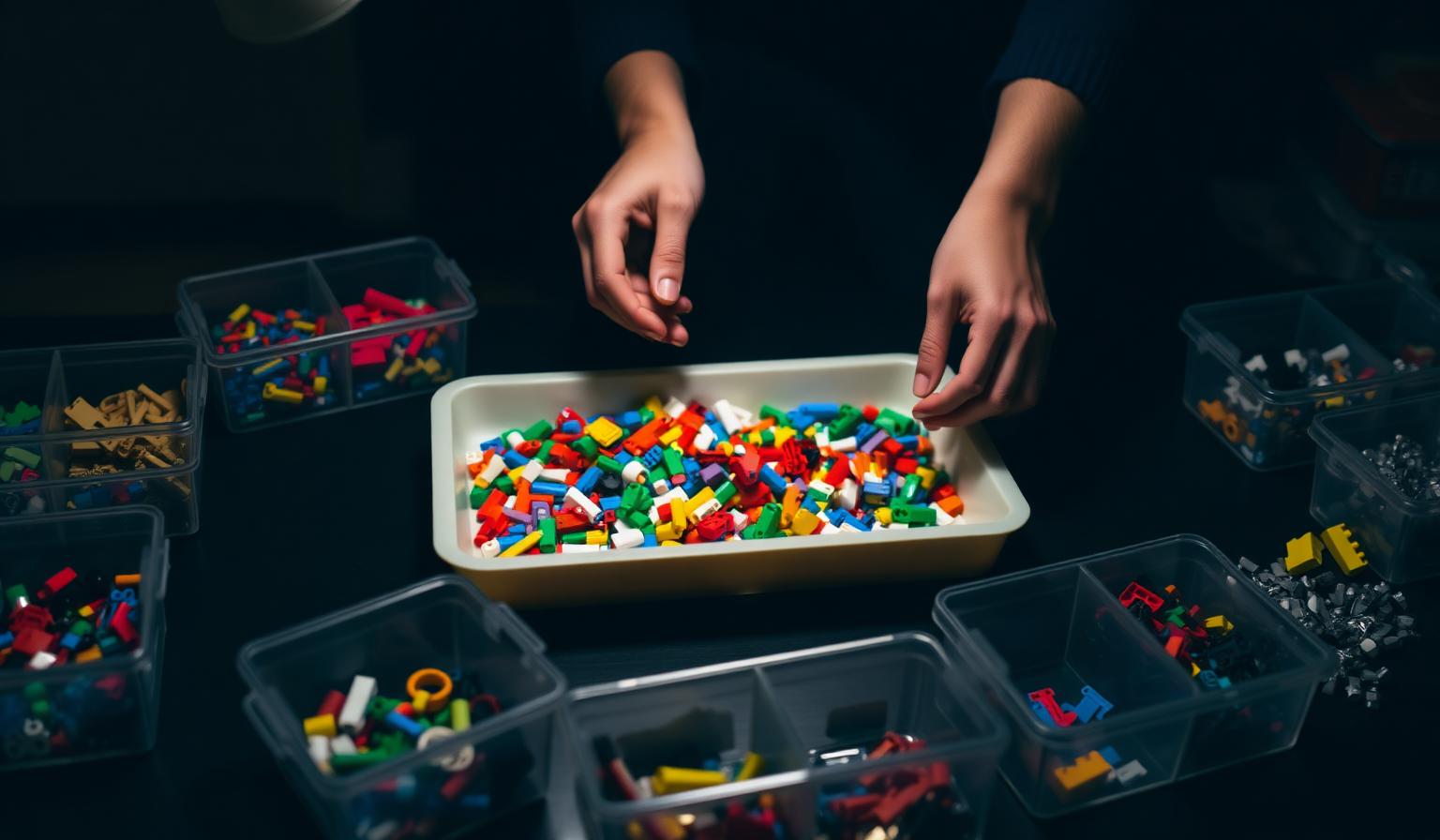
Set up a sorting tray
A shallow, light-colored tray is your best friend. Pour a manageable handful of mixed toy bricks into it, sort that batch, then refill. Trying to sort a whole tub at once is overwhelming. Small batches keep momentum.
Give yourself time
Sorting a large collection is a marathon, not a sprint. Break it into sessions. Put on a podcast or music and treat it as the relaxing, low-pressure task it can be. Many hobbyists find the sorting itself unwinding — quiet, repetitive, satisfying.
Step 3: Do the First Big Sort
Now the real work. Here's a proven step-by-step process.
Round 1: Rough categories
Don't aim for perfection first. Do a fast pass into broad buckets:
- Bricks
- Plates and tiles
- Slopes and curves
- Technic and connectors
- Specialty pieces (wheels, windows, printed parts)
- Minifigures and accessories
Work in small tray-sized batches. Speed matters more than precision on this pass.
Round 2: Refine within categories
Once your rough buckets are full, refine each one. Split "bricks" into sizes. Split "plates" by dimension. If you're going hybrid, add color sorting inside the big groups now.
Round 3: Handle the specials
Pull out anything rare, fragile, or hard to replace. Printed tiles, transparent elements, chrome pieces, and minifigure parts deserve their own protected spots. These are the pieces you'll be most annoyed to lose — the same logic applies when you customize and mix minifigures.
A tip for families
Turn Round 1 into a game. Give each child a category to "own" and race the clock. Younger kids handle color sorting well; older ones can manage shapes. It teaches sorting logic while getting the job done.
Step 4: Choose the Right Storage
Sorting is only half the battle. Storage keeps it sorted.
For adult hobbyists
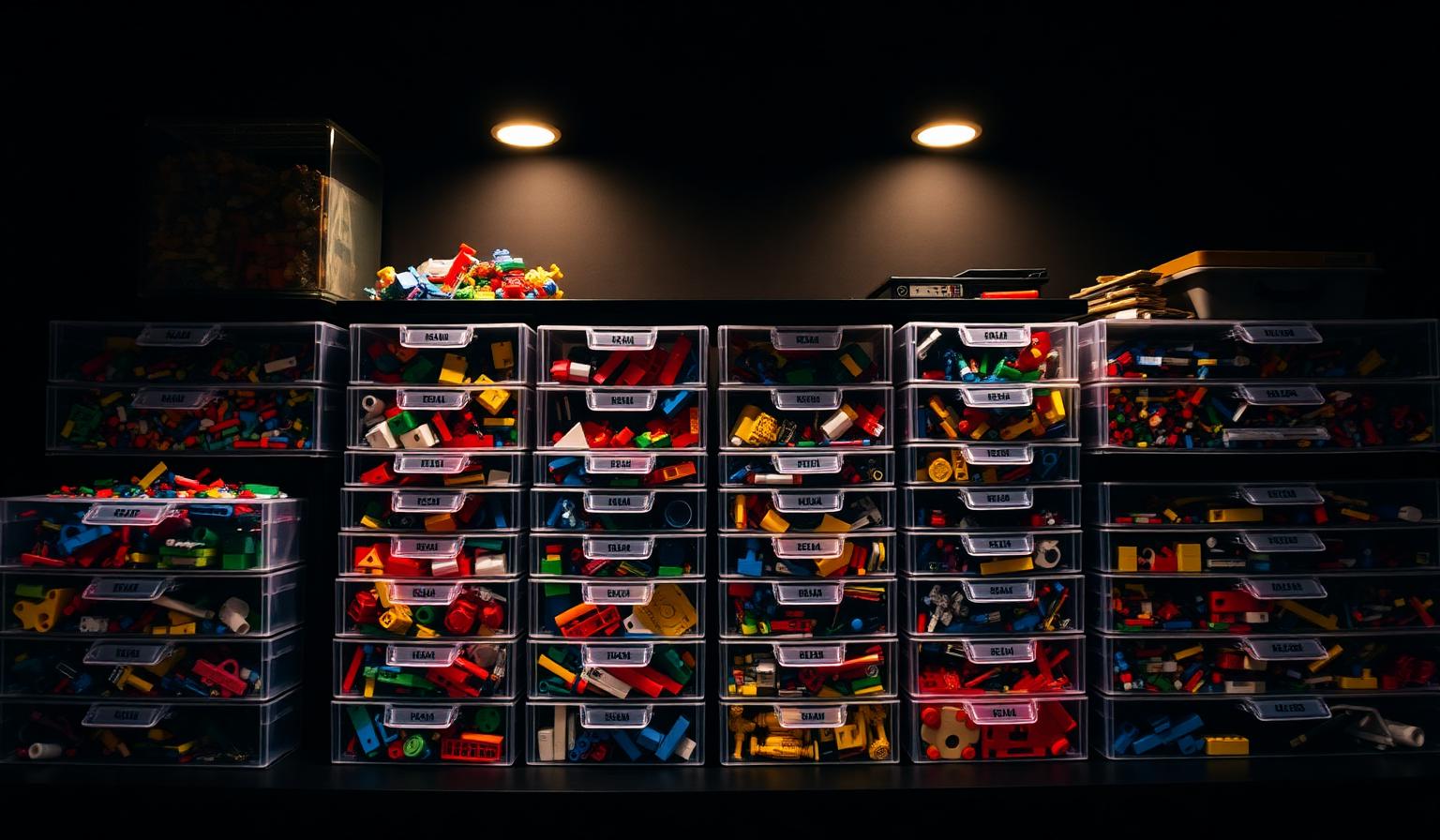
- Multi-drawer cabinets for shape-and-size sorting. Label every drawer.
- Stackable dividers so you can reconfigure as your collection changes.
- A dedicated shelf or cart near your building area so pieces are always within reach.
Labeling is non-negotiable at scale. A quick label on each drawer saves you from re-learning your own system every time.
For families
- Large lidded bins that survive being dropped
- Color-coded boxes kids can manage themselves
- A shallow "active build" tray so a project in progress doesn't get dumped back into storage
Keep the system simple enough that a child can maintain it. If cleanup is too complicated, it won't happen.
For collectors
- Airtight containers to keep dust off stored sets
- Original boxes and instructions stored flat and dry
- Display cases with UV protection to stop colors fading over time
Store rare pieces away from direct sunlight. Prolonged light exposure yellows certain plastics, which hurts both looks and value.
Step 5: Maintain the System
A sorting system only works if it survives daily use. Here's how to keep it running.
The "sort as you go" rule
The single most important habit: return pieces to their homes as you build, not after. Keep your sorted containers open beside you while you work. When you're done with a piece type, it goes straight back.
Quick post-build resets
After finishing a build, spend five minutes returning stray pieces. Five minutes now prevents a two-hour re-sort later.
Periodic deep tidies
Every few months, do a quick audit. Pieces drift into the wrong bins over time. A short reset keeps the system accurate.
Adjust as you grow
Your collection changes. When one category overflows, split it. When a method stops working, tweak it. The best system is the one you'll actually keep using. If you ever run into trouble with damaged or missing pieces during sorting, our support team can help you sort out replacements and questions.
Common Mistakes and How to Avoid Them
- Over-sorting from the start. Fifty micro-categories on day one leads to burnout. Start broad and refine only when a category slows you down.
- Using opaque containers. If you can't see inside, you'll forget what's there. Clear storage or clear labels are essential.
- Ignoring the "active build" space. Dumping an in-progress build back into storage every night wastes huge amounts of time.
- Making it too complex for kids. A family system only works if the whole family can use it.
- Forgetting to label. You will not remember your own logic in three months. Label everything.
- Storing near heat or sunlight. Heat warps plastic and light fades color. Keep your toy bricks cool, dry, and shaded.
Quick Recap
- Choose a method — color, shape, set, or a hybrid — that matches how you build.
- Prepare a large space, clear containers, and a sorting tray.
- Sort in rounds, from rough categories to fine detail, protecting specials.
- Store with systems suited to your needs as a hobbyist, family, or collector.
- Maintain with a sort-as-you-go habit and quick post-build resets.
- Avoid over-sorting, opaque bins, and complex systems kids can't manage.
A sorted collection isn't just tidy — it's a creative advantage. When you can see and reach every piece, you build faster, dream bigger, and enjoy the hobby more. Pick your method, clear your table, and pour out that first tray today. If you're still deciding which system to buy into, start with choosing the right toy bricks brand.
Frequently Asked Questions
What's the best way to sort toy bricks for a large collection?
For big collections, sort by shape and type first, then by color within each shape category. This matches how builds actually use pieces — you usually need a specific shape, then choose the color. Use multi-drawer cabinets with clear labels, and keep rare or fragile pieces in their own protected containers. Start with broad categories and refine only as each group grows large enough to slow you down.
How do I sort bricks with young children involved?
Keep it simple and visual. Color sorting works best for younger kids because it's intuitive and easy to maintain. Turn it into a game by giving each child a color or category to own, and use large, durable, clearly labeled bins they can manage themselves. The goal is a system simple enough that cleanup becomes part of the play rather than a chore.
What containers work best for storing toy bricks?
Clear, stackable containers are ideal because you can see what's inside at a glance. Small parts organizers work well for shapes and specialty pieces, while larger lidded bins suit bulk common bricks. Collectors should choose airtight, UV-protected storage to prevent dust and color fading. Whatever you pick, label everything — you won't remember your own system months later.
How often should I re-sort my collection?
If you follow the sort-as-you-go habit — returning pieces to their homes while you build — you'll rarely need a full re-sort. Do a quick five-minute reset after each build, and a slightly deeper audit every few months to catch pieces that have drifted into the wrong bins. This keeps the system accurate without ever becoming a big job again.
Do compatible bricks from different brands sort together easily?
Yes. Quality toy bricks built to standard dimensions sort and store together seamlessly, since they share the same shapes and sizes. Group them by shape and color just as you would any single-brand collection. The main thing to check is clutch power and dimensional consistency, so every piece connects reliably regardless of which set it originally came from.
Order LEGO-Compatible Sets from Morebybourn
We sell LEGO alternative sets and compatible bricks in a wide range of shapes, colors and specialty parts — perfect for growing and organizing a serious collection. If you would like help choosing the right sets or restocking a category, simply contact our customer service team and we will place the order for you.