How to Decide If LEGO Compatible Bricks Are Worth It for You
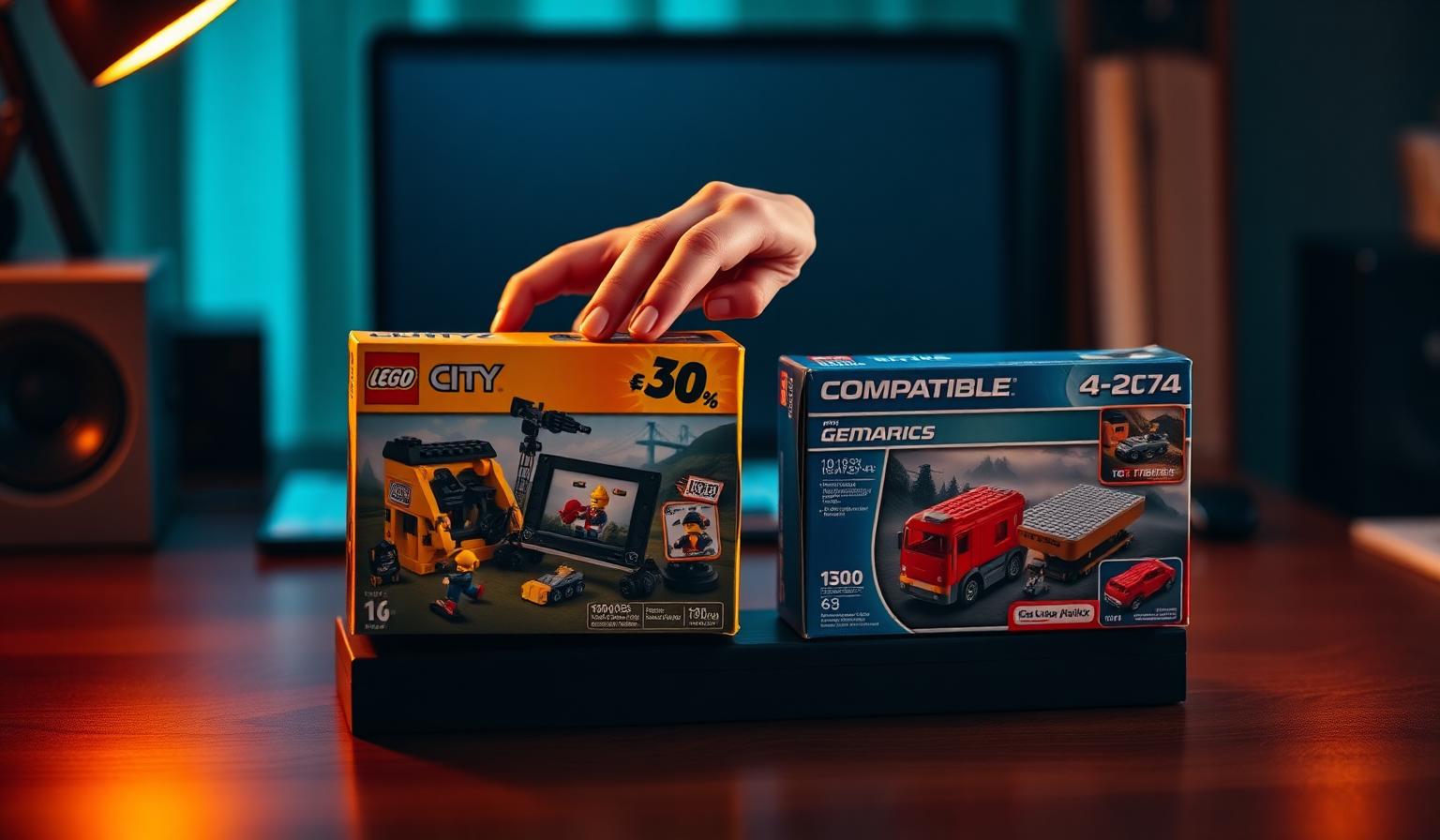
You've seen the price gap. A premium branded set runs $250, while a compatible version with the same piece count sits at $90. That difference makes you pause. It should.
The real question isn't whether one costs less. It's whether the cheaper option delivers what you actually need. Is LEGO compatible worth it for the way you build, display, and play? The honest answer depends entirely on your goals, your standards, and your budget.
This guide gives you a repeatable decision framework. No hype, no brand loyalty, just a clear method to work out whether compatible bricks fit your situation. By the end, you'll know exactly where you stand.
- The four questions that settle the decision fast
- A scoring method matched to your builder type
- The hidden costs and hidden savings most buyers miss
- A final worth-it verdict you can trust
Start With the Right Question
Most buyers ask the wrong thing first. They ask "Is it as good as the premium brand?" That's a trap. It sets an impossible standard and ignores what matters: your specific use. A collector displaying a landmark has different needs than a parent buying a weekend project for a nine-year-old.
The better question reframes everything. Is LEGO compatible worth it for your purpose? Purpose changes the entire calculation. A brick that's perfect for a family build night might disappoint a display collector, and vice versa.
So before you compare a single spec, define your purpose. Write it down in one sentence:
- "I want a relaxing weekend project I'll display for years."
- "I want an educational activity my kids will actually finish."
- "I want a rare theme the premium brand discontinued."
- "I want cheap, consistent parts for my custom designs."
That sentence is your measuring stick. Everything else follows from it.
The Four-Question Decision Framework
Answer these four questions honestly. Together they settle the worth-it decision for almost any builder.
Question 1: What's Your Primary Goal?
Your goal sets your quality threshold.
- Display and permanence. You need top-tier clutch power, exact color matching, and printed detail parts. Your standard is high because the piece sits on a shelf under scrutiny for years.
- Play and learning. You need durability and clear instructions more than perfect color fidelity. A brick that survives a child's rough handling matters more than a flawless gray.
- Creation and experimentation. You need volume, consistency, and low per-piece cost. You'll tear the build apart anyway, so batch reliability beats box presentation.
- Casual fun. You need an enjoyable few hours at a fair price. Your standard is modest, and compatible bricks almost always clear it.
Question 2: How Big and Complex Is the Build?
Scale changes the stakes. A 300-piece set forgives small quality gaps. If one brick fits loosely, it barely registers. A 4,000-piece modular building punishes every weakness. Weak clutch power on a large vertical build means sagging walls and collapsing sections.
- Small builds (under 500 pieces): Compatible bricks are almost always worth it. The quality bar is easy to clear.
- Medium builds (500–1,500 pieces): Worth it when the brand confirms strong clutch power and color consistency.
- Large builds (1,500+ pieces): Worth it only from brands with proven tolerance and grip. This is where cheap bricks fail hardest and quality bricks prove their value most.
Question 3: What's Your Real Budget Picture?
Look past the sticker price. The upfront saving is obvious — a compatible set often costs 50–70% less than a comparable premium one. But calculate the full picture:
- Piece-count value. Divide price by piece count. Compatible sets usually win decisively.
- Replacement risk. Factor in the cost of replacing a poor set if it fails.
- Reuse value. Quality ABS bricks survive dozens of rebuilds, spreading the cost across years.
For most builders, the math favors compatible bricks strongly, as long as quality clears their threshold. Browse current piece counts and pricing on our products page to run your own numbers.
Question 4: How Much Does Brand Prestige Matter to You?
Be honest here. It matters to some people, and that's valid. If owning the official brand name brings you genuine satisfaction, that's part of your value equation. Prestige is a real benefit, even if it doesn't affect how the bricks perform. But if what you want is the building experience and the finished result, prestige adds little. Compatible bricks deliver the same click, the same challenge, and the same display piece for a fraction of the cost.

Score Your Decision by Builder Type
Now put the framework to work. Here's how the worth-it verdict lands for each type of builder.
The Adult Hobbyist
Verdict: Usually worth it. You build for challenge and relaxation. Compatible bricks give you high piece counts and complex designs at prices that let you build more often. The focused, screen-free hours feel identical regardless of the logo on the box.
Where to hold the line: for large architectural builds meant for permanent display, insist on proven clutch power. A quality compatible brand clears this easily; a bargain-bin one won't. Best fit: modular buildings, technical vehicles, large landmarks, ambitious original layouts.
The Family Builder
Verdict: Strongly worth it. You want engagement, durability, and educational value. Compatible bricks deliver all three at a price that lets you buy more sets as your kids grow. Building teaches sequencing, symmetry, spatial reasoning, and patience — these STEM lessons land exactly the same whether the bricks are premium or compatible. The lower cost also means less stress when a piece goes missing under the couch. Best fit: themed adventure sets, buildable vehicles, starter architecture, anything that sparks storytelling.
The Collector
Verdict: Worth it with careful selection. You care about detail, accuracy, and shelf presence. Here your standards are highest, so brand selection matters most. The upside is real: compatible brands often reproduce retired or discontinued themes that the secondary market prices out of reach. The catch is that color fidelity and print quality must meet display standards, so choose brands with strong review photos. Best fit: retired-theme reproductions, large landmark models, limited-edition display pieces.
The Creator
Verdict: Almost always worth it. You design your own builds and need reliable parts in volume. Compatible bricks are ideal: affordable per-piece cost lets you experiment freely, and a deep parts catalog fuels original designs. For MOC (My Own Creation) work, consistent tolerance across large orders beats any box presentation. Best fit: bulk parts, brackets, SNOT pieces, specialty tiles in specific colors. If this is you, our builder type guide maps the full shopping path.
The Hidden Costs Nobody Mentions
A fair decision accounts for the risks, not just the savings.
- Inconsistent quality across brands. The compatible category is uneven. One brand delivers premium-grade bricks; another ships brittle, loose pieces. The label "compatible" alone guarantees nothing.
- Color batch drift. Cheaper sets sometimes ship grays that don't match across bags. For a large single-color facade, that's a visible flaw.
- Missing-part hassles. Replacement-part service varies widely. Check the support policy before you buy, not after.
- Instruction clarity. Some compatible sets skimp on instructions. For a complex build or a young builder, unclear steps ruin the experience.
None of these are dealbreakers. They're simply factors to weigh. Knowing them upfront is what separates a smart purchase from a gamble.
The Hidden Savings Nobody Counts
- Build more for the same money. Your hobby budget stretches two to three times further — more projects, more variety, more building hours.
- Access to unavailable themes. Compatible brands reach themes premium makers retired or never made.
- Lower stakes, more freedom. When bricks cost less, you experiment more freely. Creativity thrives when the price of failure drops.
- Longevity across rebuilds. Quality ABS bricks survive years of teardowns and rebuilds, so the per-use cost becomes tiny.
For deeper breakdowns of value and build techniques, our articles hub covers real builder experiences across every type — including how to run a hands-on comparison before you commit.
Your Worth-It Decision Checklist
Run this quick check before you commit. It turns the framework into a fast yes or no.
- Purpose defined? You've written your one-sentence goal.
- Threshold matched? The brand's quality clears your goal's bar.
- Scale checked? Clutch power confirmed for your build size.
- Value calculated? Price-per-piece compared honestly.
- Prestige weighed? You've decided how much the logo matters to you.
- Support verified? Missing-part policy checked.
- Reviews scanned? Real photos confirm color and fit.
Five or more yeses means compatible bricks are worth it for your situation. Fewer than five means either pick a better brand or reconsider your fit.
Common Mistakes in the Worth-It Decision
- Comparing to the wrong standard. Judging compatible bricks against brand prestige instead of your actual purpose.
- Ignoring your builder type. A collector's standards don't apply to a family buyer.
- Buying the cheapest option. Rock-bottom price often means recycled plastic and weak grip. Value means quality per dollar.
- Skipping the support check. Missing pieces happen with every brand; what differs is how easily you get replacements.
- Overweighting a single review. One angry review about shipping says nothing about brick quality. Look for patterns, not outliers.
The Verdict: When It's Worth It and When It's Not
Is LEGO compatible worth it? For the vast majority of builders, yes, clearly. If your goal is the building experience, the finished result, an educational activity, or a display piece, quality compatible bricks deliver everything premium bricks do at a far lower cost. The click feels the same. The challenge feels the same. The finished model stands just as proud on the shelf.
It's not worth it in narrow cases. If brand prestige itself is your primary source of satisfaction, no compatible brick will replace that. And if you buy the cheapest option without checking quality, you'll get what you paid for. The decision fails not because compatible bricks are bad, but because the wrong one was chosen.
The smart move is simple. Define your purpose, match it to a brand that clears your threshold, verify with reviews and support policy, then build with confidence. Do that, and your money goes further while your shelf fills faster. Every set in our range is built to clear these thresholds, from family builds to collector-grade display pieces — see the full lineup at Morebybourn and match a set to your purpose.
Frequently Asked Questions
Is LEGO compatible worth it for large, complex display builds?
Yes, when you choose a quality brand. For large builds, the deciding factor is clutch power and color consistency, since weak bricks sag on tall structures and mismatched grays show on big facades. Whether LEGO compatible is worth it at this scale comes down to brand selection: confirm strong tolerance and printed detail parts through review photos, and a quality compatible set will hold together and display beautifully for years at a fraction of the premium cost.
How much money do compatible bricks actually save?
Compatible sets typically cost 50–70% less than comparable premium sets with similar piece counts. To see your real saving, divide price by piece count and compare. Also factor in reuse value, since quality ABS bricks survive dozens of rebuilds. For most builders, this means your hobby budget stretches two to three times further.
Are compatible bricks good enough for kids and STEM learning?
Absolutely. Building teaches sequencing, symmetry, spatial reasoning, and problem-solving, and these lessons land identically regardless of brand. For families, prioritize sturdy clutch power that survives rough handling and clear step-by-step instructions. The lower price is a bonus, letting you add new sets as your child's skills grow.
When is LEGO compatible NOT worth it?
It's not the right pick if owning the official brand name is your main source of satisfaction, since prestige is a genuine value no compatible brick replicates. It also fails if you buy the cheapest option without checking quality, as bargain sets often use brittle plastic. The fix is choosing a proven brand, not avoiding the category.
How do I verify a compatible brand before buying?
Check three things. First, scan recent reviews with user photos to confirm real-world fit and color. Second, verify the missing-part and replacement policy, since piece issues happen with every brand and responsive support makes the difference. Third, confirm the material is stated as virgin ABS. Pass all three, and you can buy with confidence.
Order LEGO-Compatible Sets from Morebybourn
We sell LEGO alternative sets and compatible bricks that clear the worth-it thresholds in this guide — firm clutch power, consistent colors and quality ABS at a fair price. If you would like help choosing the right set for your goals, simply contact our customer service team and we will place the order for you.