How to Use LEGO Compatible Customer Reviews to Buy Smarter

A product page tells you what a brand wants you to believe. Reviews tell you what actually happens when the bricks hit the table.
That difference is everything when you're spending real money on a large build. A 3,000-piece castle looks stunning in a render. It looks very different when the walls sag because the clutch power is weak, or when the grays don't match across bags.
This guide shows you how to read LEGO compatible customer reviews like a pro. You'll learn what signals matter, which red flags to avoid, and how to turn scattered feedback into a confident buying decision.
- The specific things quality reviews reveal that photos never do
- How to spot fake or low-value reviews fast
- A method for reading reviews by builder type
- A repeatable checklist you can run before every purchase
Why Reviews Matter More for Compatible Bricks
Compatibility is a claim. Reviews are the proof. When a set says "compatible with major brands," that's a promise the manufacturer makes. Whether it holds up depends on tolerances measured in fractions of a millimeter. You can't see that in a listing. You can see it in a builder's photo of a wall that clicked together perfectly, or one that gapped at every seam.
Three real-world factors decide whether a set is worth your money:
- Clutch power — Do bricks grip firmly and release cleanly?
- Color consistency — Do the same colors match across every bag and batch?
- Cross-compatibility — Do the pieces actually fit the bricks you already own?
What Great Reviews Actually Tell You
A five-star rating alone means little. The value lives in the details. Here's how to mine reviews for the information that predicts your building experience.
Clutch Power Clues
Clutch power is the single most important quality marker for large or display builds. Weak grip means collapsing walls and detail pieces that won't stay put. Look for phrases like "bricks held tight even on a tall build," "pieces snapped together with a satisfying click," or "had to use a brick separator" — that last one is a good sign, because it means firm grip. Warning phrases: "pieces fell off," "loose fit," "wobbled when I picked it up."
Reviewers who mention building something tall or heavy give you the best clutch data. A minifigure display tells you little. A two-foot tower tells you plenty.
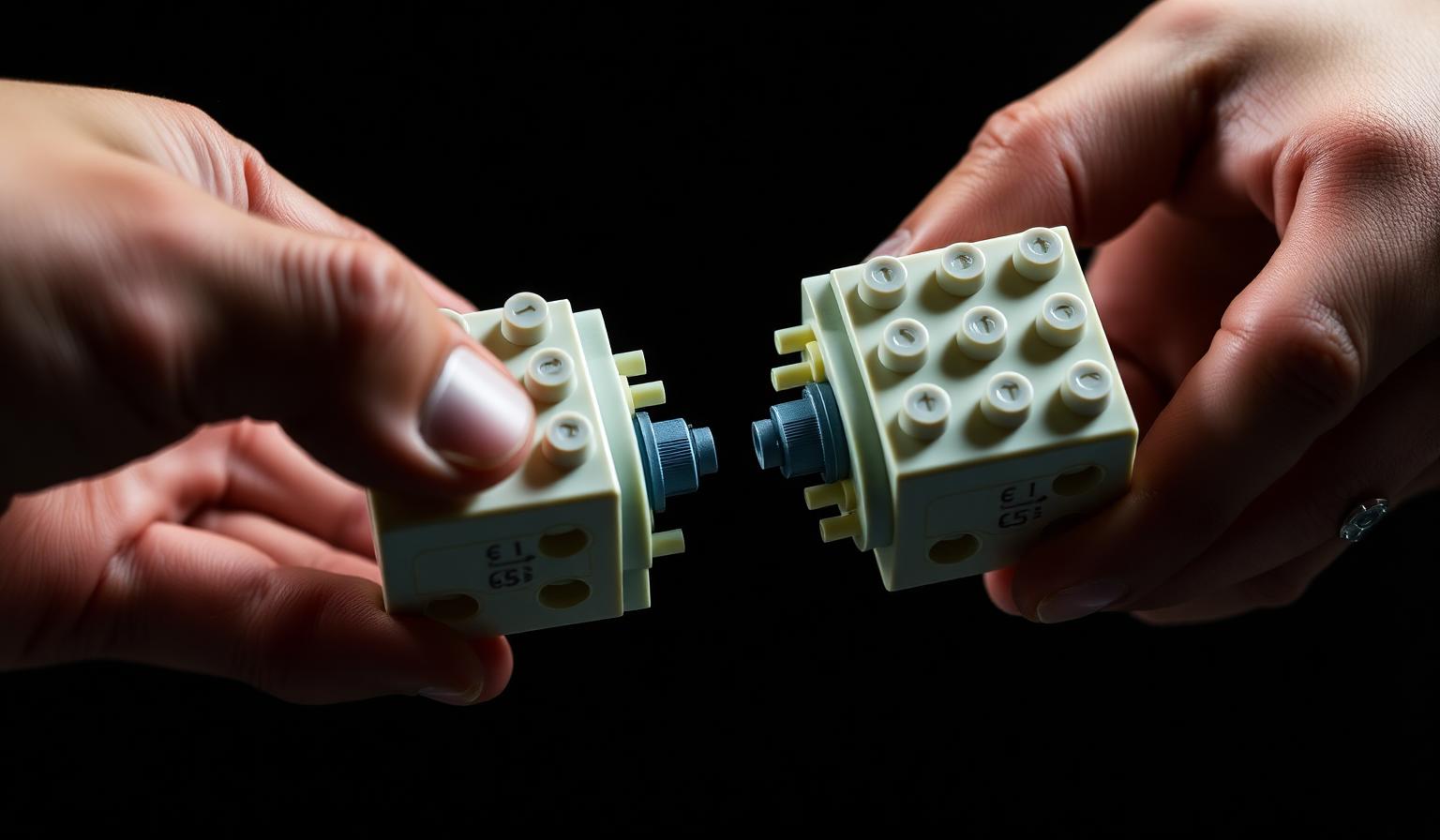
Color Consistency Signals
Nothing ruins a monochrome facade faster than mismatched grays. Batch-to-batch color drift is a common weak point in cheaper sets, and reviews expose it instantly. Search reviews for the words "color," "shade," "match," and "batch." Builders notice this immediately and almost always mention it. Photos help even more here — a user photo of a completed gray building shows color consistency better than any spec sheet.
Compatibility Confirmation
The most useful reviews come from builders who mixed the set with bricks they already owned. Look for lines like "fit perfectly with my existing collection" or "mixed these with parts from other brands without issue." That's direct confirmation the tolerances are right, and it pairs well with the hands-on tests in our brick mixing guide.
Instruction and Experience Quality
For families and newer builders, instruction clarity makes or breaks the afternoon. Reviews that mention "easy to follow steps," "numbered bags," or "clear diagrams" signal a smooth build. Complaints about "confusing instructions" or "no bag numbers" warn you the experience may frustrate a younger builder. To see how detailed reviews translate into real sets, browse the range on our products page and compare feedback across builds.
Red Flags: Reviews You Shouldn't Trust
Not every review deserves your attention. Some are fake. Some are useless. Learning to filter them protects you from bad decisions.
- The vague praise trap. "Great product! Love it!" tells you nothing about clutch power, color, fit, or build experience. Skip it and look for specifics.
- The photo test. Real reviews come with real photos. Hundreds of glowing reviews with almost no user photos is a quiet warning sign.
- The timing cluster. Dozens of five-star reviews posted in the same two-day window suggest a coordinated push, not organic feedback.
- The one-star overreaction. A furious review about a shipping delay says nothing about brick quality. Judge the bricks by brick feedback.
| Red Flag | What It Suggests |
|---|---|
| Vague praise, no detail | Possibly incentivized or fake |
| No user photos | Unverified real-world quality |
| Review timing clusters | Coordinated posting |
| Off-topic complaints | Not about brick quality |
| Only extreme ratings | Missing the honest middle |
How to Read Reviews by Builder Type
The same review means different things to different builders. Match the feedback to your own goal — and if you are not sure which profile fits you, start with our builder type guide.
If You're an Adult Hobbyist
- Comments on clutch power for tall structures
- Feedback on part variety and specialty pieces
- Notes on whether detail parts are printed or stickered
- Long-term durability after weeks on a shelf
If You're Shopping for a Family
- Whether bricks survived rough handling
- Instruction clarity for kids
- How long the build held a child's attention
- Whether the set sparked independent play afterward
If You're a Collector
- Color fidelity to the original theme
- Print quality on detailed parts
- Box and instruction presentation
- Proportional accuracy
If You're a Creator
- Batch color consistency for bulk ordering
- Tolerance reliability across large part counts
- Availability of brackets and SNOT pieces
- Per-piece value for experimentation
How Community Feedback Builds Better Bricks
Reviews don't just help buyers. They shape the product itself. Builders post honest LEGO compatible customer reviews. Good manufacturers read every one. Patterns emerge — a color that drifts, a part that runs tight, an instruction step that confuses. Then the next production run fixes it.
This feedback cycle is why alternative brick quality has climbed so sharply. Adult builders review everything in public, so weak products get exposed fast and quality became a survival requirement. The best brands treat reviews as a roadmap — they don't hide criticism; they act on it. That's the standard we hold ourselves to at Morebybourn, and it feeds directly into how we build the next set.
Turning Reviews Into a Buying Decision
- Sort by most recent. Quality changes over time; a set reviewed poorly a year ago may have had its molds updated since.
- Filter for photos. Photo reviews carry the most reliable information about fit, color, and finish.
- Read the three-star reviews. Five-star reviews cheer, one-star reviews vent, three-star reviews think.
- Count specific mentions. Tally how many reviews mention clutch power, compatibility, and color positively versus negatively.
- Cross-check compatibility claims. Find at least one review from a builder who mixed the set with other bricks.
The 7-Point Review Reading Checklist
- Recent reviews? Prioritize feedback from the last few months.
- User photos present? Real build shots confirm real quality.
- Clutch power mentioned? Look for grip and hold comments.
- Color consistency noted? Especially for large single-color builds.
- Compatibility confirmed? At least one mix-with-others review.
- Instruction feedback? Vital for kids and beginners.
- Balanced pattern? A healthy spread of ratings, not just extremes.
If a set passes five or more of these, you're on solid ground. Pair the result with the value framework in our worth-it decision guide to finish the call.
Common Mistakes When Reading Reviews
- Reading only the star rating. The number hides the story; details predict your experience.
- Trusting only five-star reviews. The middle ratings are often the most honest.
- Ignoring the photos. User images reveal more than any written description.
- Confusing service complaints with product flaws. A late package says nothing about brick quality.
- Skipping recent feedback. Products improve; old reviews may be outdated.
Your Next Step
Reading reviews well is a skill, and it pays off every time you buy. Dig past the star rating into specific mentions of clutch power, color, and fit. Trust reviews with photos and balanced perspectives over vague praise. Run the 7-point checklist before you commit. Do this and you'll stop guessing — you'll buy sets that click together right the first time, hold their color across every bag, and stand strong on your shelf for years.
Frequently Asked Questions
How many reviews should I read before buying a LEGO-compatible set?
Aim for at least 8 to 10 detailed reviews, focusing on recent ones with photos. Reading a mix of five-star, three-star, and one-star feedback gives you a balanced picture. Look for repeated mentions of clutch power, color consistency, and compatibility rather than relying on the overall star average alone.
What do LEGO compatible customer reviews reveal that product photos don't?
Reviews expose real-world performance that renders can't show. They tell you whether bricks grip firmly, whether colors match across batches, and whether pieces fit your existing collection. They also reveal instruction clarity and long-term durability, all things you only learn once someone actually builds the set.
How can I tell if a review is fake or unreliable?
Watch for vague praise with no specifics, a lack of user photos, and clusters of glowing reviews posted within the same short window. Genuine reviewers mention concrete details like fit, color, and build experience, and they often include photos of finished models. Balanced feedback across months signals authentic, trustworthy input.
Do customer reviews really influence how brick sets are made?
Yes. Quality brands read feedback closely and act on it. When multiple reviews flag a color drift or a tight-fitting part, responsible manufacturers correct it in the next production run. This feedback loop is a major reason alternative brick quality has improved so much in recent years.
Which reviews matter most for choosing a set for my child?
Prioritize reviews written by other parents. Look for comments on brick durability under rough handling, instruction clarity for young builders, and how long the set held a child's attention. Feedback mentioning STEM value, like sequencing and problem-solving, tells you whether the set delivers real learning alongside the fun.
Order LEGO-Compatible Sets from Morebybourn
We sell LEGO alternative sets and compatible bricks backed by real builder feedback — firm clutch power, consistent colors and parts that fit the collection you already own. If you would like help choosing the right set, simply contact our customer service team and we will place the order for you.