How to Run a LEGO Compatible Comparison Before You Buy
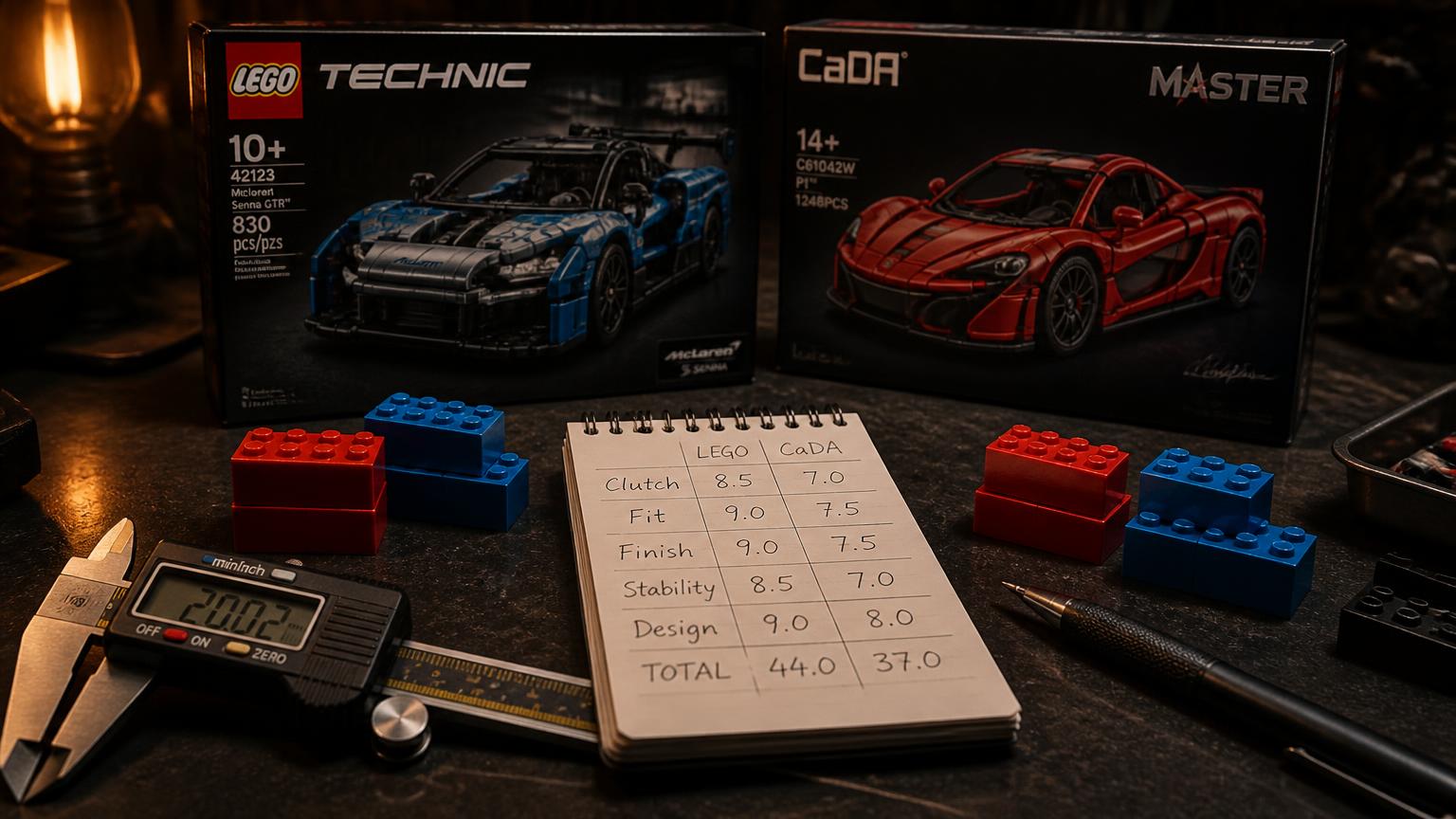
Buying a brick set should not feel like a gamble. Yet with dozens of brands claiming premium quality and full compatibility, it is easy to spend real money on bricks that sag, warp or refuse to click into your existing collection.
The fix is simple: learn to test the sets yourself. This guide teaches you how to run a proper LEGO compatible comparison so you can judge any brand on measurable criteria rather than marketing copy — a repeatable checklist for every future purchase.
Why a Structured Comparison Beats Guesswork
Most shoppers look at box art, count the pieces and check the price — then wonder why the model feels flimsy. A structured comparison scores each set against fixed criteria so you catch quality problems before they ruin a 2,000-piece build. It matters most for collectors who need shelf-stable models, hobbyists who want a smooth build and parents who need bricks that survive real play. Pair it with our builder type guide to shortlist candidates first.
Criterion 1: Clutch Power
Clutch power is the grip between two connected bricks — the single most important quality signal. A good brick clicks in with light pressure, holds firm and releases cleanly without cracking.
- Snap two 2x4 bricks together. They should click, not slide.
- Lift the top brick. The bottom one should hold on, not drop.
- Separate them. You should feel resistance, then a clean release.
- Repeat five times. The grip should stay consistent.
Score 5 for a firm click that holds weight every time, 3 for slightly loose or stiff and 1 for parts that fall apart or need painful force. One loose brick in a bag of hundreds is a warning about the whole batch.

Criterion 2: Stud Tolerance
The industry standard stud sits at 4.8mm in diameter. Connect the new bricks to bricks from a brand you trust — they should lock without wobble. Build a flat 8x8 plate area and run a finger across it; it should feel level with no raised seams. Check large baseplates against a flat table, since warping means poor tolerance control. Our base plate guide covers flatness testing in more depth.
Criterion 3: Plastic Material
- Color consistency. Every red brick should be the same red, with no batch drift.
- Clean edges. Rough flash along a seam means cheap molds.
- Solid weight. Hollow, ultra-light bricks often use inferior blends.
- No chemical smell. A strong odor can signal low-grade plastic.
- Flex test. Quality ABS bends slightly and springs back; brittle plastic creaks or snaps.
Criterion 4: Part Variety
Scan the parts list for specialty pieces rather than standard bricks alone, check whether individual parts and baseplates are sold separately, and look for Technic-style connectors, gears and hinges if you want moving models. A brand that sells parts à la carte signals confidence in its system — and turns a single set into a launchpad for a growing mixed collection.
Criterion 5: Price-Per-Piece and Real Value
Divide total price by piece count — under 8 cents per piece is strong value for a detailed set — then factor in build hours and display life.
- Set A: $80, 1,000 pieces = 8¢/piece, 6-hour build.
- Set B: $60, 500 pieces = 12¢/piece, 3-hour build.
Criterion 6: Instruction Clarity
Look for large high-contrast step diagrams, part-count callouts at each stage, sub-assemblies broken into logical sections, numbered bags matched to build stages and digital manuals as a bonus. For families using sets as STEM tools, a clear manual teaches sequencing and problem-solving; a confusing one teaches only frustration.
Putting Your Comparison Into a Scorecard
| Criterion | Weight | Score (1–5) |
|---|---|---|
| Clutch power | High | ___ |
| Stud tolerance | High | ___ |
| Plastic material | High | ___ |
| Part variety | Medium | ___ |
| Price-per-piece | Medium | ___ |
| Instruction clarity | Medium | ___ |
26–30 is excellent, 20–25 is solid with minor trade-offs, 14–19 is mixed and below 14 means skip it. A set can lose a point on instructions and still be a great buy — weak clutch power or off-spec studs is a dealbreaker.
Common Mistakes to Avoid
- Judging by piece count alone. A high count means nothing if the bricks are loose or brittle.
- Trusting "compatible" on the box. Only a physical fit test confirms it.
- Ignoring builder reviews. Verified feedback reveals how a set performs after assembly — learn to read reviews properly.
- Skipping the plastic check. Cheap plastic looks fine in-store and yellows within months.
- Chasing the lowest price. The cheapest set often costs more in disappointment.
Conclusion: Test Once, Buy Better Forever
Test clutch power, check stud tolerance, inspect the plastic, weigh part variety, calculate real value and rate the instructions. Score every set out of 30, prioritize the three high-weight factors, and you will never gamble on a purchase again.
Frequently Asked Questions
What's the single most important factor in a LEGO compatible comparison?
Clutch power and stud tolerance tie for first place. Clutch power decides whether your model holds together, and stud tolerance decides whether new bricks fit your existing collection. If a set fails either test, no amount of low price or high piece count makes up for it. Test both before you commit to a large build.
How can I test compatibility at home without special tools?
Just use bricks you already own. Snap the new bricks onto trusted bricks from another brand — they should lock firmly with no wobble and no forced fit. Build a small flat area and run your finger across it to check for level seams. Flex a thin plate to confirm the plastic bends and springs back rather than cracking. Your hands are the only tool you need.
Is a higher price always a sign of better bricks?
No. Price often reflects licensing, marketing and brand name rather than actual quality. Many alternative brands match the clutch power and ABS material of premium sets at a much lower cost. That is why the price-per-piece calculation matters — it measures real value against piece count, build time and display longevity instead of sticker price alone.
Are these sets suitable for kids and STEM learning?
Yes. Quality-compatible sets with clear, numbered instructions teach sequencing, spatial reasoning and problem-solving through hands-on play. Look for high part variety and durable ABS plastic so the bricks survive repeated building. Step-by-step manuals let children finish complex models with confidence.
How often should I run this comparison?
Run it on every new brand or set you are unsure about. Once you have verified a brand hits your standards across all six criteria, you can trust its future releases with a quick spot-check rather than a full test. The scorecard is most valuable when you are trying a brand for the first time.
Order LEGO-Compatible Sets from Morebybourn
We sell LEGO alternative sets and compatible bricks that stand up to this six-point scorecard — genuine ABS, tight 4.8mm stud tolerance and clear instructions. If you would like help scoring a set or choosing between two, simply contact our customer service team and we will place the order for you.