How to Design a LEGO-Compatible Train Layout That Actually Grows With You
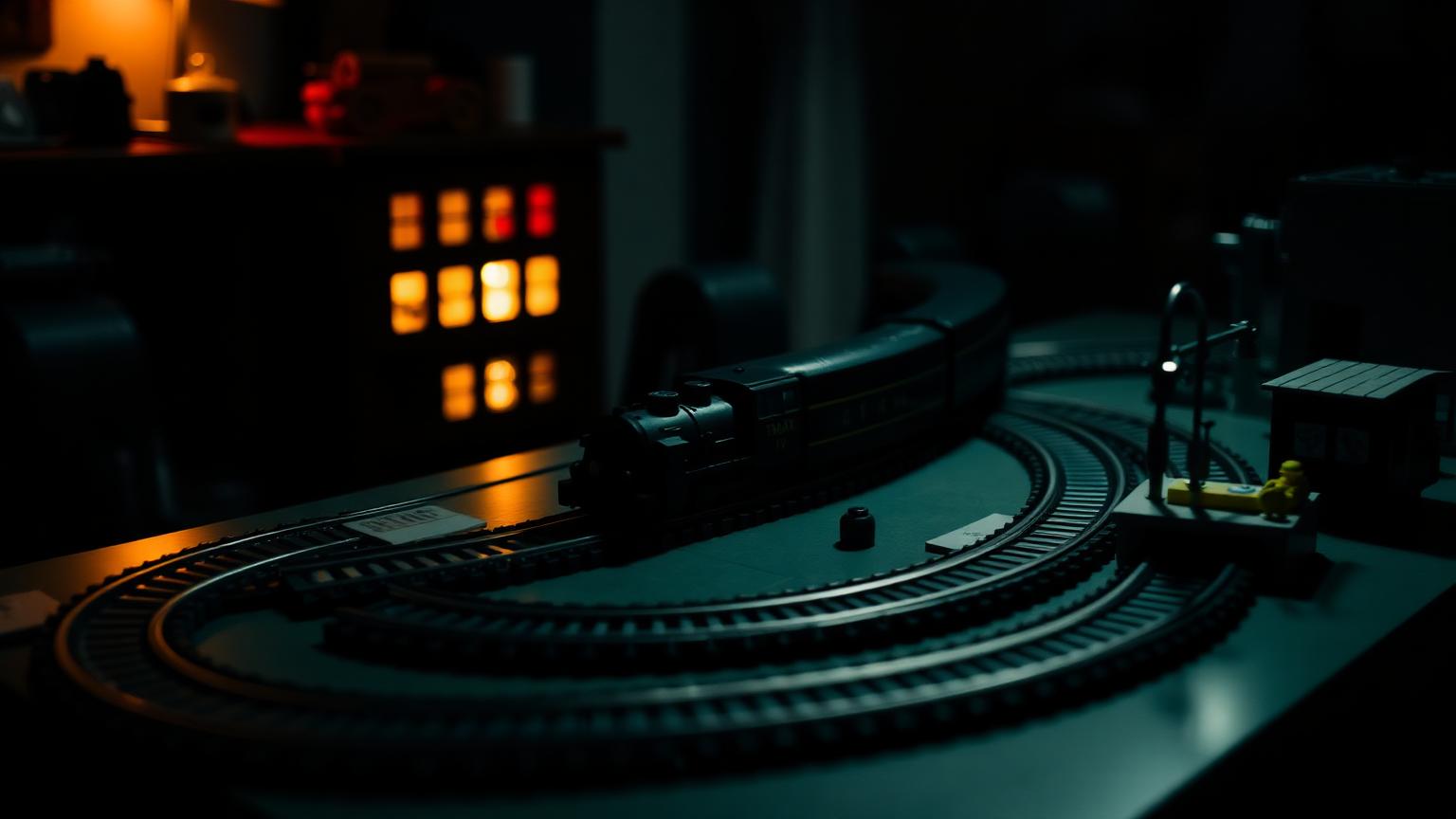
Most train layouts fail for the same reason: they start as a single loop on the floor and never move past it. You add a few cars, run out of space, and the whole thing gets boxed up by spring.
The fix is not more track — it is a plan that lets your layout expand without ripping everything apart. Here is how to build a modular setup that keeps growing.
Why Track Planning Beats Track Buying
Lego compatible train track follows the same gauge and stud spacing as the mainstream system, so pieces from different sources snap together and trains roll across seams without derailing. Use that advantage deliberately: think in modules, not loops. A module is a self-contained section — a corner, a station, a bridge run — that connects to others through standard endpoints.
Step 1: Know Your Track Types
- Straights. Set layout length and let trains build speed — buy more than you think.
- Curves. Define your footprint; keep the radius consistent or geometry drifts.
- Switches (points). Split one line into two for sidings, passing loops and branch lines.
- Crossings. Let two lines intersect for figure-eight and dense urban designs.
- Ramps and flexible track. Add elevation and bridge awkward gaps between modules.
Step 2: Plan Your Layout on Paper First
- Measure your space. Note usable length and width, then subtract a border.
- Sketch the mainline loop. A simple oval sized to the table is your circuit.
- Mark expansion points. Reserve two or three spots where a switch can later feed a new module.
- Count your pieces. A layout one curve short will never close its loop.
Step 3: Confirm Compatibility Before You Commit
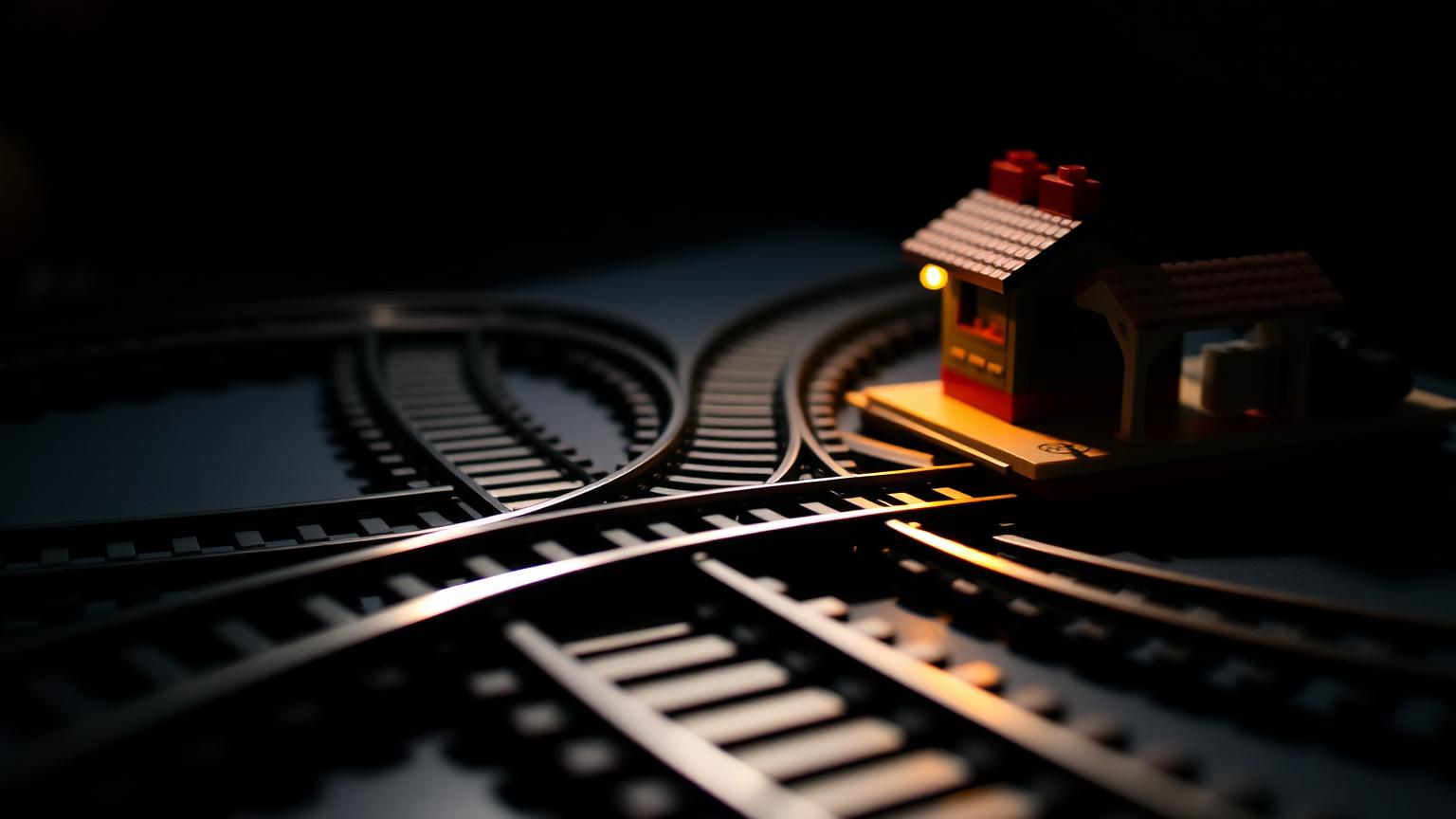
- Match the gauge. The rail spacing must state the standard building-block gauge.
- Check stud spacing. Track bases should lock onto baseplates and integrate with platforms and scenery.
- Test the rail join. Quality track gives a flush, level seam with no lip.
- Verify wheel clearance. Larger locomotives can catch on poorly designed switches.
For brand-mixing questions on trains specifically, see our compatible trains and themed bricks guide.
Step 4: Build in Modules for Painless Expansion
- Define standard endpoints. Every module starts and ends at a standard connection, ideally on a baseplate edge.
- Build three core modules. The loop, the station with a siding, and a junction with a switch.
- Add themed modules over time. Mountain, industrial, city — each clicks onto existing endpoints.
- Store modules intact. Lift whole sections without disassembly and set up in minutes.
Mounting modules on a flat, warp-free surface is half the battle — our base plate guide explains what to build on.
Step 5: Optimise for Smooth, Reliable Running
- Level your base. Baseplates or a flat table prevent stalls and derailments.
- Respect minimum radius. Long locomotives and connected cars need wider curves.
- Ease your grades. Spread a climb over more track so motors do not struggle.
- Keep rails clean. Dust cuts grip and adds friction.
- Check switch alignment. Run trains slowly through every switch in both positions.
Picking a drive system for your locomotive? Start with our compatible motors guide.
Step 6: Grow Your Layout the Smart Way
- Expand one module at a time. Run it, fix issues, then add the next.
- Build vertically. Bridges and elevated loops multiply the layout in the same footprint.
- Add scenery modules. Stations, tunnels and crossings turn a loop into a world.
- Connect with the community. Standard endpoints let your modules join someone else's at meetups.
Putting It All Together
You measure a four-foot table, sketch an oval mainline with two reserved switch gaps, confirm gauge and stud spacing, then build three core modules on baseplates. Three months later a mountain module with a gentle ramp clicks onto a reserved endpoint in minutes. No rebuild — just a bigger, better layout that grew exactly as planned.
Frequently Asked Questions
Is lego compatible train track fully interchangeable with mainstream brick track?
In most cases, yes. Lego compatible train track is built to the same gauge and stud spacing as the mainstream system, so pieces connect at standard endpoints and trains roll across seams cleanly. Always confirm the listing states the standard gauge, and check reviews for flush, gap-free joins before buying.
Do I need powered track, or can trains run without it?
Most modern building-block train systems use battery-powered locomotives rather than electrified rails, so the track itself is unpowered. This makes layouts simpler and safer for kids. Your track's job is geometry and smooth joins — the power lives in the train.
What's the best minimum radius for a beginner layout?
Start with the standard curve radius that forms a basic oval or circle. Standard curves handle most starter locomotives and short car trains reliably. If you later add longer locomotives or connected cars, switch to wider curves to prevent derailments on tight bends.
How do I stop my trains from derailing at track joins?
Focus on three things: a level base, flush rail joins with no lip, and clean switches. Mount track on baseplates to lock the geometry, run trains slowly through every switch during setup, and replace any piece that produces a gap. Most derailments trace back to one of these.
Can I mix track pieces from different sets to expand my layout?
Yes — that's the main advantage of a compatible standard. As long as each piece shares the same gauge and stud spacing, you can combine straights, curves and switches from multiple sets. Standardised endpoints let you add modules freely, which is exactly how modular layouts grow over time.
Order LEGO-Compatible Sets from Morebybourn
We sell LEGO alternative sets, train models and compatible track built to the same universal standard, so every piece rolls and clicks exactly as it should. If you would like help choosing a locomotive, sourcing track or planning a full layout, simply contact our customer service team and we will place the order for you.