How to Choose Toy Bricks for Kids by Age: A Parent's Guide
Picking the right building set for a child sounds simple. Then you face a wall of boxes, age labels that don't match your kid, and piece counts that range from 12 to 12,000. Which one actually fits your 3-year-old? Your 10-year-old? Both at once?
This guide sorts it out. You'll learn how to match toy bricks for kids to each developmental stage, from chunky toddler blocks to complex builds for tweens. You'll also get safety pointers, skill-building benefits, and practical tricks to keep building sessions fun instead of frustrating.
- Why bricks matter at every age
- A stage-by-stage guide (ages 2–12)
- Safety essentials by age
- How to make building sessions more engaging
- Common parent questions, answered
Why Building Bricks Belong in Every Childhood
Bricks do more than fill a rainy afternoon. They quietly teach skills that stick for life.
When a child snaps two pieces together, they're practicing fine motor control. When they follow a diagram, they're learning to sequence. When they knock a tower down and rebuild it taller, they're testing cause and effect. This is STEM learning disguised as play.
The best part? It's screen-free. For families trying to cut tablet time, a bin of bricks offers hours of hands-on focus that feels like fun, not homework.
The right toy bricks for kids grow with your child. A set that challenges a 5-year-old becomes a spare-parts stash for a 9-year-old's original creations. That's real value over time.
The Stage-by-Stage Guide to Toy Bricks for Kids
Age labels on boxes are a starting point, not a rule. Every child develops at their own pace. Use these stages as a flexible map, and adjust for your kid's actual skills and interests.
Ages 2–3: Big Blocks, Big Wins
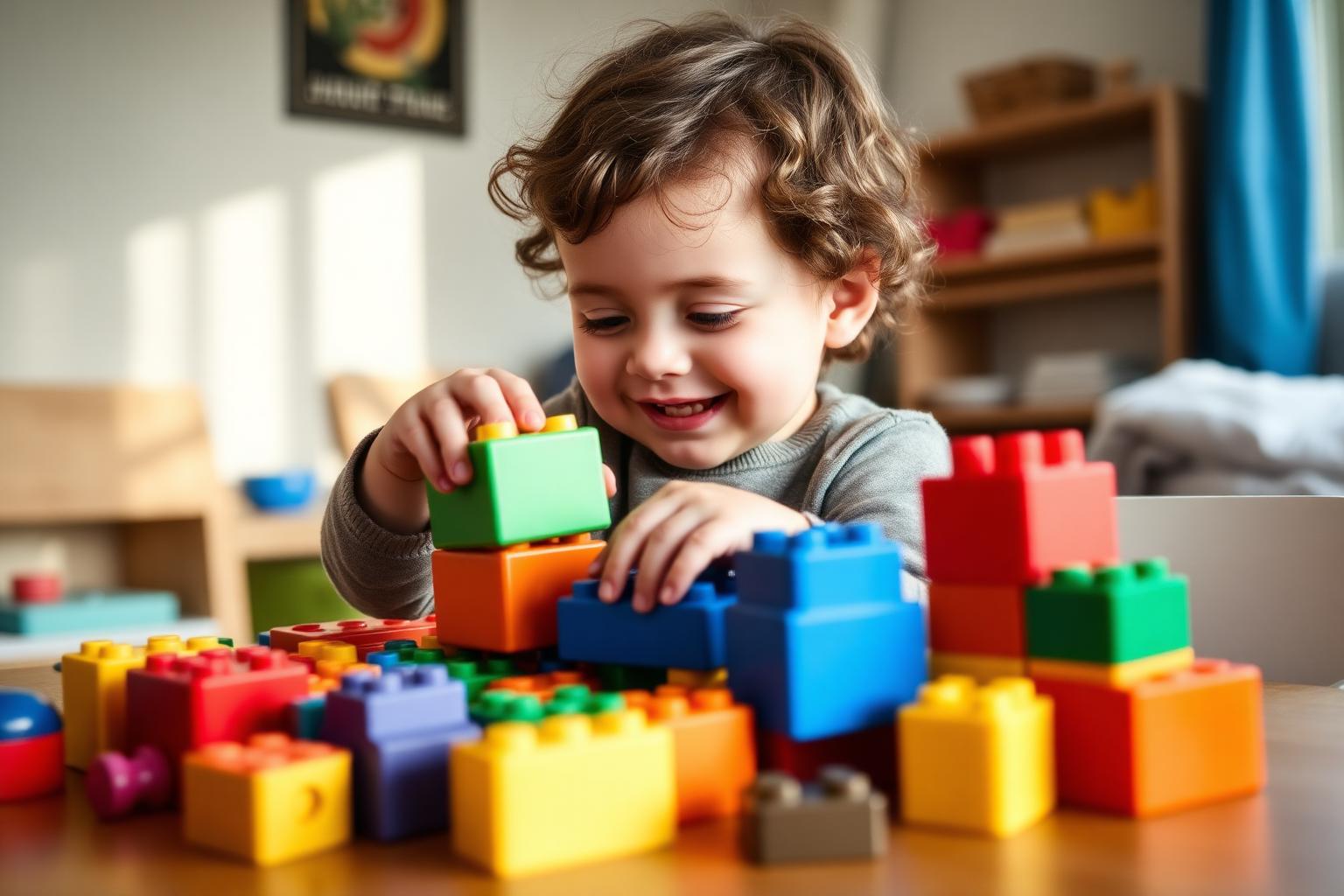
Toddlers explore with their whole hands — and often their mouths. Safety comes first here.
What to look for:
- Large, chunky pieces too big to swallow
- Rounded edges and smooth surfaces
- Bright, high-contrast colors that grab attention
- Easy clutch power — pieces that connect without a death grip
At this age, the goal isn't following instructions. It's free play. Let your toddler stack, sort by color, and topple towers. Every crash teaches something about balance and gravity.
Ages 4–5: From Stacking to Building
Around age four, hands get steadier and imaginations take off. Kids start building things that represent something — a house, a car, a dog.
What to look for:
- Medium-sized pieces that fit small hands but still challenge them
- Themed sets with recognizable subjects (animals, vehicles, houses)
- Simple picture instructions with few steps
- Minifigures or characters to spark story-based play
This is the sweet spot for pretend play. A brick-built cottage becomes the setting for an entire adventure. Encourage the storytelling — it builds language and social skills alongside dexterity.
Ages 6–8: The Instruction-Following Years
School-age kids can follow multi-step instructions and take real pride in a finished model. This is where building becomes a genuine hobby.
What to look for:
- Sets in the 100–500 piece range for a satisfying but achievable build
- Clear, step-by-step booklets with color-coded diagrams
- Themes tied to their interests — space, dinosaurs, castles, vehicles
- Sturdy finished models that survive play and display
At this stage, kids benefit from balance: some guided builds that teach patience and sequencing, plus free bricks for open-ended creation. You'll find a strong range of age-appropriate options on the Morebybourn products page, sorted so you can match complexity to your child's confidence.
Ages 9–12: Complex Builds and Original Designs
Tweens crave a challenge. They can handle intricate sets, mechanical elements, and long projects spread across several sittings.
What to look for:
- Higher piece counts (500–1,500+) for depth and challenge
- Working features — gears, hinges, moving parts
- Advanced techniques like SNOT (Studs Not On Top) building
- Display-worthy models they'll be proud to show off
Many kids this age move beyond instructions entirely, designing their own creations. This is also the age when community enters the picture — kids love sharing builds with friends or online. Choosing toy bricks for kids that connect to a wider building community gives them an audience and a source of fresh ideas.
Safety First: A Quick Age-by-Age Checklist
Safety rules shift as kids grow. Here's what matters at each stage.
Ages 2–3:
- Choose large pieces only — no small parts that fit through a toilet-paper tube
- Check for choking-hazard warnings and respect them
- Supervise all play sessions
- Inspect for cracks or broken pieces regularly
Ages 4–5:
- Smaller pieces are okay, but stay nearby
- Teach the "no bricks in mouths" rule early
- Store sets away from younger siblings
Ages 6+:
- Standard pieces are fine for most kids
- Keep tiny accessory pieces off the floor (they hurt bare feet and can be swallowed by toddlers in the home)
- Encourage cleanup habits to keep pieces out of reach of pets and babies
Always look for sets that meet CE (Europe) and CPSC (US) safety standards. Reputable makers test their plastic for toxins and display certifications clearly. When in doubt, check our support team for safety details and age guidance.
What Bricks Teach: The Real Benefits
You might wonder whether bricks are "just toys." They're far more.
- Fine motor skills. Pinching, twisting, and pressing pieces strengthens the small hand muscles kids need for writing.
- Spatial reasoning. Figuring out how pieces fit in 3D space is a foundation for math and engineering.
- Patience and focus. Longer builds train kids to stick with a task — a skill that pays off in school and life.
- Problem-solving. When a design won't stand or a piece won't fit, kids learn to test, fail, and adjust.
- Creativity. Open-ended building has no "right" answer, giving kids space to invent freely.
- Emotional resilience. A collapsed tower is a small, safe frustration to recover from. Rebuilding teaches persistence.
These aren't abstract claims. Educators use building bricks in classrooms precisely because they deliver hands-on STEM learning that engages kids who tune out worksheets.
How to Make Building Sessions More Engaging
Buying the right set is half the battle. Keeping kids interested is the other half. Try these tactics.
Build Together, Not Just Side by Side
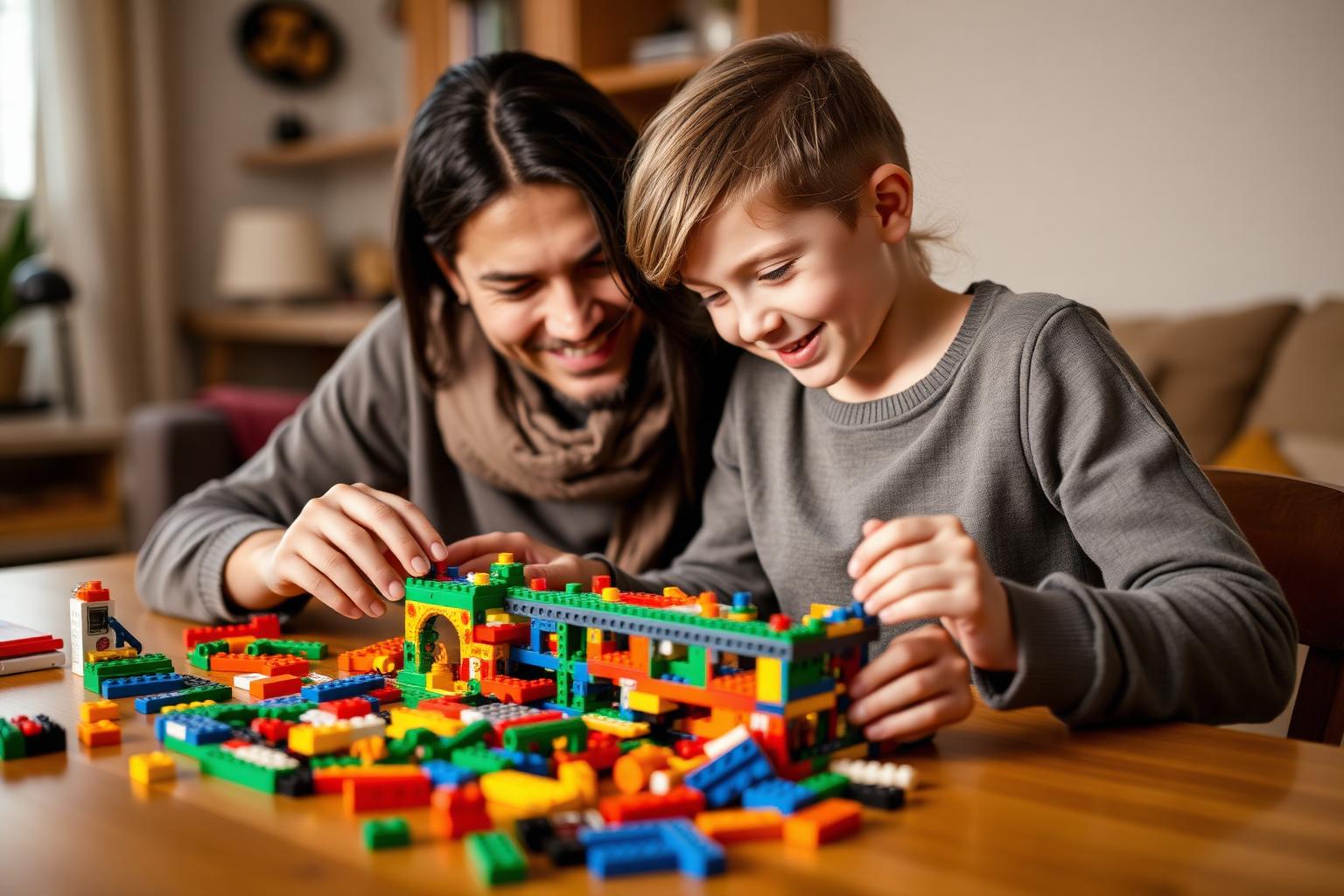
Sit down and build with your child, especially early on. Your involvement signals that the activity matters. Ask questions: "What should we add next?" "Why do you think it fell?" You're modeling problem-solving without lecturing.
Rotate, Don't Overload
Too many bricks at once can overwhelm younger kids. Keep part of the collection stored away and rotate sets every few weeks. Old pieces feel new again, and choice stays manageable. A tidy system helps — see how to organize and sort your toy bricks so rotation is effortless.
Add a Story
A model comes alive with a narrative. Who lives in the castle? Where's the spaceship headed? Story-driven play stretches a single build into an afternoon of imaginative fun.
Set Gentle Challenges
Constraints spark creativity. Try prompts like:
- Build something using only red and blue pieces
- Make a bridge strong enough to hold a toy car
- Create a creature that's never existed
Display the Finished Work
Give completed builds a shelf or windowsill spot. Seeing their creations on display makes kids feel proud and motivates the next project.
Join the Community
Older kids especially thrive on sharing. Photograph their builds, celebrate them, and — with supervision — explore online building communities for inspiration. Seeing what other young builders create fuels fresh ideas and healthy ambition.
Answering the Objections Parents Raise
"These sets look too complex for my child." Start below your child's age level and work up. A set that's slightly too easy builds confidence; one that's too hard breeds frustration. Good instructions guide kids through the tricky parts step by step.
"Aren't quality bricks expensive?" Think cost-per-hour. A well-made set delivers years of building, rebuilding, and free-play use. Pieces mix into future creations, so nothing goes to waste. Alternative brands like Morebybourn offer quality construction at a friendlier price than the biggest name brands.
"Won't they just lose interest?" Rotation, story play, and gentle challenges keep engagement high. And because bricks grow with a child, the same collection stays relevant from preschool through the tween years.
Your Quick Buying Checklist
- Age match — piece size and complexity suit your child's stage
- Safety certified — meets CE and CPSC standards
- Quality build — tight clutch power, consistent color, durable plastic
- Clear instructions — age-appropriate and easy to follow
- Room to grow — pieces work for free building later
- A theme they love — genuine interest keeps kids engaged
Choosing toy bricks for kids comes down to one idea: match the set to the child, not the box's suggested age. Start with big, safe blocks for toddlers, move to themed builds for preschoolers, guided sets for school-age kids, and complex projects for tweens. If you're still comparing makers, our guide on choosing the right toy bricks brand is the perfect next read.
Frequently Asked Questions
At what age can kids start playing with building bricks?
Children can start around age 2 with large, chunky blocks designed for little hands. At this stage, always choose oversized pieces that can't be swallowed, and supervise play closely. As fine motor skills develop, usually around age 4, kids can move to smaller, standard-sized pieces. The key is matching piece size to your child's stage rather than rushing them into sets meant for older kids.
How do I choose the right set for my child's age?
Look at three things: piece size, piece count, and instruction complexity. Toddlers need big pieces and no instructions. Preschoolers do well with medium pieces and simple picture guides. School-age kids handle 100–500 piece sets with step-by-step booklets, while tweens enjoy complex builds of 500 pieces or more. When in doubt, choose slightly below your child's age for a confidence-building win.
Are building bricks actually educational, or just entertaining?
Both. Building bricks teach fine motor skills, spatial reasoning, sequencing, patience, and problem-solving — core elements of STEM learning. Educators use them in classrooms for exactly this reason. Kids absorb these lessons through hands-on play, which means they're learning without it feeling like work. The educational value is real and backed by how widely bricks are used in early education.
Are alternative brick brands safe for children?
Quality alternative brands are safe when they meet recognized standards. Look for products certified to CE (Europe) and CPSC (US) requirements, which confirm the plastic is non-toxic and pieces meet safety guidelines. Always check the recommended age rating, since small pieces pose a choking risk for very young children. Reputable makers publish their safety testing and are happy to answer questions.
How can I keep my child interested in building over time?
Rotate sets so bricks feel fresh, add storytelling to bring models alive, and set small creative challenges to spark invention. Build alongside your child, especially when they're young, and display finished creations to build pride. For older kids, sharing builds with friends or an online community keeps motivation high. Because a good collection grows with your child, the same bricks stay engaging for years.
Order LEGO-Compatible Sets from Morebybourn
We sell LEGO alternative sets and compatible bricks for every age group — from safe starter blocks to challenging tween builds. If you would like help choosing the right set for your child, simply contact our customer service team and we will place the order for you.