How to Decode Toy Brick Names: A Builder's Guide to Every Piece in Your Collection
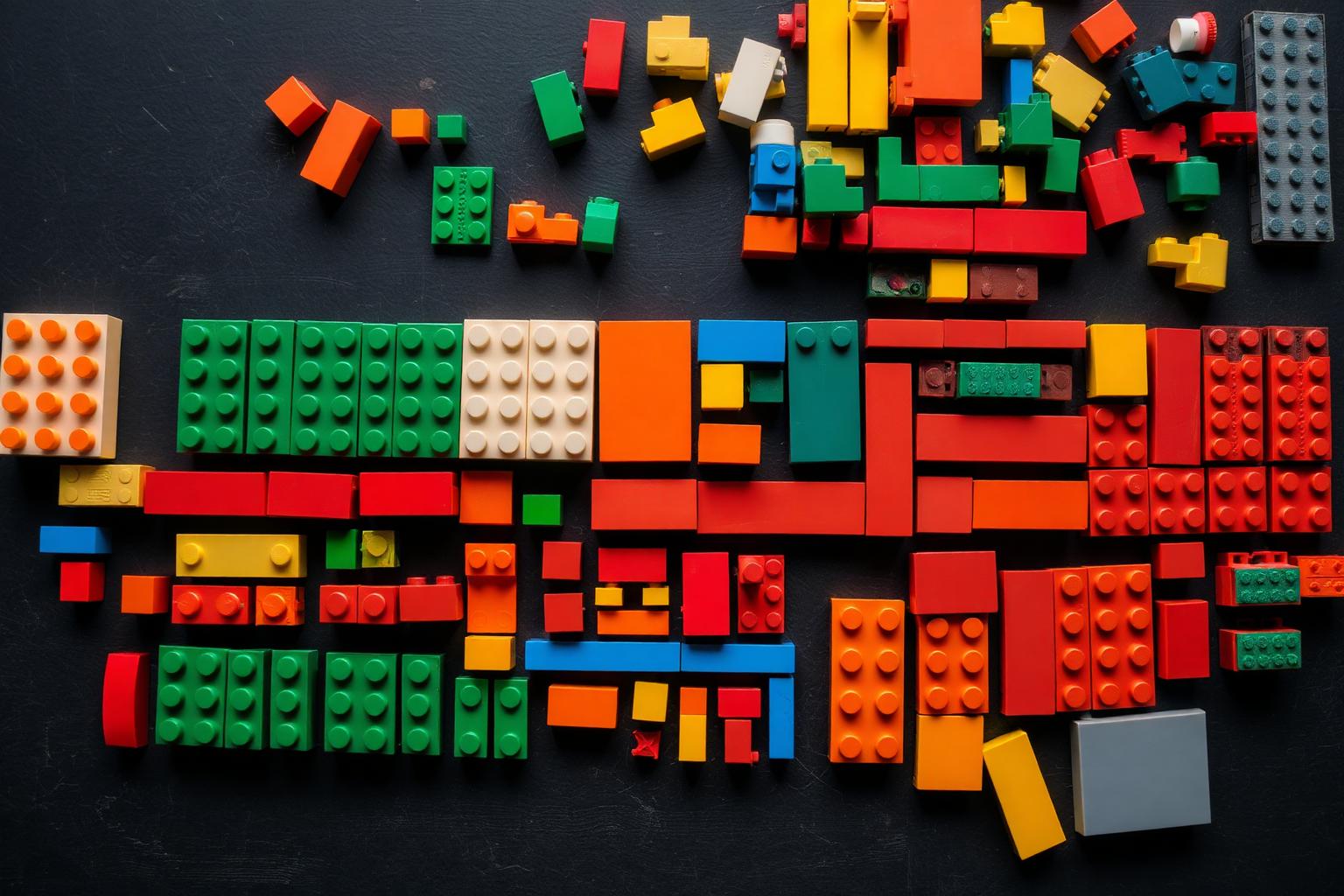
Ever opened an instruction booklet and stared at a step that says "attach the 1x2 jumper plate to the tile"? If your first thought was "the what plate?", you're not alone. Every builder hits this wall. The good news: the language of bricks is easier to learn than you think, and once it clicks, everything about building gets smoother.
This guide is for anyone who wants to stop guessing and start naming. Whether you're an adult hobbyist chasing complex models, a parent building alongside your kids, or a creator designing your own sets, knowing the correct toy bricks name for each piece changes how you shop, sort, and build.
- The core categories every brick falls into, explained in plain language
- How to identify a piece by its dimensions and shape
- A practical method for choosing the right bricks for your project
- Simple ways to tell quality pieces from disappointing ones
Why Knowing Brick Names Actually Matters
Naming pieces isn't trivia. It's a skill that saves you time and money.
When you know the correct toy bricks name, you can search product catalogs precisely, follow instructions without backtracking, and describe exactly what you need when asking the community for help. You stop buying the wrong parts. You stop hunting through a pile for twenty minutes looking for "that flat thing with one bump."
For creators designing original builds, the vocabulary is even more essential. You can't plan a mechanism or order the right quantities if you can't name the components. And for families, teaching kids the correct terms turns building into a low-key lesson in geometry and spatial reasoning. If your parts pile is still chaos, our guide on organizing and sorting your toy bricks pairs perfectly with this vocabulary lesson.
The Universal Naming System, Explained
Here's the foundation that unlocks everything: most brick names follow a simple size-then-type formula.
A piece is usually named by its dimensions first, then its category. So a "2x4 brick" is two studs wide and four studs long. A "1x6 plate" is one stud wide, six studs long, and thin. Studs are those little bumps on top — they're the universal measuring unit of the entire building world.
Once you understand that studs are the ruler, every name starts to make sense. Count the bumps across, count the bumps along, and you've already got half the name.
Try this: Pick up any piece near you right now. Count the studs on the shortest side, then the longest side. You just measured it like a pro.
The Core Brick Categories You Need to Know
Nearly every piece belongs to one of a handful of families. Learn these, and you'll recognize 90% of what's in any box.
Bricks
The classic. A brick is a solid, rectangular piece with height — the fundamental building block of walls and structures. Named by width and length: 1x1, 2x2, 2x4, and so on. If it has noticeable height and stacks tall, it's a brick.
Plates
A plate is a thinner version of a brick. Three plates stacked equal the height of one standard brick — a ratio worth memorizing, because it governs how you build precise, layered structures. Plates are your tool for fine height adjustments and strong horizontal connections.
Tiles
A tile is a plate with a smooth top — no studs. Tiles create finished surfaces: floors, roads, screens, and polished tops where you don't want bumps showing. They're the difference between a build that looks unfinished and one that looks intentional.
Slopes
Slopes are angled pieces. They create roofs, ramps, and curved surfaces. Named by their angle and footprint, slopes come in standard, inverted (angling downward), and curved varieties. Master these and your models stop looking blocky.
Specialty and Connector Pieces
- Jumper plates — a plate with a single centered stud, letting you offset pieces by half a stud
- Brackets — L-shaped pieces that let you build sideways or downward
- Clips and bars — for attaching, hinging, and posing
- Technic elements — beams, pins, and axles for working mechanisms and gears

How to Identify Any Piece in Three Steps
Stuck on an unfamiliar element? Use this quick method to name it fast.
Step 1: Count the studs. Width first, then length. This gives you the dimensions — the front half of the toy bricks name.
Step 2: Check the profile. Is it tall (brick), thin (plate), smooth (tile), or angled (slope)? This gives you the category.
Step 3: Note any special feature. Does it have a clip, a hinge, a hole, or a curve? Special features get their own descriptor added to the name.
Put those three together and you've got it: "1x2 plate with clip" or "2x2 curved slope." No guessing required. Common mistake to avoid: don't confuse plates and tiles at a glance. Both are thin, but tiles have no studs on top. Flip the piece over and check before you commit it to a build.
How to Choose the Right Bricks for Your Project
Naming is step one. Choosing well is step two. Here's how to match pieces to your goals.
Start with the structure
- Building tall, sturdy walls? You want plenty of standard bricks and plates for interlocking strength.
- Creating smooth, realistic surfaces? Stock up on tiles.
- Adding roofs, ramps, or curves? Slopes are your friend.
- Designing something that moves? You'll need Technic beams, pins, and axles.
Knowing the right toy bricks name for each need means you order exactly what your design calls for — no wasted parts, no missing links mid-build.
Match complexity to skill level
- Beginners thrive with mostly bricks and plates. Simple, forgiving, hard to get wrong.
- Intermediate builders benefit from adding tiles, slopes, and jumper plates for cleaner detail.
- Advanced creators reach for brackets, Technic parts, and specialty connectors to pull off sideways building and working mechanisms.
Think in colors and quantities
A build is only as good as its color consistency. Plan your palette before you order, and buy a few spare pieces of your key colors. Running out of a specific red halfway through a wall is a special kind of frustration. You can browse organized categories by piece type and theme in the Morebybourn product range, which makes it easy to find exactly the elements your design needs.
How to Tell Quality Bricks Apart
The name on the piece is one thing. The quality is another. Here's how to spot pieces worth building with.
- Test the clutch power. Good bricks hold firm but release without a battle. If pieces pop off on their own or refuse to separate, the tolerances are off.
- Check the material. Quality bricks use ABS plastic: durable, non-toxic, and color-stable. Cheaper pieces use softer plastic that scratches, warps, and yellows.
- Inspect the molding. Crisp studs and clean edges mean precise manufacturing. Flashing and uneven studs signal loose quality control.
- Confirm compatibility. Any brick worth buying should connect cleanly with the pieces you already own.
Quality alternatives from a brand like Morebybourn are built to universal stud specifications, so they mix seamlessly with your existing collection. For a deeper comparison, read how to choose the right toy bricks brand.
Building Your Personal Brick Vocabulary
- Learn as you build. Every time an instruction booklet names a piece, register the term. Repetition does the work.
- Sort by name. Group plates with plates and slopes with slopes. Sorting reinforces the vocabulary and speeds up every future build.
- Ask the community. Post a photo of a mystery piece and someone will name it within minutes.
- Keep a cheat sheet. Bricks, plates, tiles, slopes — the four core categories cover most of what you'll touch.
Common Naming Mix-Ups to Watch For
- Plate vs. tile. Thin with studs is a plate. Thin without studs is a tile.
- Brick vs. plate. If three of them stack to one brick's height, they're plates.
- Slope direction. A standard slope angles up; an inverted slope angles down.
- Stud count order. Width always comes before length — consistent ordering keeps your searches accurate.
Bringing It All Together
The language of bricks isn't a barrier — it's a shortcut. Once you can name what you're holding, you shop smarter, build faster, and design with real intention. The size-then-type formula, the four core categories, and the three-step identification method give you everything you need to decode any piece in any box.
Start small. Learn the difference between a brick, a plate, a tile, and a slope. Add the specialty terms as your builds grow. Then put the vocabulary to work on a real challenge with our guide to toy bricks puzzles.
Frequently Asked Questions
What is the correct toy bricks name for the small flat pieces?
The thin, flat pieces are called plates if they have studs on top, and tiles if their top surface is smooth. Both are thinner than standard bricks — three plates stacked equal the height of one brick. The easiest way to tell them apart is to flip the piece over: studs mean it's a plate, a smooth top means it's a tile. Knowing this distinction is one of the most useful pieces of brick vocabulary you can learn early.
Are brick names the same across different building brands?
Largely, yes. The core vocabulary — bricks, plates, tiles, slopes — is universal across the hobby, and the size-then-type naming formula holds true regardless of brand. Some specialty and connector pieces may carry slightly different names between manufacturers, but the fundamentals transfer directly. This shared language is exactly why quality alternative bricks built to universal stud dimensions mix so easily with pieces you already own.
How do I know which bricks I need before starting a build?
Start with what your build needs to do. Walls and structures call for bricks and plates. Smooth surfaces need tiles. Roofs and ramps need slopes. Moving parts require Technic beams, pins, and axles. Once you know the goal, matching the right toy bricks name to each need becomes simple. Planning your palette and quantities before you order also prevents running short mid-build.
Why does knowing the toy bricks name make building easier?
Because it removes guesswork at every stage. When you know the correct toy bricks name, you can search catalogs precisely, follow instructions without backtracking, order exact quantities, and ask the community for help using terms everyone understands. It turns a frustrating hunt through your parts pile into a quick, confident grab for exactly the piece you need.
Where can I get help identifying an unfamiliar piece?
Start with the three-step method: count the studs, check the profile, and note any special feature. If you're still stuck, the building community is remarkably helpful — post a clear photo and someone will name your piece fast. You can also contact the Morebybourn customer service team, who can help you identify and choose the right elements for your projects.
Order LEGO-Compatible Sets from Morebybourn
We sell LEGO alternative sets and compatible bricks — from single-part categories to complete display builds. If you need help identifying the pieces or sets you want, simply contact our customer service team and we will place the order for you.