How to Get More From Your Building Brick Sets: A Builder's Guide to Picking, Combining, Displaying, and Expanding
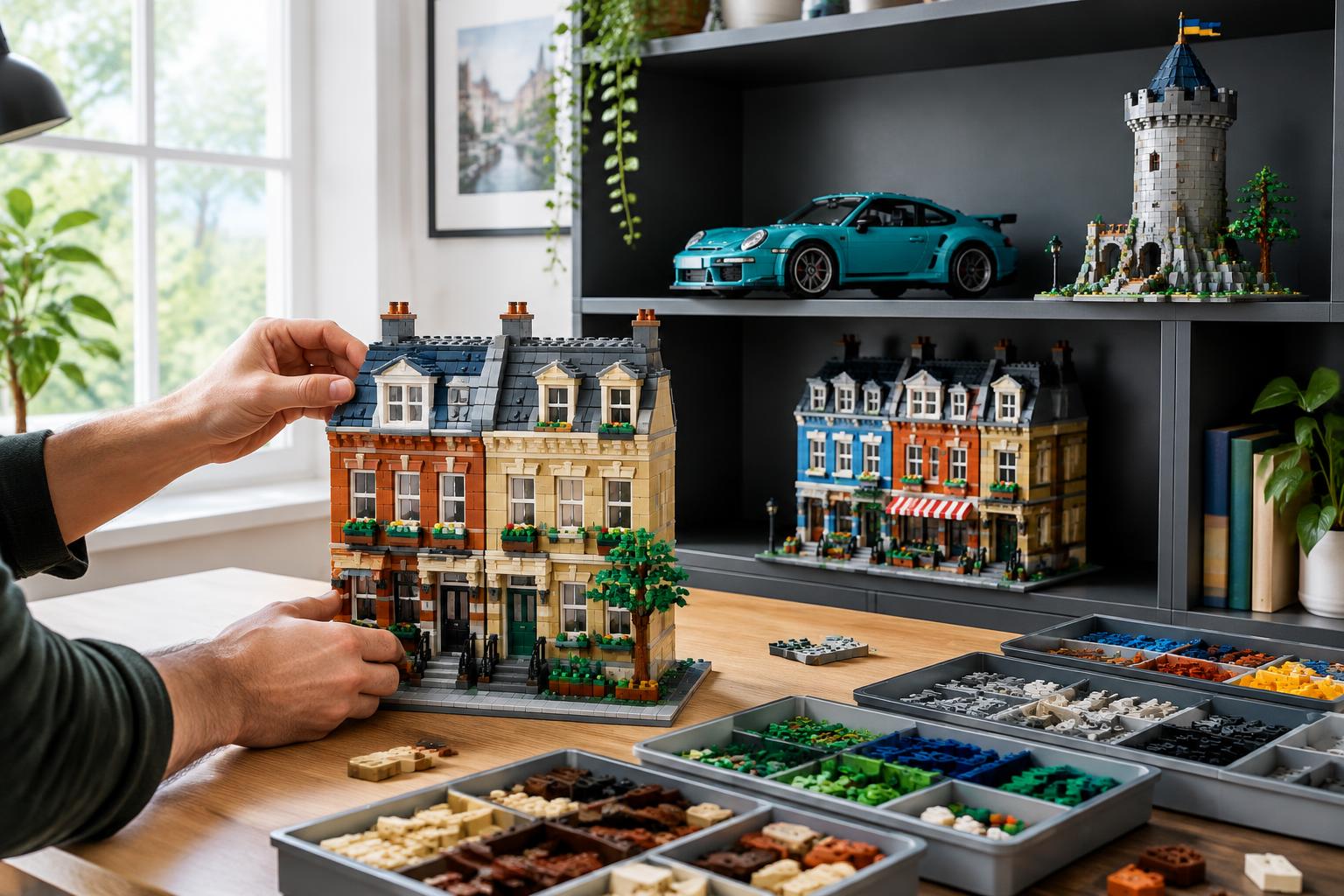
The box is open. The build is done. The model sits on a shelf.
For many adult builders, that is where the value of a set quietly ends. It shouldn't. The best building brick sets keep paying off long after the last step. They feed future builds, anchor a display, and become the parts library for your own designs.
This guide is for hobbyists, collectors, and creators in the US and Europe who want more from every box. You'll learn how to pick sets with long-term value, combine them into bigger scenes, display them so they stay sharp, and grow your collection without blowing your budget.
Decide What Your Collection Is For
Every strong collection starts with a goal. Without one, you end up with a shelf of random models and a closet of half-sorted bins.
Most adult builders fall into one of three camps. Many sit in two.
The Display Collector
You buy finished-model appeal. Detail, accuracy, and shelf presence matter most. Sets usually stay built. Limited releases and large landmark models are your sweet spot.
What to prioritize: Exterior detail, stable display posture, and a model that looks good from more than one angle.
The Parts Library Builder
You see every set as raw material. You build it once, enjoy it, then break it down for your own projects. Rare colors and useful elements matter more than the picture on the box.
What to prioritize: Useful parts, uncommon colors, and a high count of versatile pieces like plates, tiles, brackets, and hinges.
The Rotating Builder
You build to relax. You want a steady stream of satisfying builds, not a growing museum. Sets get built, displayed for a few weeks, then rebuilt or swapped.
What to prioritize: Build experience, clever techniques, and sets that are fun to assemble more than once.
Know your camp before you buy. It changes which set is the "right" one. A detailed castle can be a great buy for a collector and a poor one for a parts-library builder if most of its pieces are single-use printed elements.
How to Pick Your Next Set
Shopping for sets as an adult is different from shopping for a gift. You're not just buying a model. You're buying hours of building, shelf space, and future parts.
Ask Three Questions Before You Buy
1. Where will it live?
Measure first. A large modular building often needs a 25 cm x 25 cm (about 10 x 10 inch) footprint. Big vehicles and ships can run past 60 cm. If you don't have the space, the set ends up back in its box.
2. What will you learn from it?
Good sets teach techniques. Look at the instructions or reviews for things like SNOT building (studs not on top), offset walls, angled roofs, or working mechanical functions. A set that teaches you two new tricks is worth more than a bigger set that repeats the same stacking pattern.
3. What happens after?
Will it stay built? Will it join a larger scene? Will you part it out? A set should have a clear second life.
Read the Parts List, Not Just the Box
The piece count tells you very little. The parts list tells you almost everything.
Look for:
- Versatile elements. Plates, tiles, brackets, slopes, and Technic pins show up in almost every MOC.
- Uncommon colors. Sand green, dark tan, and dark red are harder to source in volume. A set that includes lots of them is a smart buy for creators.
- Low sticker reliance. Stickers age and peel. Printed or brick-built details hold up better on long-term displays.
- Few single-use parts. Large, specialized molds look impressive but rarely get reused.
Check How the Build Flows
Adult builders want a session that feels good, not just a good result. Search for build reviews or speed-build videos. Watch for long stretches of repetitive steps, like building twelve identical windows. Some builders love that rhythm. Others find it tedious. Know which you are.
Browsing for your next project? Compare options against these three questions in the Morebybourn range before you commit.
How to Build for Relaxation, Not Just Completion
Many adults build to switch off after a long day at a screen. The way you build changes how much stress relief you actually get.
Slow the Pace on Purpose
Racing to finish defeats the point. Set a natural stopping point before you start, like the end of a bag or the end of one floor. Stop there, even if you want to keep going. Coming back to a half-built model the next evening is part of the fun.
Build a Better Workspace
- Light: A daylight-balanced desk lamp (around 5000K) makes dark gray, black, and dark blue easy to tell apart.
- Trays: Shallow trays keep loose parts visible. Pizza-box lids work in a pinch.
- Height: Build at a table that keeps your shoulders relaxed. Long sessions add up.
Keep a Build Log
This one is simple and underrated. Snap a photo at the end of each session. Note anything you learned, like a clever hinge connection or a smart way to hide a gap. Over a year, that log becomes your personal technique library. It's also great material for community posts.
How to Combine Sets Into Something Bigger
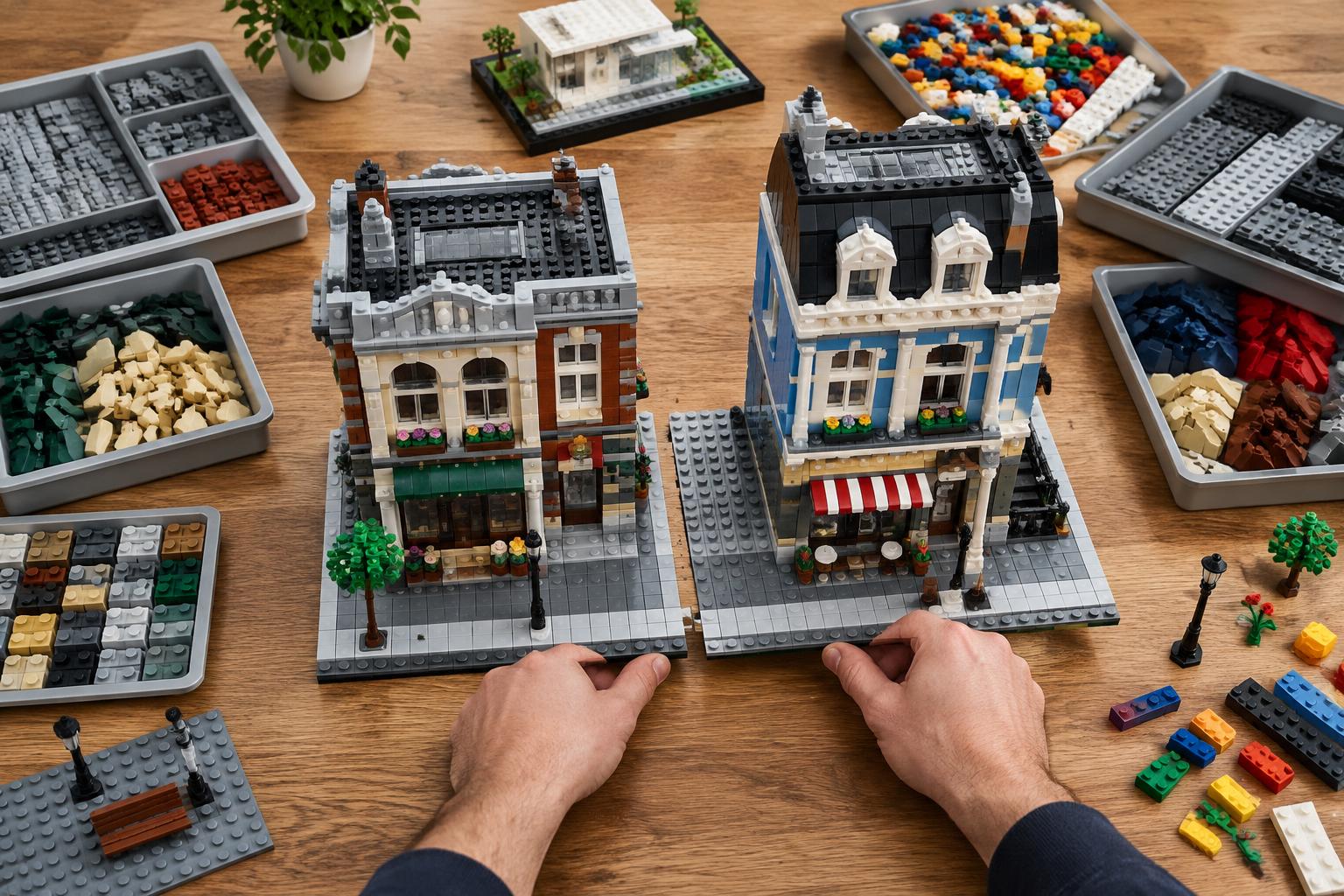
This is where a collection stops being a row of separate models and becomes a world.
Start With a Common Grid
Most city-style and modular-style building brick sets are designed around a 32 x 32 stud base. Many connect side by side using Technic pins through the outer walls. Keep that standard in mind when you plan a layout.
If your sets use different base sizes, build a simple grid of 32 x 32 sections first. Fill gaps with road plates, parks, or plazas. Suddenly, three unrelated sets look like a street.
Match Scale Before You Match Style
Mixing sets at different scales is the most common layout mistake. A minifigure-scale shop next to a micro-scale skyscraper looks off, even if both are great models.
Group your sets by scale:
- Microscale: Landmarks and skylines
- Minifigure scale: City buildings, vehicles, and street scenes
- Large scale: Display vehicles, sculptures, and display busts
Combine within groups. Display groups separately.
Unify With a Color Palette
Two sets from different themes can sit together if they share colors. Pick a base palette for your layout, like tan, dark tan, reddish brown, and dark green for a medieval village. Swap a few roof or trim pieces on each set to tie them together. Small changes, big result.
Try Kitbashing
Kitbashing means merging two or more sets into one new model. Combine a small house set and a shop set into a corner building. Merge two vehicles into one longer truck. The instructions get you 80 percent of the way. Your creativity covers the rest.
How to Display Your Sets So They Stay Sharp
A finished model can look great for years, or it can fade, gather dust, and lose pieces. The difference is how you display it.
Keep It Out of Direct Sunlight
This is the biggest threat to any display. UV light causes white and light gray building bricks to yellow over time. Bright colors like red and blue can fade. Pick a wall that never gets direct sun, or use UV-filtering film on nearby windows.
Fight Dust Early
Dust is easier to prevent than to remove.
- Acrylic display cases are the best protection for large or limited models.
- A soft makeup brush cleans detailed models without pulling parts loose.
- Compressed air works at a distance. Hold it back so you don't blow off small pieces.
- Glass-door cabinets suit collectors with many mid-size models.
For a deep clean, take sets apart and wash parts by hand in lukewarm water (below 40°C / 104°F) with mild soap. Air-dry fully. Never use a dishwasher. Heat warps ABS.
Use Height and Depth
Flat rows of models look like a store shelf. Add variety:
- Place clear risers at the back so rear models stay visible.
- Stagger models at slight angles instead of facing straight out.
- Leave space around your centerpiece. Crowding cancels out detail.
Add Lighting
LED light kits make a display look finished. Interior lights in a modular street or headlights on a vehicle change how a model reads at night. Many kits run on USB power and thread through the model with thin wires. Plan the wiring before the build, not after. It's far easier.
Label Your Collection
Small display cards with the set name, piece count, and build date add a museum-style touch. Collectors with limited editions often add the release year and edition number. It looks great and helps when you reorganize later.
How to Expand Your Collection Without Overspending
Collections grow fast. Budgets don't. A few habits keep both in balance.
Set a Monthly Build Budget
Pick a fixed amount each month. Roll unspent money into the next month for bigger purchases. This one rule stops impulse buys and makes large sets feel earned.
Keep a Wishlist With Priorities
Rank your list into three tiers:
- Must-have: LIMITED releases you'll regret missing
- Planned: Sets that fit your layout or display goals
- Someday: Nice-to-have sets you'll grab on sale
When a sale hits, check tier 2 and 3. When a limited release drops, act on tier 1 fast. Limited editions often sell out within days.
Track Your Parts Digitally
Free tools like Rebrickable and BrickLink let you log every set you own. They show which alternate models you can build with parts already on your shelf. Many builders discover dozens of new builds without buying anything.
Use Compatible Bricks for Volume
Rare colors and basic parts in bulk are where compatible brands make the biggest difference. If you need 500 dark tan plates for a desert layout, a compatible building blocks set or bulk pack stretches your budget much further. Check that the bricks connect cleanly with your existing collection, then mix freely.
Planning a bigger expansion? Explore the compatible options at Morebybourn to fill out your layout for less.
How to Turn Sets Into Your Own Designs
Every set you own is a lesson in design. Use it.
Modify Before You Create From Scratch
Jumping straight to an original MOC can feel overwhelming. Start smaller:
- Add a full interior to a building that only has a shell.
- Extend a vehicle by a few studs and add a working door.
- Swap the color scheme of a set to match your layout.
Each mod builds skills you'll need for full original designs.
Reverse-Engineer What You Like
When a technique impresses you, stop and study it. Take the section apart. Rebuild it. Try it with different parts. This is how experienced designers grow their toolkit.
Design Digitally, Then Source Parts
Free software like BrickLink Studio lets you design with unlimited virtual parts. Build your idea on screen. Export the parts list. Check what you already own, then buy only what's missing. Remember that digital builds ignore gravity. Test weak joints with real bricks before committing.
Share Your Builds With the Community
Online brick communities are one of the best parts of this hobby. Sharing your builds earns feedback, sparks ideas, and connects you with builders across the US, Europe, and beyond.
Take Better Photos
- Use a plain background. White or light gray poster board works.
- Shoot in soft, even light. Two lamps at 45-degree angles cut harsh shadows.
- Get low. Shoot at minifigure eye level for city scenes.
- Show details. Add close-ups of clever techniques. Builders love those.
Post With Context
Share the set name, any mods you made, and what you'd change next time. Build threads that show progress over several posts get far more engagement than a single finished photo.
Take Feedback Seriously
Community feedback is free design advice. If several builders suggest the same change, try it. Your next build will be better for it.
Why Builders Choose Morebybourn
Morebybourn: compatible bricks made for builders who want more from every set.
Here's what you get:
- Works with your collection. Bricks are made to connect with the standard system already on your shelf.
- Sets for every builder. Relaxing evening builds, large display models, and parts for your own designs.
- Models that hold. Consistent clutch keeps builds stable on display and during handling.
- More building for your budget. Expand layouts and fill out color palettes for less.
Whether you're adding a centerpiece to your shelf, extending a city layout, or sourcing parts for your next MOC, Morebybourn belongs on your list.
Final Thoughts
A set doesn't have to end when the build does.
Know what your collection is for. Pick sets for their parts, techniques, and second life, not just the box art. Combine models by scale and color into larger scenes. Protect your displays from sun and dust. Expand with a plan and a budget. Then use every set as a stepping stone toward your own designs.
Do that, and your building brick sets become more than models. They become a hobby that keeps growing with you.
Start your next build today!
FAQs
How do I stop white building bricks from turning yellow?
Keep them out of direct sunlight. UV light causes yellowing in white and light gray parts. Display models on a wall that doesn't get direct sun, use UV-filtering window film, or keep valuable sets in acrylic cases. Mild yellowing can't be fully reversed at home without risk, so prevention is the best approach.
Can I combine sets from different brands in one layout?
Yes. Compatible bricks are made to the same basic dimensions as standard bricks. Test a few connections first. If the clutch feels consistent, you can combine sets in one layout. Match scale and color palette so the finished scene looks unified.
What's the best way to clean a built model?
For light dust, use a soft makeup brush or compressed air held at a distance. For a deep clean, take the model apart and wash parts by hand in lukewarm water below 40°C (104°F) with mild soap. Let everything air-dry fully before rebuilding. Never use a dishwasher or hot water.
Should I keep my sets built or take them apart?
It depends on your goal. Display collectors keep favorite and limited sets built. Parts-library builders take most sets apart for new projects. Many builders do both: they keep a few centerpieces on display and rotate the rest. Keep instructions and a parts list for every set so you can always rebuild.
How can I build original models without buying lots of new sets?
Log your current sets in a free tool like Rebrickable to see which alternate builds you can make with parts you already own. Design ideas in BrickLink Studio, then buy only the missing parts. Bulk compatible bricks are a cost-effective way to fill gaps in common pieces and colors.
Explore our Best Lego Alternatives guides, read our Building Blocks for Kids, and use our compatible bricks comparison before choosing your next set.
Order LEGO Alternatives From Morebybourn
We sell LEGO alternative sets and compatible bricks for families, hobbyists, and collectors. Browse our available sets, contact our customer service team, or message us on WhatsApp for recommendations and help placing your order.
Order LEGO-Compatible Sets from Morebybourn
We sell LEGO alternative sets and compatible bricks for families, hobbyists, and collectors. Contact our customer service team for personal recommendations and help placing your order.