How to Choose Building Blocks for Kids: A Practical Age-by-Age Guide
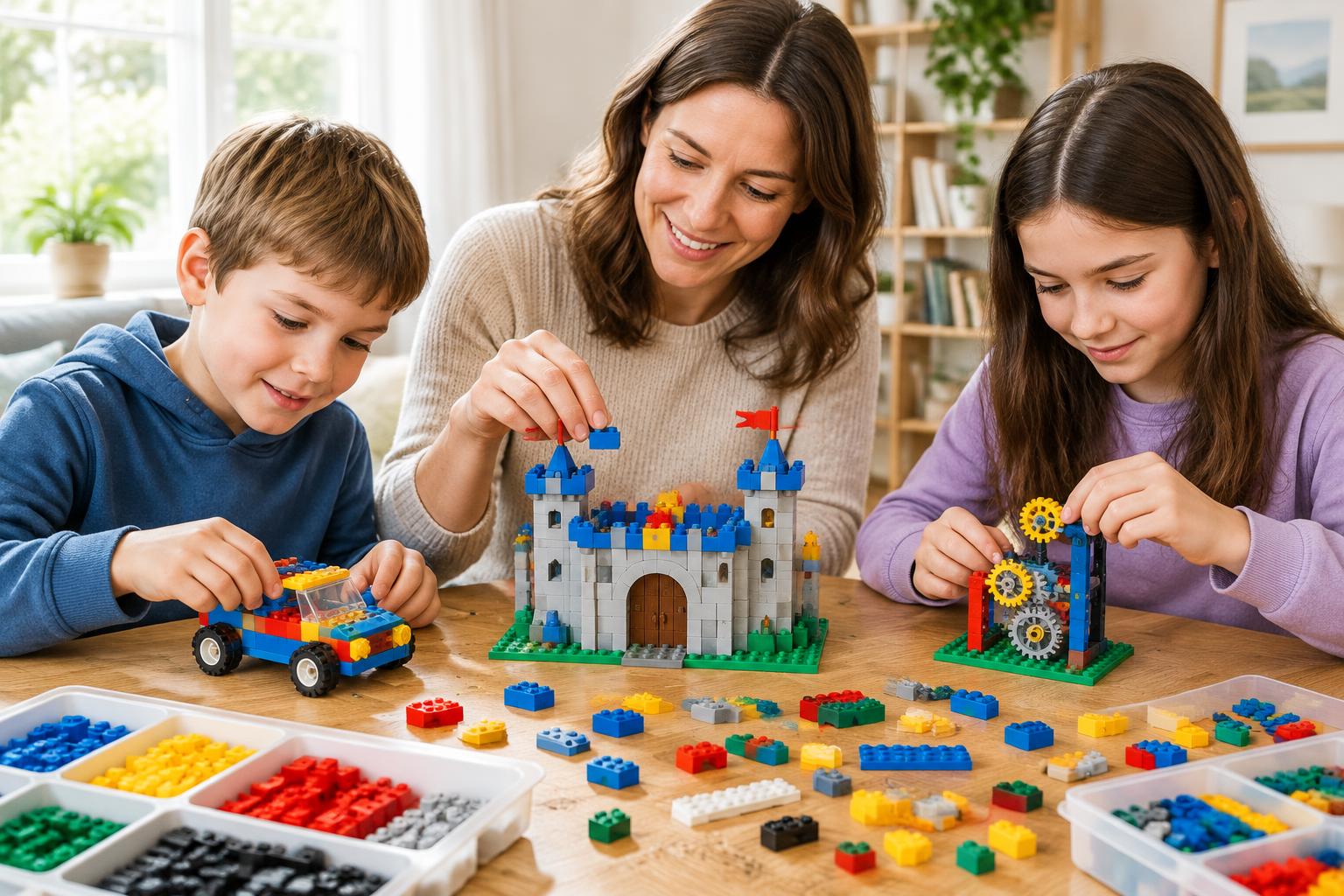
Most bad toy purchases share one problem. The set didn't match the child.
A 6-year-old gets a 1,200-piece model and quits at bag two. A 12-year-old gets a "beginner" kit and finishes it before dinner. Both boxes end up in the closet. Choosing building blocks for kids isn't about the biggest box or the flashiest picture. It's about fit: the right size, the right challenge, and the right kind of play.
This guide walks you through the whole process, from reading a child's play style to testing brick quality at home. Here's what you'll get:
- An age-by-age breakdown of piece counts and complexity
- A 5-minute quality check you can run on any set
- How to mix compatible bricks with the collection you already own
- Simple ways to turn one set into weeks of building
Parents, teachers, and adult builders shopping for the next generation will all find something to use. Let's start with the child, not the box.
Step 1: Start With the Child, Not the Box
Before you look at a single product page, spend a few days watching how the child plays. Kids tell you exactly what they need. You just have to notice it.
Identify Their Play Style
Most kids lean toward one of these four styles:
- The Stacker. Builds tall, knocks it down, builds again. Cares about speed, not detail.
- The Storyteller. Builds a house, then spends an hour acting out what happens inside. Needs figures, vehicles, and scenes.
- The Engineer. Wants things that move, spin, or open. Asks "how does this work?" a lot.
- The Finisher. Follows instructions page by page and wants the model to look exactly like the box.
A Storyteller gets bored with a detailed static display model. An Engineer gets bored with a dollhouse. A Finisher gets frustrated with a loose tub of random bricks and no plan.
Match the set to the style. Then match it to the age.
Read Age Ratings the Right Way
The age on the box does two jobs. It's a safety rating and a complexity rating. Treat them differently.
The safety part is not flexible. Sets with small parts carry choking-hazard warnings for children under 3. In the US, that warning is required by federal law. In Europe, the EN 71 standard sets the rules. If there's a toddler in the house, the age rating applies to the whole home, not just the child the set was bought for.
The complexity part is a guide. A confident 7-year-old who already builds a lot can often handle an "8+" set. A 10-year-old new to bricks can start happily with a "6+" set. Go by experience, not birthdays.
Once you know the play style and the real skill level, you're ready to narrow down the options.
Step 2: Match the Set to the Age and Stage
Here's a practical breakdown. Piece counts below are starting points from hands-on experience, not hard limits.
Ages 5–7: Big Wins, Short Sessions
Kids at this age want results fast. Focus attention runs 15 to 30 minutes for most.
Look for:
- 100 to 300 pieces
- Builds split into small bags or stages
- Large, clear instruction pages with one or two steps per page
- Models that can be played with once finished (cars, animals, small houses)
Skip: Fragile details, long instruction books, and sets where nothing looks "done" until the last page.
A good first set gives the child a finished thing in one sitting. That feeling of "I made this" is what brings them back.
Ages 8–10: Real Projects Begin
This is when many kids get serious. They can follow longer instructions, and they start remixing models on their own.
Look for:
- 300 to 800 pieces
- Simple moving parts: hinges, wheels, opening doors
- Themes they already love, like space, vehicles, animals, or castles
- Building block sets that can be rebuilt into two or three alternate models
At this stage, a set with a working function teaches more than a bigger static one. A crane that actually lifts beats a crane that just sits there.
Ages 11–14: Challenge Is the Point
Older kids want sets that feel grown-up. Many will happily spend a full weekend on one build.
Look for:
- 800 to 2,000+ pieces
- Gears, axles, and mechanical functions
- Display-worthy models: architecture, detailed vehicles, modular buildings
- Advanced techniques like SNOT (studs not on top) that make models look sharper
This is also the age where kids start designing their own models. Mixed bulk bricks and specialty parts become as valuable as boxed sets.
Teens, Parents, and the Whole Family
Some of the best builds happen when a parent and child work on the same set. A large modular building or a technical vehicle splits naturally between two builders. One sorts and finds parts. The other builds. Swap every bag.
Adult builders who already love bricks have an advantage here. You know what good clutch feels like. You know how instructions should read. Use that knowledge in the next step.
Step 3: Run a 5-Minute Quality Check
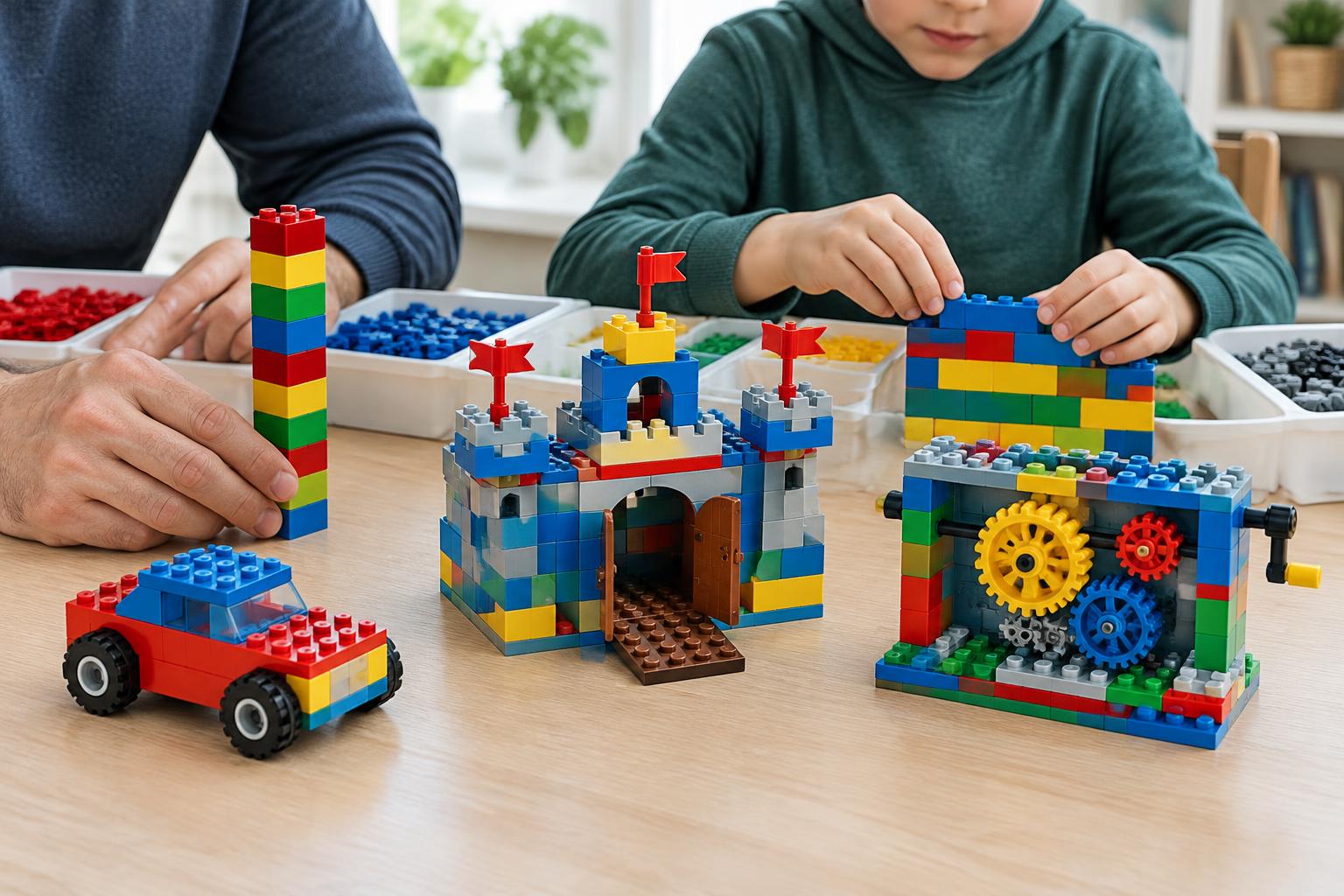
Not all bricks are made equal. A low-quality set ruins the build no matter how good the design is. Run this check when a set arrives, ideally before the child opens it.
The Clutch Test
Press two 2x4 bricks together. They should snap with a firm click and hold. Pull them apart. It should take effort, but a 6-year-old should still manage it.
- Too loose: Models fall apart when lifted.
- Too tight: Kids can't separate parts and give up. Small fingers get sore.
The Stack Test
Stack 8 to 10 bricks in a column. Look at it from the side. It should stand straight. A lean means the molding is inconsistent.
The Color Check
Hold bricks of the same color next to each other under daylight. They should match. Mismatched shades of the same color point to poor quality control.
The Edge and Smell Check
Run a finger along the edges. No sharp flash (leftover plastic from molding). Open the bags and take a sniff. Good ABS plastic has almost no smell. A strong chemical odor is a warning sign.
The Instruction Check
Flip through the booklet. Ask yourself:
- Can you tell which part goes where without squinting?
- Are colors easy to tell apart on the page (dark gray vs. black is a common trouble spot)?
- Does each step show what's new?
Poor instructions cause more quit-moments than hard builds do.
Know the Safety Marks
Look for these on the packaging:
- Europe: CE mark, showing conformity with EN 71 toy safety rules
- UK: UKCA or CE mark
- US: Compliance with ASTM F963 and CPSIA requirements
A brand that sells into these markets should state compliance clearly. If you can't find it, ask.
Want to see what a quality-first approach to building block sets looks like in practice? Browse the range at Morebybourn and compare the details against this checklist.
Step 4: Mix Compatible Bricks With Your Existing Collection
Most families already own a bin of bricks. Good news: compatible building blocks are designed to work with the system you already have.
How Compatibility Works
Standard bricks share the same basic dimensions. The distance between studs, the height of a brick, and the height of a plate are all fixed. When a compatible brand matches these measurements closely, the pieces snap together with your existing collection.
Test Before You Mix Everything
Before dumping a new set into the family bin, run a quick test:
- Take a new 2x4 brick and attach it to an old one from your bin.
- Check the clutch. It should feel the same as two old bricks together.
- Build a small wall mixing old and new bricks, about 6 rows high.
- Lift the wall by its top row. Nothing should fall off.
If it passes, mix freely. Your child just doubled the number of possible builds.
Why This Matters for Creative Kids
A child who designs their own models needs variety. Compatible bricks give them more colors, more specialty parts, and more volume for the same budget. Your MOC-loving 11-year-old will notice the difference right away.
Step 5: Choose Sets That Teach Something
Bricks are one of the best hands-on learning tools around. You don't need a "STEM" label on the box to get STEM value. You need the right kind of build.
Skills Different Sets Build
- Following instructions: Sequencing, attention to detail, spatial reasoning
- Mechanical sets: Gears, gear ratios, levers, and how motion transfers
- Architecture sets: Symmetry, load-bearing structure, proportion
- Free building: Problem-solving, planning, and testing ideas
Simple STEM Activities at Home
Try these with any set:
- The bridge challenge: Build a bridge between two books. Add coins one at a time. How much weight before it breaks? Rebuild and try again.
- The gear swap: On a set with gears, swap a small gear for a large one. Does the output spin faster or slower? Why?
- The tower test: Who can build the tallest tower that survives a light table bump?
Each one takes 20 minutes. Each one teaches a real concept.
Tips for Teachers and Educators
Classroom bricks need to survive heavy use. A few tips:
- Pick sets with sturdy core structures, not fragile details.
- Buy extra common parts. Pieces go missing in every classroom.
- Use sorting trays so groups don't waste time searching.
- Set a clear goal for each session, like "build a vehicle that rolls one meter."
Good building blocks for kids in a classroom make abstract ideas concrete. Kids remember what they built far longer than what they read.
Step 6: Plan the Build Session
How you build matters as much as what you build. A little structure keeps the session fun, especially with younger kids.
Set Up the Space
- Use a table, not the carpet. Carpet eats small parts.
- Lay down a light-colored tray or towel. Dark parts are easier to see.
- Keep a small bowl for parts from the current bag only.
Follow This Session Plan
- Sort first. Spend five minutes sorting the bag by color or shape. Younger kids love this job.
- Assign roles. One person finds parts. One person builds. Switch each bag.
- Build one bag at a time. Don't open the next bag until the current one is done.
- Set a stop point. End at a finished section, not halfway through a step. It makes the next session easy to start.
- Snap a photo. Take a picture at each stage. Kids love seeing their progress.
Handle Frustration Early
When a child gets stuck, don't take over. Ask questions instead:
- "What's different between your build and the picture?"
- "Can you count the studs on that piece?"
- "Which step was the last one that looked right?"
Most mistakes happen two or three steps back. Teaching kids to retrace their steps is a skill they'll use far beyond bricks.
Step 7: Store and Sort So Bricks Get Used
A mountain of mixed bricks looks exciting. In practice, kids stop building because they can't find anything.
Storage That Works by Age
- Ages 5–7: One or two large bins. Sort by color, not shape. Simple wins.
- Ages 8–10: Drawers or tackle boxes sorted by type (bricks, plates, wheels, special parts).
- Ages 11+: Detailed sorting by part type and size. Serious builders want to find a 1x2 tile in seconds.
Keep Finished Models Safe
- Give each finished display model a "home" on a shelf.
- Keep instructions in a binder or folder labeled by set.
- Store spare parts in a labeled zip bag with each set.
When kids want to rebuild a favorite model, everything is ready. No hunting, no frustration.
Step 8: Get More Value From Every Set
The best building block sets keep giving long after the first build. Here's how to stretch every box.
Run Remix Challenges
Once a set is built, break it down and challenge your kids:
- Build something new using only the parts from this set.
- Build the same model, but twice as tall.
- Build a vehicle for the figures from a different set.
- Build a scene from a favorite book.
Share With the Community
Older kids and adult builders love seeing what others make. Online brick communities are full of builders sharing photos, techniques, and original designs. Posting a finished build is a big confidence boost for a young builder. It's also where many kids discover new techniques and get inspired for their next design.
Always supervise younger kids online, and share photos without personal details.
Rotate Sets
Put some sets away for a month. When they come back out, they feel new again. This works especially well during school holidays.
Step 9: Budget Smarter
Bricks can get expensive. A few habits keep spending under control without cutting the fun.
Don't Rely on Price Per Piece Alone
Price per piece is a useful starting point, but it can mislead. A set full of tiny 1x1 plates looks like great value but builds very little. A set with large specialty parts, figures, or lights costs more per piece for good reason.
Look at the finished size, the build time, and how many ways it can be rebuilt.
Time Your Purchases
- Holiday seasons and birthdays are the obvious buying windows.
- New releases often push older sets into sales.
- Limited editions sell out fast. If a collector's set fits your plans, don't wait.
Build a Balanced Collection
A healthy home collection includes:
- A few instruction-led sets for skill building
- A bulk bin of basic bricks for free creativity
- One "big project" set for school holidays or family weekends
This mix covers every play style and every mood.
Why Families and Builders Choose Morebybourn
Morebybourn focuses on compatible bricks. That focus shows up where it matters most: fit, clutch, and build quality.
Here's what you get:
- Compatibility you can trust. Bricks are made to work with the collection already in your home.
- Sets for every stage. From first builds for younger kids to large, detailed models for teens and adults.
- Builds that hold. Consistent clutch means models stay together during play and on display.
- Value for families. More building for your budget, so collections grow faster.
Whether you're shopping for a 6-year-old's birthday, stocking a classroom, or picking your own next big project, start at Morebybourn.
Final Thoughts
The right building blocks turn into hours of focused, screen-free building. The wrong ones end up in the closet.
Start with the child's play style and real skill level. Match piece count and complexity to their stage. Run the 5-minute quality check on every new set. Mix compatible bricks into your collection to expand what kids can create. Then add structure to build sessions, storage, and remix challenges so every set keeps delivering.
Your next step is simple. Watch how your child plays this week, pick one set that fits, and build it together.
Find your next build at Morebybourn!
FAQs
What age is best to start with building blocks?
Most kids are ready for standard-size bricks around age 5. Younger children should use larger blocks designed for toddlers, because standard bricks contain small parts that are a choking hazard for kids under 3. The age rating on the box applies to every child in the home.
Are compatible bricks safe for kids?
Yes, when they meet the right safety standards. In Europe, look for the CE mark and EN 71 compliance. In the US, look for ASTM F963 and CPSIA compliance. Always check the age rating and follow small-parts warnings.
How many pieces should a set have for my child?
As a starting point: 100 to 300 pieces for ages 5–7, 300 to 800 for ages 8–10, and 800 or more for ages 11–14. Adjust based on experience. A child who builds often can move up faster.
Can I mix compatible bricks with my existing collection?
Yes. Compatible bricks are designed to match standard brick dimensions. Test a few pieces with your current bricks first. If the clutch feels the same and a small mixed wall holds when lifted, you can combine them freely.
How do I keep my child interested in building?
Rotate sets, run remix challenges, and build together. Store parts so they're easy to find. Celebrate finished builds with a photo or a spot on the shelf. Kids keep building when it feels rewarding and easy to start.
Explore our Best Lego Alternatives guides, read our Building Brick Sets Guide, and use our compatible bricks comparison before choosing your next set.
Order LEGO Alternatives From Morebybourn
We sell LEGO alternative sets and compatible bricks for families, hobbyists, and collectors. Browse our available sets, contact our customer service team, or message us on WhatsApp for recommendations and help placing your order.
Order LEGO-Compatible Sets from Morebybourn
We sell LEGO alternative sets and compatible bricks for families, hobbyists, and collectors. Contact our customer service team for personal recommendations and help placing your order.