Choosing the Right Plastic Building Blocks: A Parent's Guide to Brick Building Sets in 2026
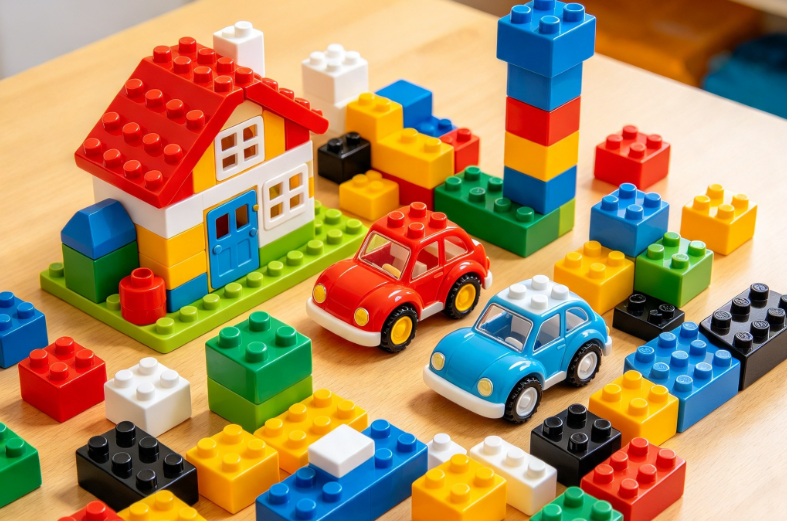
Few toys have proven as resilient as plastic building blocks. While screens and short-lived fads come and go, a bin of interlocking bricks still pulls kids away from tablets and into hours of focused, hands-on creativity. That staying power isn't an accident. Building toys tap into something screens can't replicate: the satisfaction of making something real with your own hands, then taking it apart and making something else.
For parents and hobbyists shopping across Europe and North America, though, the sheer number of options on the market has made choosing a set far more complicated than it used to be. Walk through any toy aisle, or scroll through any online store, and you'll find dozens of brands claiming to offer the same experience as the market leader at a fraction of the price. Some genuinely deliver. Others cut corners in ways that aren't obvious until the box is already open.
This guide breaks down what actually separates a good set from a disappointing one, how to evaluate alternatives to the big-name brands, and how a smaller label like Morebybourn fits into that picture. By the end, you'll have a practical way to compare sets rather than relying on marketing copy or packaging alone.
Plastic Building Blocks vs. Plastic Building Bricks vs. Brick Building Sets: What's the Difference?
Before comparing products, it helps to get the terminology straight, since these terms are often used interchangeably but don't always mean exactly the same thing.
Plastic building blocks is the broadest term, covering any interlocking plastic piece designed for construction play. This includes everything from oversized blocks meant for toddlers to the smaller, more detailed pieces found in advanced sets for older kids and adults.
Plastic building bricks typically refers more specifically to the classic rectangular, stud-and-tube style pieces most people picture when they think of this category. These are the standard units that make up the bulk of most construction sets, and compatibility between brands often hinges on whether their bricks share the same stud dimensions.
A brick building set, meanwhile, is the packaged product itself: a specific collection of bricks, specialty pieces, and instructions designed to build one or more particular models. A set might include hundreds of individual building bricks, plus wheels, hinges, or minifigures, all boxed together around a theme like a vehicle, a building, or a fictional scene.
Understanding this distinction matters when you're comparing products online, since some listings use these terms loosely. A product described as "building blocks" might actually be a toddler-focused set with oversized pieces, while something labeled a "brick set" could be aimed at teenagers or adult hobbyists. Reading the fine print on piece size and recommended age saves a lot of returned packages.
Key Features to Look For When Choosing Brick Building Sets
Once you know what you're shopping for, the real work is comparing sets against a consistent set of criteria. Here's what actually makes a difference once the box is opened at home.
Piece size relative to age. Standard-size bricks are generally appropriate from around age 6 upward, while sets for younger children should use larger, chunkier pieces to reduce choking risk and ease frustration. Don't rely solely on the age printed on the box; check a few photos of the actual pieces if you're shopping online.
Build complexity and instructions. A good set should challenge a child without overwhelming them. Instructions that are clearly illustrated, step-by-step, and free of ambiguous diagrams make a measurable difference in whether a child finishes a build independently or gives up halfway through.
Piece quality and clutch power. "Clutch power" is a term enthusiasts use to describe how firmly pieces snap together and hold. Cheaper bricks can feel loose or wobbly, which makes builds collapse mid-construction and leads to frustration fast. Quality plastic should snap together with a satisfying click and stay put.
Compatibility with existing collections. If your child already owns a shelf of building toys, checking whether a new set's bricks are dimensionally compatible with what they already have can meaningfully extend the value of both collections.
Safety certification. This is non-negotiable regardless of brand or price point. In the EU, look for the CE mark and compliance with EN71 toy safety standards. In the US and Canada, confirm ASTM F963 compliance. Reputable manufacturers list these clearly on packaging or product pages, and if a listing doesn't mention certification at all, that's worth treating as a red flag.
Replay value. The best sets don't end once the pictured model is finished. Look for sets that lend themselves to reconfiguration, or that include enough general-purpose pieces to support original builds once the "official" model has been assembled and admired.
How to Compare LEGO Alternatives Like Morebybourn
LEGO remains the household name in this category, and for good reason: decades of consistency have earned it trust. But the quality gap between LEGO and its competitors has narrowed considerably, and brands like Morebybourn have carved out a loyal following by delivering comparable building experiences at a more approachable price.
The first thing worth checking when evaluating any alternative brand is piece compatibility. Many manufacturers, Morebybourn included, design their plastic building bricks to match standard stud dimensions, which means a child's existing collection doesn't become obsolete the moment a new brand enters the mix. This matters more than it might initially seem, since it lets families mix and match across brands without starting over from scratch every time they add to a collection.
From there, consider the design philosophy. Some manufacturers lean heavily on licensed sets tied to movies, games, or franchises, which can be appealing but often come at a licensing premium. Others focus on original, open-ended designs that encourage kids to build their own creations rather than simply replicate a picture on a box. If your child enjoys inventing more than following instructions to the letter, that distinction is worth weighing carefully.
Price-to-value ratio tends to be where smaller brands have a real edge. Without the overhead of major licensing deals or blockbuster marketing campaigns, companies like Morebybourn can often offer similar piece counts and build complexity at a noticeably lower cost per set. You can browse a full range of options directly through the Morebybourn product catalog to see how pricing stacks up across different sizes and themes.
Finally, don't underestimate the value of responsive customer support and an active community. A brand that answers questions quickly, publishes clear building guides, and maintains an engaged base of hobbyists and parents tends to offer a noticeably better ownership experience than one that disappears after the sale is made.
Step-by-Step: Choosing the Right Set for Your Child
With those evaluation points in mind, here's a practical sequence to follow when narrowing down your final choice.
Step 1: Identify the purpose. Is this set meant for open creative play, a specific interest like vehicles or castles, or a more structured, puzzle-like challenge? Getting clear on the goal narrows the field quickly and prevents impulse buying based on box art alone.
Step 2: Match the set to current skill, not printed age. A child who's been building for years may find an age-matched set too simple, while a true beginner might do better starting a notch below their age bracket. Watch how your child plays rather than defaulting to the label.
Step 3: Verify certifications before adding to cart. Confirm the set meets the relevant safety standard for your region, whether that's EN71 in Europe or ASTM F963 in North America, and skim a handful of reviews for recurring complaints about missing pieces or fragile components.
Step 4: Weigh long-term value over sticker price. A slightly pricier set with higher piece quality and stronger clutch power often outlasts a cheaper one that falls apart after a few builds. Factor in how often the set will realistically be rebuilt.
Step 5: Compare across two or three brands before deciding. It's worth taking five extra minutes to check alternatives rather than settling on the first listing that appears. A visit to the Morebybourn new releases page is a reasonable place to start that comparison.
Step 6: Buy with room to grow. If a child shows strong interest in a particular theme, consider starter sets that can be expanded later with add-on packs, rather than isolated one-off purchases that can't be built upon.
Following this sequence turns what can feel like an overwhelming decision, especially during birthday season or the holidays, into a manageable, five-minute process.
How to Get the Most Out of Plastic Building Bricks Once You've Bought Them
Choosing the right set is only half the job. How a family actually uses and stores these toys has a surprising amount of influence on how much long-term value they deliver.
Set up a dedicated building space, even if it's just a tray or a designated bin on a shelf. Lost pieces are one of the single biggest reasons building sets get abandoned early, and a consistent storage habit prevents that slow decline in usability.
Resist the urge to treat the instruction booklet as the finish line. Once the pictured model is complete, challenge your child to take it apart and build something entirely their own using the same pieces. This one habit does more to extend the lifespan of a set than almost anything else you can do.
Sort pieces by type or color if your child is old enough to appreciate the system. It sounds like a small thing, but it meaningfully speeds up future builds and reduces the frustration of hunting through a mixed pile for one specific piece.
Rotate sets rather than leaving everything out permanently. Children often rediscover genuine enthusiasm for a set that's been tucked away for a few weeks, which can stretch the value of your investment without requiring a single new purchase.
Finally, consider combining pieces across multiple sets once a collection grows. Mixing specialty pieces from different themed sets, assuming the bricks are compatible, often leads to the most imaginative and unexpected builds of all.
Morebybourn Spotlight: Top Picks for 2026
For families specifically exploring Morebybourn as an alternative to the bigger names, a few standout lines are worth a closer look heading into 2026.
The brand's vehicle-focused sets have earned attention for pairing straightforward assembly with genuinely functional details, giving kids the satisfaction of building something that rolls or moves rather than just sitting on a shelf. These tend to resonate especially well with builders aged 7 and up who want more than a static display piece.
Morebybourn's architecture-inspired range takes a different approach entirely, favoring precision and patience over speed. These sets suit older children, teens, or adult hobbyists looking for a slower, more meditative building session, and the sturdier piece construction tends to hold up well for display afterward.
For the youngest builders, Morebybourn's beginner kits use larger, simplified pieces that reduce frustration while still delivering the payoff of a finished model. These make a sensible entry point before a child graduates to standard-size bricks.
Across every category, the consistent thread is reliability: clear instructions, compatible sizing, and builds that genuinely invite a second or third attempt. The full current lineup is viewable through the Morebybourn collection page, making it easy to compare specific sets side by side before settling on one.
If you've worked through the comparison points above and you're now ready to narrow things down to an actual purchase, whether for an upcoming birthday or ahead of the holiday rush, that research puts you in a solid position to pick a set with real staying power rather than one that gets abandoned in a closet by spring.
Frequently Asked Questions
What age should a child be before starting with plastic building blocks?
Most standard-size brick sets are appropriate from around age 6 upward, though simplified versions with larger pieces are available for children as young as 2 or 3. Always check the specific piece dimensions rather than relying solely on the age printed on the box.
Are Morebybourn bricks compatible with other major brands?
Morebybourn designs its pieces to standard stud dimensions, which generally allows them to connect with other major building brick systems. That said, it's worth double-checking individual product listings, since compatibility can vary slightly for specialty or uniquely shaped pieces.
How can I tell if a brick building set is actually safe for my child?
Look for region-appropriate safety certification: the CE mark and EN71 compliance in the EU, or ASTM F963 compliance in the US and Canada. These certifications confirm the product has been tested for choking hazards, material toxicity, and structural durability.
Is it worth paying more for a big-name brand instead of an alternative like Morebybourn?
Not necessarily. Many alternative brands offer comparable build quality, safety certification, and piece compatibility at a noticeably lower price, since they don't carry the same licensing fees or marketing budgets as the market leader. Comparing specific sets side by side is a far more reliable approach than assuming a higher price automatically means better quality.
What's the best way to keep a large collection of building bricks organized?
Sorting by piece type, size, or color in labeled bins tends to work best for larger collections, especially once bricks from multiple sets start getting mixed together. A simple storage system saves significant time during future builds and helps prevent pieces from getting lost or thrown away by accident.
Keep Exploring
Read our companion guide, How to Choose and Use Classic Building Bricks: A Complete Guide for Parents and Hobbyists, compare age picks in How to Choose Building Blocks for Kids, plan a growing collection with Building Toys for Kids: One System From Age 3 to 12, check brands in our compatible bricks comparison guide, and browse more picks in Best Lego Alternatives.
Order LEGO Alternatives From Morebybourn
We sell LEGO alternative sets and compatible bricks for kids, families, and adult builders. Want to order? Browse our available sets, contact our customer service team, or message us on WhatsApp and we'll help you place your order.
Order LEGO-Compatible Sets from Morebybourn
We sell LEGO alternative sets and compatible bricks for families, hobbyists, and collectors. Contact our customer service team for personal recommendations and help placing your order.