Your Complete Toy Bricks Comparison Guide: Find the Best LEGO Alternative
Quick answer: A toy bricks comparison evaluates build quality, compatibility, safety certifications, set variety, and price-per-piece to identify the best LEGO alternative for your needs. The right choice depends on your age group, budget, and build goals — from family-friendly city sets to large-scale adult collector models.
Not all building bricks are created equal. Walk into the hobby expecting a simple swap from LEGO to an alternative brand, and you'll quickly discover that brick tolerance, clutch strength, print durability, and theme variety vary significantly across manufacturers. A set that looks identical in a product photo might click together with satisfying precision — or frustrate you with misaligned studs and brittle plastic.
A structured comparison removes guesswork and replaces it with a repeatable process you can apply to any brand, any price point, and any build style.
What to Look for Before You Compare Toy Bricks
Before you open a single product page, define what success looks like for your build. The best bricks for a 7-year-old building a first city set look nothing like the best bricks for a 45-year-old assembling a 2,800-piece architectural replica. Start with three anchoring questions:
- Who is building? Children under 10 need larger bricks, durable prints, and certified safe materials. Teens and adult collectors prioritize fine detail, Technic compatibility, and display quality.
- What themes matter? Space, architecture, vehicles, and city each attract different brands.
- How will the model be used? Play sets face drops and repeat assembly; display models sit in cases.
How to Compare Toy Bricks: A Step-by-Step Guide
Step 1: Define your budget
Price-per-piece (PPP) is the standard benchmark. LEGO's average PPP sits between $0.10 and $0.20 USD. Quality alternatives typically land between $0.03 and $0.08 — savings of 40–70% without a meaningful drop in clutch quality. A $230 set with 2,882 pieces works out to roughly $0.08 per piece; a $99 set with only 400 pieces at $0.25 per piece is harder to justify. For a deeper dive, read our guide to getting the best toy bricks price.
Step 2: Assess build quality and compatibility
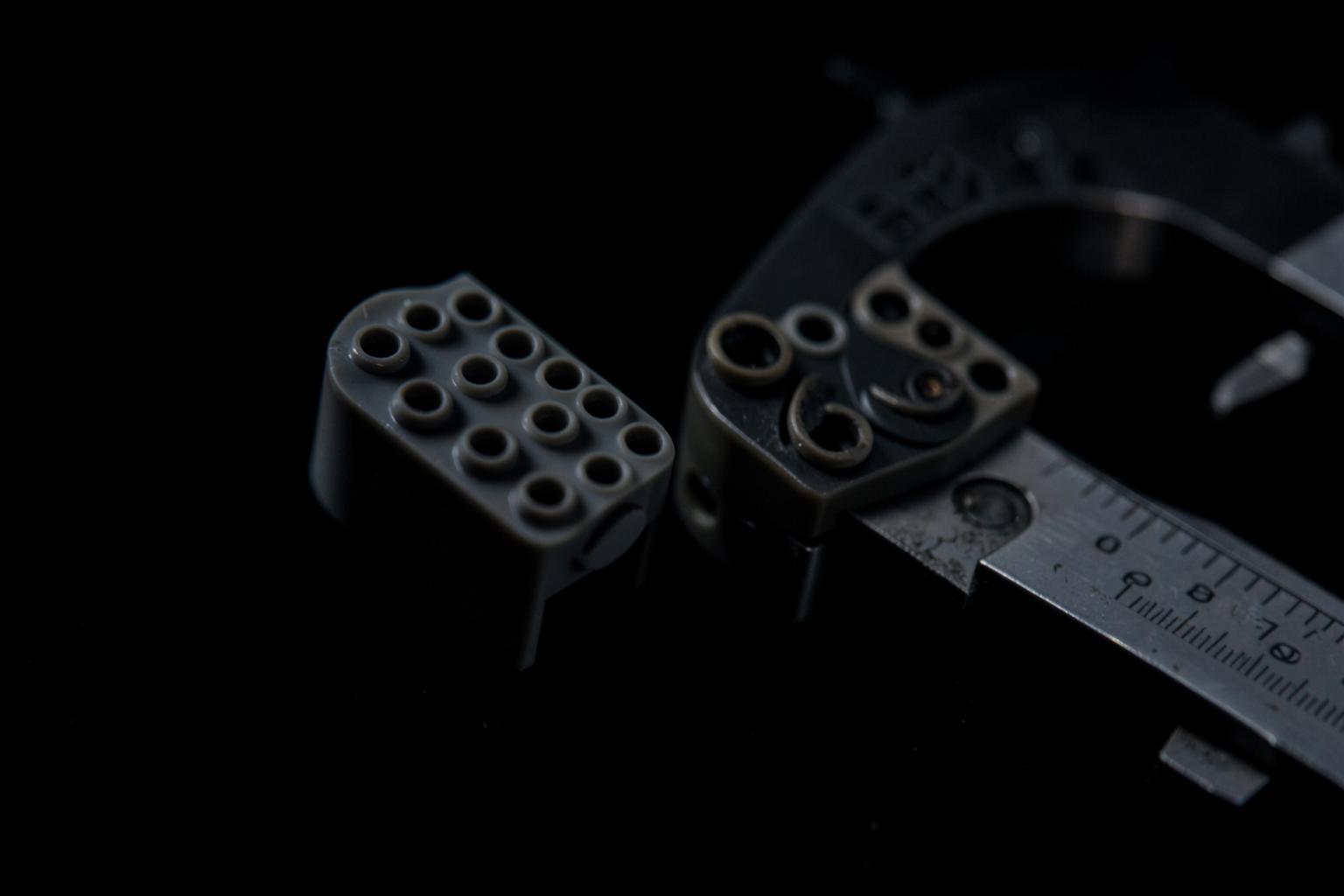
- Stud tolerance — LEGO bricks are engineered to ±0.01 mm. Top-tier alternatives using high-grade ABS match or closely approach that standard.
- Clutch strength — too loose and pieces fall off during play; too tight and disassembly damages the studs.
Step 3: Evaluate set variety and themes
For families, city and castle themes with color-coded instructions work best for ages 6–12. Adult collectors gravitate toward architecture, large-scale vehicles, and modular buildings with 1,000+ piece counts. Mould King and Reobrix have strong reputations for high-detail display models, while Sembo and Wekki are recognized for kid-friendly sets. Catalog depth matters too — see our top building block brands hub.
Step 4: Check safety certifications
- ASTM F963 — the US Consumer Product Safety standard covering toxic substances, flammability, and choking risks.
- EN71 — the European equivalent with comparable chemical, mechanical, and flammability testing.
Reputable brands sold through established retailers carry both. If a listing doesn't state which certifications apply, treat it as a red flag.
Step 5: Read community reviews
- Long-term clutch performance after 12+ months
- Print durability on minifigures after regular handling
- Instruction quality — English-language instructions matter for US and EU buyers
- Customer support responsiveness when pieces are missing
Top LEGO Alternatives Worth Considering
- Cada — Technic-style vehicles and mechanical models with strong clutch performance.
- Mould King — large-scale architectural and vehicle sets, often above 2,000 pieces, with motorization options.
- Reobrix — high-detail display models popular in the AFOL community.
- Sembo — broad coverage of city, seasonal, and character-based sets.
- Wekki — solid entry-level to mid-range option with good color accuracy.
All of these are available through our curated collection of building block sets, vetted against quality, safety, and compatibility benchmarks.
How Morebybourn Stands Out in the Toy Bricks Comparison
Morebybourn doesn't manufacture bricks — it curates them. Sets from Cada, Mould King, Reobrix, and others are evaluated against strict ABS quality, print durability, and clutch-power benchmarks before they reach the catalog. Orders ship from a US warehouse with 3–5 day delivery, and every set includes English-language instructions.
The catalog spans 550+ sets across architecture, vehicles, space, and city categories, including the 2,882-piece Eiffel Tower Creator Expert and the 2,862-piece Captain Jack Sparrow's Pirate Ship. Current markdowns are collected on the best-seller deals page.
Tips for Getting the Best Value
- Buy during promotions. Markdowns of 40–70% on bestsellers are common.
- Prioritize piece count for complex builds. Sets above 2,000 pieces deliver excellent display value.
- Store and display with care. Acrylic cases and indirect light prevent ABS yellowing.
- Mix brands strategically. Pair a premium brand's specialty parts with mid-range bulk bricks.
- Check instruction quality before buying anything above 1,500 pieces.
Final Thoughts: Build Smarter, Not Harder
A thorough toy bricks comparison isn't about finding the cheapest bricks — it's about matching the right set to the right builder at a quality level that holds up over time. Apply the same five criteria consistently and disappointing purchases drop to near zero. Next, learn how to spot genuine bundles in our guide to the best toy bricks package deals.
Frequently Asked Questions
Are LEGO alternative bricks truly compatible with official LEGO sets?
Yes — quality LEGO alternative brands manufacture bricks to the same ±0.01 mm stud tolerance as official LEGO, using high-grade ABS plastic. This allows free mixing with existing LEGO collections without gaps, misalignment, or forced connections. Always verify compatibility claims through community reviews, particularly for Technic-pin-dependent builds.
What safety certifications should I look for in LEGO alternative bricks?
Look for ASTM F963 (US standard) and EN71 (EU standard). These certifications confirm that bricks have been tested for toxic substances, choking hazards, and mechanical durability. Quality alternatives use BPA-free, phthalate-free ABS plastic — the same food-contact-grade resin used in official LEGO bricks.
How do I choose between LEGO alternatives for kids versus adult collectors?
For children aged 6–12, prioritize sets under 500 pieces with large bricks, color-coded instructions, and certified-safe materials. For teens and adult collectors, focus on piece count (1,000–10,000+), Technic mechanisms, motorization options, and display quality. Brands like Mould King and Reobrix excel at adult display models; Sembo and Wekki are strong choices for younger builders.
What is a good price-per-piece benchmark for LEGO alternatives?
LEGO's average price-per-piece ranges from $0.10 to $0.20 USD. Top-tier LEGO alternatives typically land between $0.03 and $0.08 USD — offering 40–70% savings without meaningful loss in clutch strength or print quality. Use this benchmark to evaluate any set before purchasing.
How should I store and display large completed brick models?
Dust-proof acrylic cases protect completed display models from UV fading and accidental damage. Position models away from direct sunlight to prevent ABS yellowing. For loose bricks, labeled plastic sorting drawers or original numbered bags keep pieces organized. LED strip lighting inside display cases significantly enhances visual impact on architectural and vehicle models.
Order LEGO-Compatible Sets from Morebybourn
We sell LEGO alternative sets and compatible bricks — from starter kits to complete display builds. If you need help choosing the right set, simply contact our customer service team and we will place the order for you.