How to Test Brick Compatibility Across Different Brands
TL;DR
- •The standard system runs on 5mm stud spacing and 8mm module height — any brand that matches it connects.
- •Reobrix uses the standard system — firm clutch, sometimes tight when new, then settles.
- •LEGO Quatro is one-directional — large-system bricks go on top of Quatro, not the other way around.
- •BLDR uses the standard system — test clutch consistency across part bags on large sets.
- •Run all tests within the return window so you can send back anything that fails.
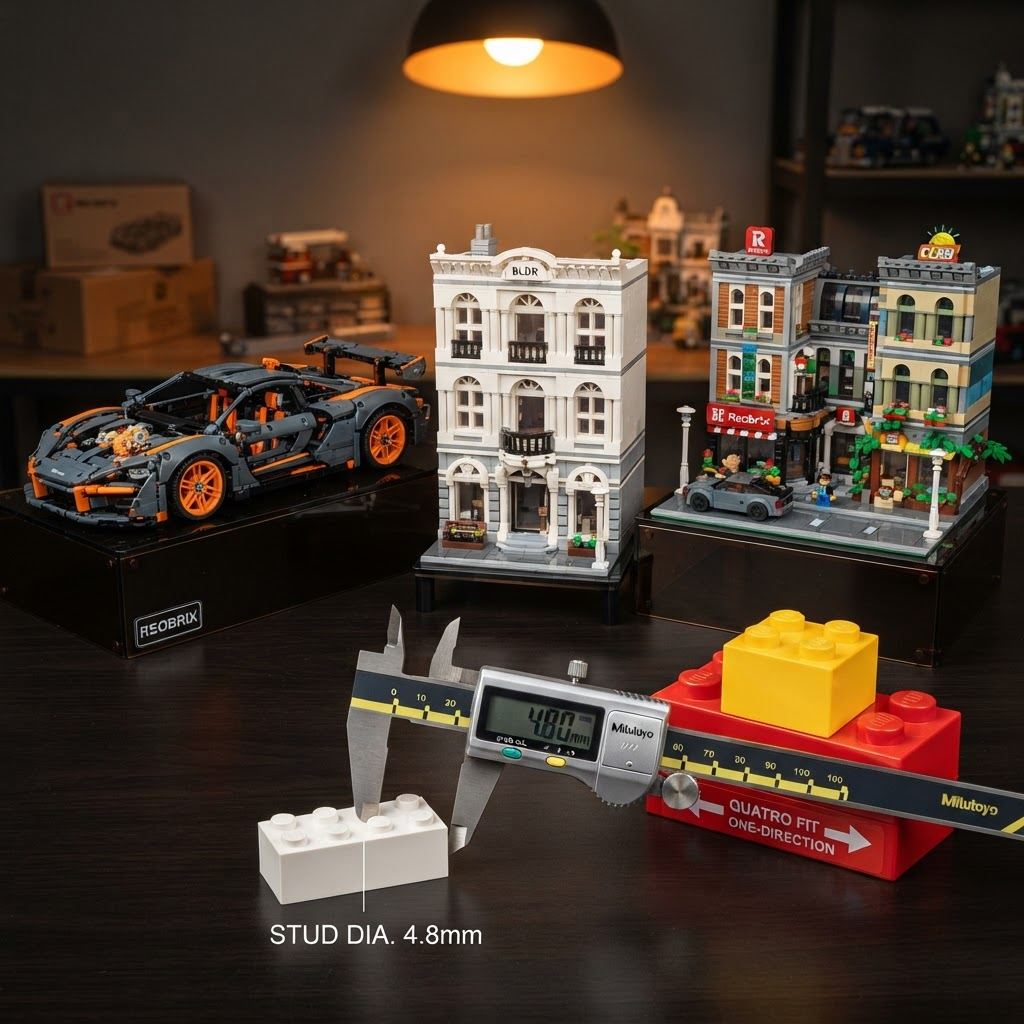
You bought a set from one brand. You already own thousands of bricks from another. The big question: will they click together? Cross-brand compatibility is where builders save money, expand collections, and mix themes that no single company sells. But not every “compatible” claim holds up. This guide shows you how to test brick compatibility yourself — the numbers that matter, the hands-on tests that reveal quality, and how popular brands like Reobrix, LEGO Quatro, and BLDR stack up against the standard system.
The Standard That Makes Everything Work
One measurement rules the whole industry: the stud. Standard bricks use a 5mm stud spacing and an 8mm module height. This is the base grid. Any brand that follows it can connect to the mainstream system. Break from it, and the bricks will not fit — no matter how good they look.
Standard System
5mm studs. Used by most sets aimed at ages 4 and up. The industry baseline for compatibility.
Large System
Bigger studs, roughly double the size. Made for toddlers and small hands. Connects via bridge pieces.
Know which system a set uses before you buy, and you will never be surprised at the table. The first rule of compatibility is simple: check the system, not the brand name.
The 6-Step Compatibility Test Protocol
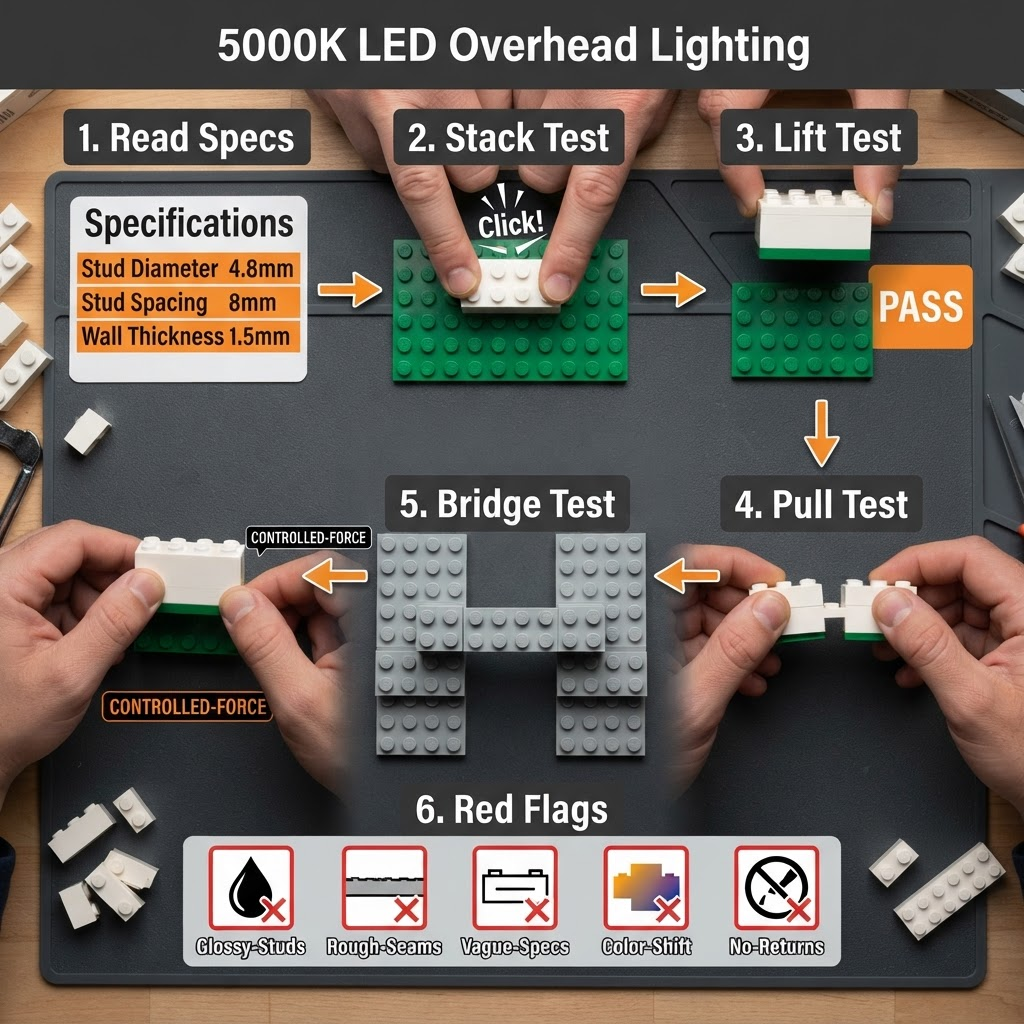
Read the Stud Specs
Before any hands-on test, gather the numbers. Most reputable brands publish these. If a brand hides them, treat that as a warning sign.
Stud Diameter
~4.8 mm
Stud Spacing
8.0 mm
Wall Thickness
~1.5 mm
The Clutch Power Test (Three Parts)
Specs on paper mean nothing without grip. Run all three parts within the return window.
Press a compatible brick onto a known standard baseplate. It should seat with a firm, satisfying click. No wobble. No gaps.
Pick up the connected pair by the top brick only. The bottom brick should hold on. If it drops off, clutch power is too weak.
Separate the bricks. Good clutch releases with a clean, controlled tug. Too easy means loose. Too hard means tolerances are off.
Test System Bridges
Bridge pieces connect two size systems. To test one:
- 1.Seat it on the larger baseplate first.
- 2.Confirm the fit is firm.
- 3.Then stack a standard brick on the top studs.
- 4.Check both connections hold under a gentle lift.
Spot the Red Flags
Vague specs — no published stud measurements means no accountability.
Glossy studs — overly shiny tops often mean cheap plastic and poor tolerances.
Rough seams — visible mold lines on studs stop bricks from seating flush.
Inconsistent color — batch-to-batch shifts hint at loose quality control.
No return policy — confident brands stand behind fit.
Brand-by-Brand Verdicts
Is Reobrix Compatible With LEGO?
Reobrix makes detailed sets, especially in the technic and vehicle categories. Yes — Reobrix bricks use the standard 5mm stud system, connecting to mainstream bricks, baseplates, and most third-party compatible pieces. Clutch power runs firm — sometimes tighter than brand-name bricks on the first few connections, then settles.
5mm Studs
Pass
Standard Baseplates
Pass
Technic Pins
Test
Clutch Power
Firm
LEGO Quatro Compatible With Duplo?
Quatro used oversized studs even bigger than the large-brick standard. The compatibility runs one direction only: large-system bricks stack on top of Quatro bricks, but Quatro bricks will not fit down onto large baseplates — the studs are too big.
One-Way Compatibility
Large-system bricks on top of Quatro — yes. Quatro on top of large baseplates — no. Plan builds around this direction.
Is BLDR Compatible With LEGO?
Yes — BLDR builds on the standard 5mm stud grid, connecting to mainstream sets and standard baseplates without trouble. The main thing to test is finish quality across a set. Larger sets sometimes mix part suppliers, so clutch power can vary between pieces.
5mm Studs
Pass
Baseplate Fit
Pass
Clutch Consistency
Test
Value on Large Sets
Strong
Compatibility Quick Reference
| Brand / System | Stud Type | Connects to Standard? | Notes |
|---|---|---|---|
| Reobrix | 5mm standard | Yes | Firm clutch, sometimes tight when new |
| BLDR | 5mm standard | Yes | Test clutch across part bags |
| LEGO Quatro | Oversized | One-directional | Large bricks stack on top only |
| Large system | Big studs | Via bridge pieces | Ideal for ages 2–4 |
| Standard system | 5mm studs | Yes | The industry baseline |
Build a Cross-Brand Collection That Works
Once you know how to test, you can build a mixed collection with confidence. Four rules keep everything working:
Standardize Your Baseplates
Use quality standard baseplates as your foundation. They become the test bed for every new brand you add.
Sort by System, Not Brand
Keep large-system and standard-system pieces separate. Then everything within a bin connects freely.
Keep a Test Brick
Set aside one known-good standard brick. Use it to spot-check every new set the day it arrives.
Mix Themes Freely
A Reobrix vehicle, a BLDR building, and standard minifigures can share one city build — because they share one system.
Cross-brand building is how you get more for your budget and more creative range. Browse the full range of quality compatible bricks at Morebybourn — every piece is engineered to the standard so it drops straight into what you already own.
Key Takeaways
- 1
The 5mm stud / 8mm module system is the universal standard — check it before trusting any brand claim.
- 2
Reobrix is compatible with LEGO via the standard system — clutch is firm, sometimes tight when new.
- 3
LEGO Quatro is one-directional — large bricks stack on top of Quatro, not the reverse.
- 4
BLDR is compatible with LEGO — test clutch consistency across part bags on large sets.
- 5
Run the stack, lift, and pull tests within the return window for every new brand.
- 6
Sort by system not brand, keep a known-good test brick, and standardize your baseplates.
Related Guides
How to Mix and Match Compatible Building Blocks Across Brands
Mega Bloks, BLDR, and 3D-print compatibility with snap, stack, and grid tests.
How to Mix LEGO-Compatible Building Blocks From Different Brands
Mega Construx and Mould King verdicts, 3-step test, and buyer checklist.
How to Choose Compatible LEGO Bricks and Sets for Custom Projects
Box-reading guide, 5-point set evaluation, and 10-item buying checklist.
How to Mix LEGO-Compatible Brick Brands and Build Better MOCs
Bulk buying guide, sort system, and MOC layering strategy.