How to Choose and Build With Blocks Compatible With LEGO: A Practical Guide
Mixing brick brands used to feel like a gamble. Today the picture is clearer. Many brands build to the same stud-and-tube standard, which means you can combine sets, expand your collection, and cut your costs without losing quality. This guide walks you through set selection, fit testing, mixed-brand building, animal scene construction, and the mistakes that trip up new builders.
TL;DR
- Compatible bricks share the same 8mm stud-and-tube standard — patents expired decades ago
- ABS plastic bricks clutch tight and last; avoid soft plastics for structural work
- COBI studs connect but feel slightly tighter — pass the 3-step test and build with confidence
- Run a single-brick, stack, and plate test on every new brand before building large
- Animal scenes mix well across brands — body, legs, head as separate modules
- Stagger seams, put your tightest bricks at stress points, and color-match in daylight
Why Compatible Bricks Matter
The stud-and-tube system is not owned by one company. The original patents expired decades ago, opening the door for dozens of makers to produce blocks compatible with lego at the same physical dimensions. Here is what compatibility gives you:
More Parts, Lower Cost
Fill out your collection without paying premium prices for every piece.
Wider Variety
Access themes, colors, and minifigures that a single brand never releases.
Bigger Builds
Combine baseplates and structures across sets for much larger scenes.
Custom Freedom
Creators who design their own models need parts from many sources.
Standard bricks measure 8mm in width per stud, with stud height and tube spacing built to the same tolerances. When a brand hits those numbers, its pieces clutch onto yours the same way. Morebybourn builds to this standard, so its sets drop straight into your existing collection.
Step 1: How to Choose Compatible Sets
Not all bricks are equal. Two pieces can look identical and still feel different in your hand. Choosing well starts before you buy.
Check the clutch claim
Look for wording like 'compatible with major brick brands' or 'standard 8mm stud.' Good sellers state this clearly.
Read the material spec
Premium bricks use ABS plastic. ABS holds tight, resists cracking, and keeps its color. Softer plastics lose grip over time.
Match the theme to your goal
Building a zoo? Search for lego compatible animals and figure packs. Building a city? Look for road plates and vehicle sets.
Compare price per piece
A 1,000-piece set at half the price is a strong deal — only if the plastic quality holds. Reviews from real builders tell you more than any label.
Buying Checklist
- ✓ABS plastic confirmed
- ✓Standard 8mm stud size stated
- ✓Theme matches your project
- ✓Reviews mention tight, lasting clutch
- ✓Piece count fits your budget
Step 2: How to Test Fit Before You Commit
Never trust a claim without a test. A five-minute check saves you from a shelf full of loose, floppy models.
01
Single-Brick Test
Press one new brick onto a known-good baseplate. It should click, hold firm when lifted, and release with a clean pull. Slides on with no resistance? Tolerance is off.
02
Stack Test
Build a tower six bricks high using alternating brands. Lift by the top brick. A solid stack holds its full weight. A weak one separates at the join.
03
Plate Test
Plates show tolerance problems fastest. Snap a new plate between two trusted plates. It should lock with no gap and no forced pressure.
Are COBI and LEGO Compatible?
In practice, most COBI bricks connect fine because they follow the same stud-and-tube standard. Builders note their studs can feel slightly tighter — that is not a flaw. It simply means you press a little harder to seat and separate pieces. Run the same three tests on any brand you add and you will know within minutes whether it works for your collection.
Step 3: How to Build With Compatible Bricks
Once your pieces pass the fit test, building follows the same rules across brands.
Start from a shared base
Lock your baseplates together with plates underneath. A unified foundation keeps mixed-brand sections from drifting apart.
Group by function, not brand
Use your tightest-clutching bricks for structural walls, floors, and supports. Save looser pieces for decorative spots where stress is low.
Stagger your seams
Overlap the joints between bricks like real masonry. A wall with stacked, aligned seams splits easily. A staggered wall holds as one solid piece even across brands.
Test as you go
Every few layers, lift the section gently. Catch a weak join early, before you build another 200 pieces on top of it.
Step 4: How to Build Animal Sets and Scenes
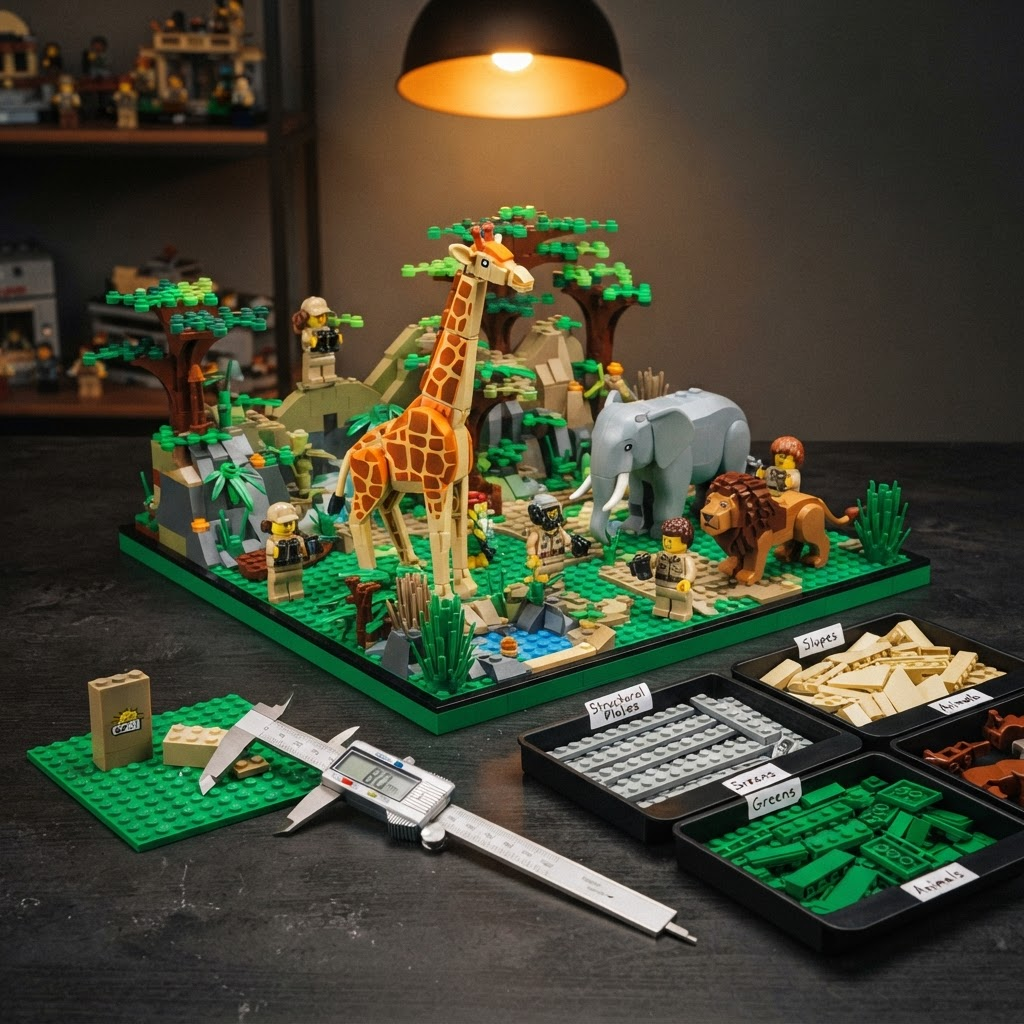
Searching for lego compatible animals opens up a wide range of options: safari packs, farm figures, dinosaurs, pets, and sea creatures. Many come as small brick-built models rather than single molded pieces, giving you more to assemble and customize.
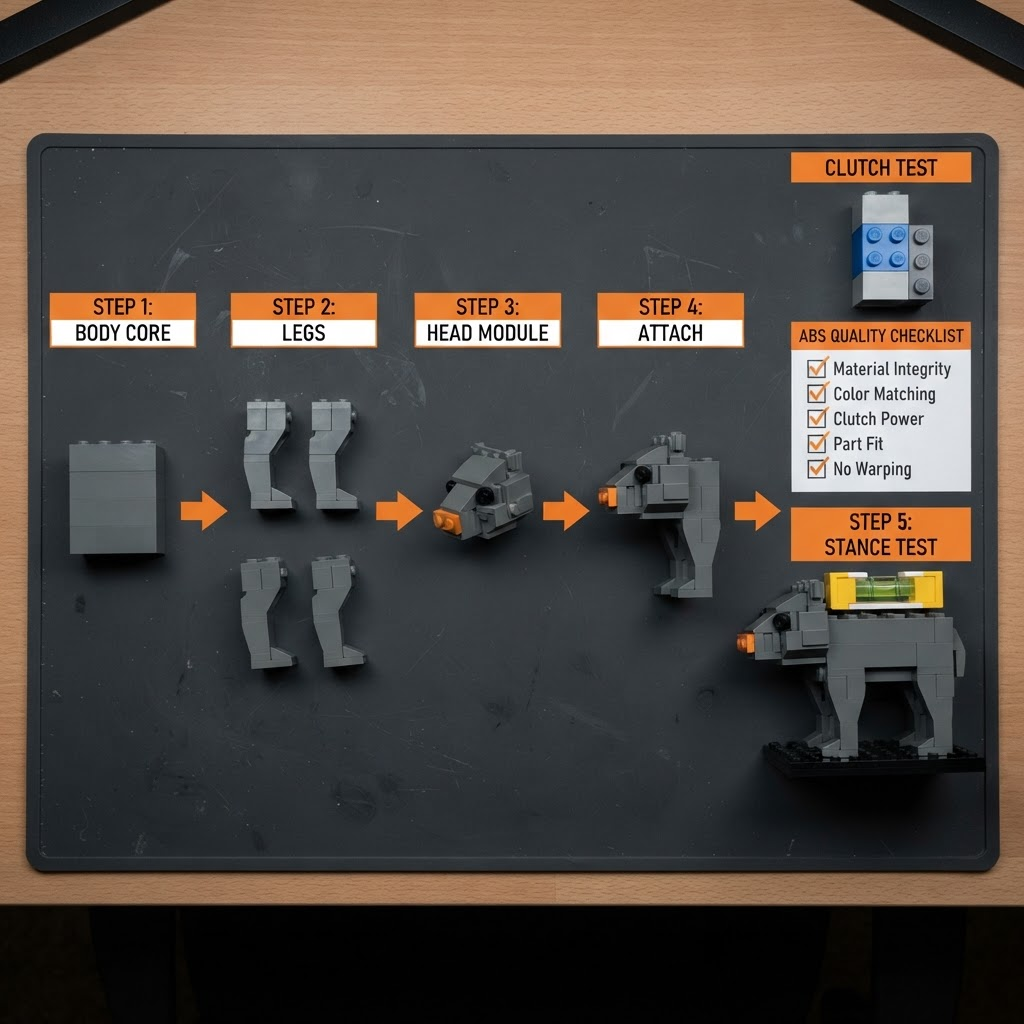
1
Body Core
Build a solid brick block as the torso. This anchors everything else and determines the animal's overall scale.
2
Matched Leg Pairs
Build both front legs identically, then both back legs. Matched pairs keep the animal balanced and standing straight.
3
Head Last
Heads carry the most detail. Build the head as a separate module, then attach it once it looks right.
4
Slopes for Realism
Flat bricks make blocky animals. Slopes and curved pieces round out backs, snouts, and tails.
5
Stance Test
A four-legged model should stand on a flat surface without wobbling. Adjust leg length in single-plate steps until it sits level.
Scene ideas that mix brands well:
- A farm with animals from one set and barns from another
- A safari base with mixed-brand trees, rocks, and figures
- A pet shop display combining small animals and shop fittings
- An aquarium wall using translucent blue plates and sea creatures
Tips for Mixing Brands the Right Way
Sort before you build
Separate pieces by color and type across all brands into one shared tray. This stops you from hunting through boxes mid-build.
Match colors carefully
Reds, grays, and tans vary slightly between makers. Build a small test patch to check color match before committing to a large surface.
Strongest bricks at stress points
Corners, hinges, and load-bearing walls take the most strain. Put your tightest-clutching blocks compatible with lego here.
Keep specialty parts by brand
Printed tiles, minifigures, and custom molds often work best within their own system. Mix freely for structure, check fit on any specialty piece.
Plan around baseplate size
Baseplates from different brands share stud spacing but can differ in overall dimensions. Measure before you assume two plates will line up.
Common Mistakes to Avoid
Mistake: Skipping the fit test
Fix: Assuming every brick clutches the same leads to loose, sagging models. Always test first.
Mistake: Using soft plastic for structure
Fix: Non-ABS bricks flex and lose grip. Keep them out of load-bearing sections.
Mistake: Ignoring color mismatch
Fix: Two 'gray' bricks from different makers can ruin a clean surface. Check in daylight.
Mistake: Aligning seams
Fix: Stacked joints split. Stagger every layer without exception.
Mistake: Forcing tight pieces
Fix: If a brick fights hard to seat, stop. Forcing can crack the stud or tube.
Mistake: Buying on price alone
Fix: The cheapest set is no bargain if the bricks won't hold. Quality plastic pays off over years of building.
Share Your Build With the Community
The best part of building comes after the last brick clicks. Builders across North America and Europe share mixed-brand creations every day, and the feedback makes everyone better. Post your finished model from several angles, note which brands you combined and how they fit, and compare notes on animal builds and mixed scenes.
You can browse project inspiration and connect with other builders through Morebybourn.
Key Takeaways
- ✓Compatible bricks share the 8mm stud-and-tube standard — patents expired, many brands qualify.
- ✓ABS plastic is the only material worth using for structural work in mixed-brand builds.
- ✓Run a single-brick, stack, and plate test on every new brand before building large.
- ✓COBI bricks connect to LEGO — their slightly tighter clutch is a feature, not a flaw.
- ✓Build animal models as three modules: body core, matched leg pairs, and head last.
- ✓Stagger seams, color-match in daylight, and put tightest bricks at every stress point.
Related Guides
Ready to start building?
Browse Morebybourn sets built to the same standard — drop straight into your existing collection.