Quick Answer
- 1.Are Mattel bricks compatible with LEGO? Yes — standard structural bricks fit. Figures use proprietary joints and do not reliably swap.
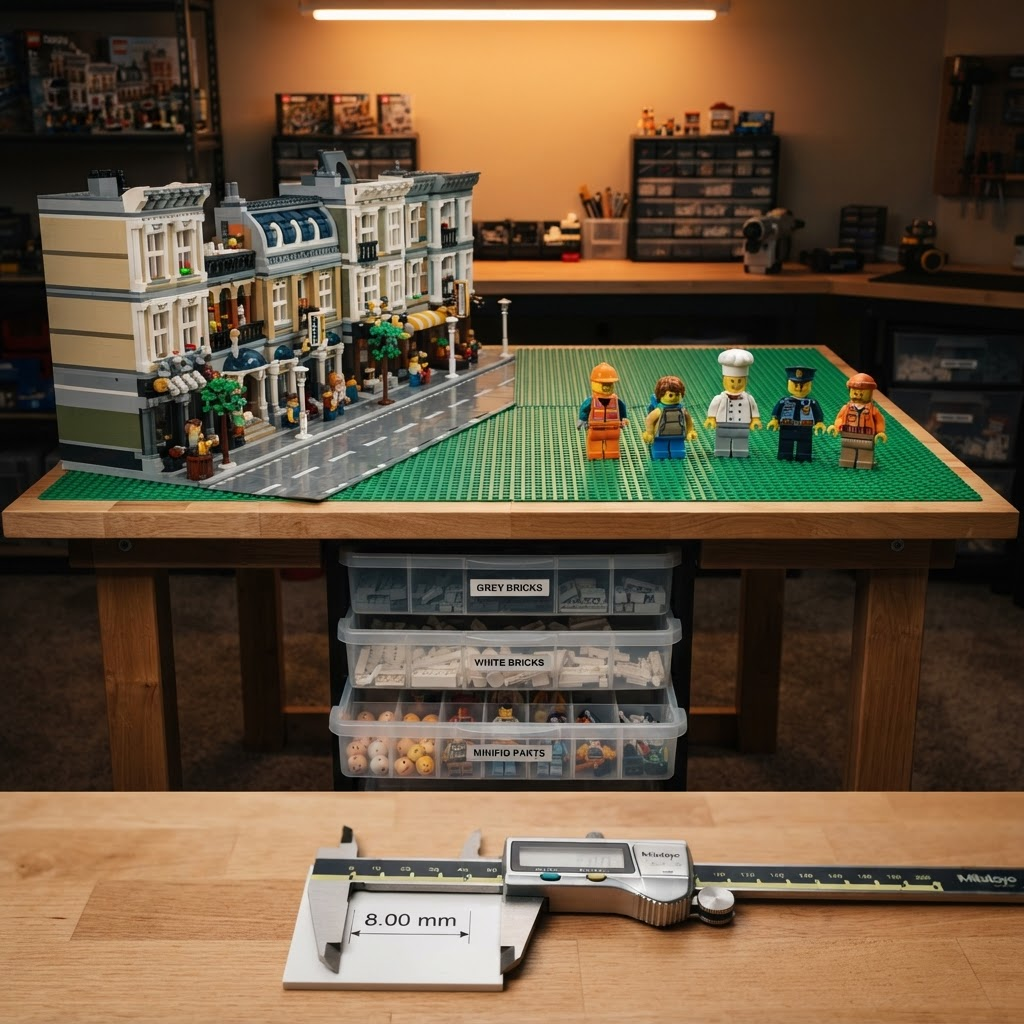
- 2.A lego compatible table uses 8mm stud spacing — either molded into the top or added via baseplates.
- 3.Good lego compatible figures match on scale, C-grip hands, and stud feet.
- 4.Zone your surface, sort figures separately, and reset after every session.
Why a Play Table Beats Floor Building
Floor building has limits. Bricks scatter. Baseplates slide. Builds get knocked over. A dedicated table fixes all three — it gives you a fixed base, a work zone, storage below, and longer, more focused build sessions. One piece of furniture covers every use case from family play to adult MOC work to collector display.
Fixed Base
Baseplates stay put — builds don't shift
Work Zone
Sorting and building in one place
Storage Below
Bins keep loose bricks off the floor
Longer Play
Ready setup means more building time
Step 1: Choose Your Table Type
Dedicated Play Table
Purpose-built with molded studs. Bricks snap directly to the top. No extra baseplates needed.
Best for: Young kids, families, ready-made solution
Convertible Table
Plain surface with compatible baseplates added on top. Flexible, often cheaper, easy to expand later.
Best for: Adult builders, anyone with an existing table
Modular Station
Multiple small panels that lock together. Rearrange as builds grow.
Best for: Serious MOC builders, collectors, changing spaces
Step 2: Build or Convert Your Table
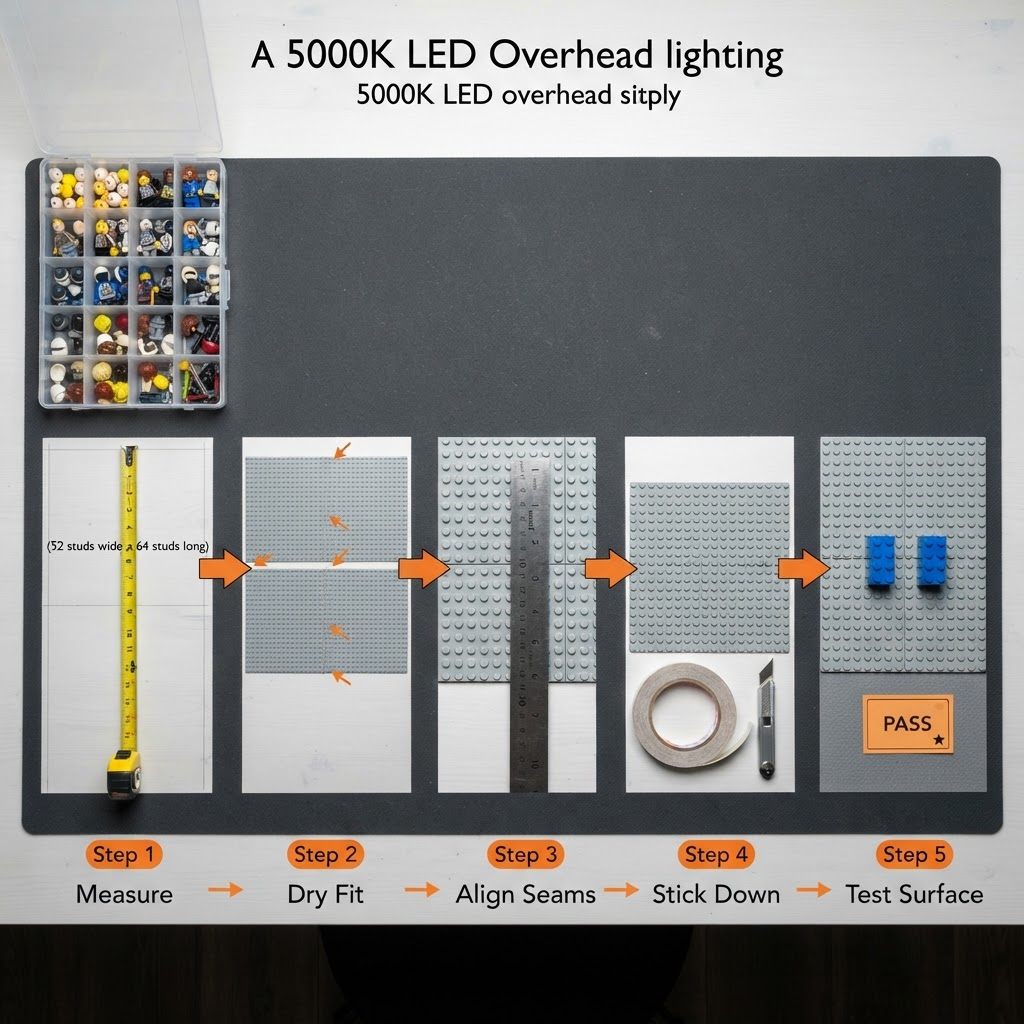
Converting an Existing Table
Measure the tabletop
Note width and depth in stud units. Standard baseplates come in fixed sizes, so plan to avoid gaps.
Dry-fit first
Lay baseplates out without adhesive. Check the fit and every seam.
Align the seams
Push baseplates tight so studs line up across every boundary. Misaligned seams stop bricks from crossing plate to plate.
Stick them down
Apply double-sided mounting tape to the table, then press each plate firmly from one edge across.
Test the surface
Snap a few bricks across the seams. They should connect smoothly with no lift.
Add Storage Underneath
Step 3: Answer the Mattel Compatibility Question
Before you your table with parts from multiple brands, settle the most common question builders ask: are Mattel bricks compatible with LEGO?
Structural Bricks: Compatible
Mattel-owned lines (including Mega) use the standard 8mm stud-and-tube system. Standard bricks, plates, and baseplates connect freely to LEGO and Morebybourn. Build with confidence.
Figures: Check Before Mixing
Mattel figure parts often use proprietary joint sizing. Heads, torsos, and accessories won't reliably swap with LEGO minifigures. Scale can differ too. Always test connections before building a scene.
| Brand | Standard Bricks | Baseplates | Figure Parts | Notes |
|---|---|---|---|---|
| LEGO | Pass | Pass | Pass | Standard minifig sizing |
| Mattel / Mega | Pass | Pass | Caution | Bricks fit, figures vary |
| Morebybourn | Pass | Pass | Pass | Standard-compatible figures |
Pass = freely compatible. Caution = test connections before mixing.
Step 4: Choose the Right Figures for Your Table
Figures bring a build to life. Good lego compatible figures share three traits with standard minifigures that make them mix-ready.
Matching Scale
Roughly 4cm tall — fits standard doors, seats, and vehicles without modification.
C-Shape Hand Grip
The standard C-shaped hand holds bars, tools, accessories, and weapons.
Stud Feet
Legs with holes that clip onto studded surfaces — keeps figures locked in place on the table.
Figure Types to Consider
Standard Minifigures
Classic three-part. Most versatile.
Themed Figures
Sports, city, adventure — match to your build.
Articulated Figures
More joints for dynamic action poses.
Custom Figures
Printed or assembled to your own design.
Step 5: Pose and Place Figures on Your Table
Raise Them Up
Place figures on plates or tiles a level above the base. Height draws the eye to your scene.
Group Them
Two or three figures read as a scene. A single figure reads as an afterthought.
Face Them Inward
Angle figures toward the action, not out at the viewer — it creates depth.
Step 6: Organize the Table for Repeat Use
Build Zone
The main studded area for active construction. Keep it clear between sessions.
Parts Zone
A tray or bin edge for pieces in active use — what you need right now.
Display Zone
A corner for finished builds and posed figures — protected from the build zone.
Step 7: Grow the Setup Over Time
Expand the Surface
Add baseplates to cover more of the tabletop. Link modular panels for larger scenes. Raise sections with brick-built platforms for multi-level builds.
Build a Figure Collection
Keep a roster for different scenes: sports teams, city crews, fantasy characters. Track what you own so you don't double up.
Connect With Other Builders
Post table setups. Join build challenges. Swap figure ideas. Other builders show what's possible and point to compatible parts you haven't found yet.
Bringing It All Together
Related Guides
How to Choose and Use Compatible Building Blocks and Base Plates
Scale matching, clutch power, flat vs rigid plates, and brand-mixing guide.
How to Mix LEGO-Compatible Brick Brands and Build Better MOCs
Block Tech and Mega Construx compatibility, bulk buying, sorting, and MOC techniques.
How to Find, Test, and Mix Bricks Compatible With LEGO
5-minute fit test, brand comparison, and smart mixing strategies.
How to Choose and Build with LEGO Compatible Sets
6-point pre-purchase checklist and integration strategies for new sets.
Tags
Frequently Asked Questions
Are Mattel bricks compatible with LEGO?
What makes a table LEGO-compatible?
Will LEGO-compatible figures work with my existing minifigures?
Can I convert a table I already own into a play table?
How should I store figures and small parts?
Ready to set up your table?
Browse compatible baseplates, bricks, and figures with confirmed specs at Morebybourn.