How to Mix LEGO-Compatible Brick Brands and Build Better MOCs
Loose bricks pile up fast. You buy one set, then another, then a bulk bag from a third brand. Soon your bins hold pieces from five different makers — and you start to wonder: do they all fit together? The short answer is yes, most of the time. This guide covers the long answer.
TL;DR
- Most major brands follow the 8mm stud standard — they physically connect.
- Block Tech: yes compatible, quality varies — test before display use.
- Mega Construx: yes compatible, solid clutch — avoid proprietary clips.
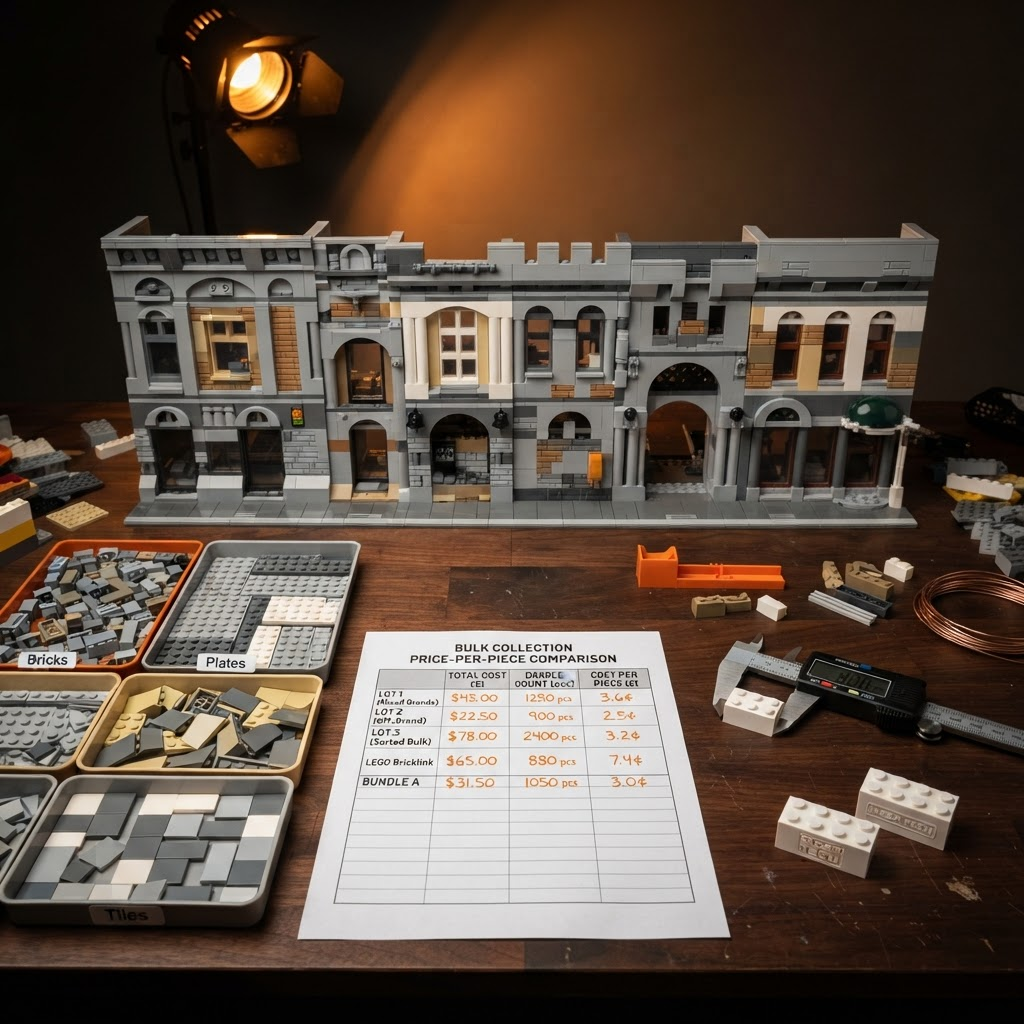
- Buy bulk for common pieces; compare price per brick, not total price.
- Sort by function, build cheap inside and quality outside, stagger seams.
How Brick Compatibility Actually Works
Every plastic brick system runs on the same idea: studs on top, tubes underneath. The connection is called the stud-and-tube clutch. When the spacing matches, bricks from different brands lock together. The industry standard is 8mm between stud centers. Most major brands follow it — that is why so many off-brand bricks snap onto a known baseplate without a fight.
But spacing is only half the story. Fit quality comes down to three things: stud diameter (must be close to 4.8mm), wall tolerance (tight molding gives a firm click), and plastic type (ABS holds shape; cheaper blends warp or crack). Matching stud spacing gets bricks to connect. Matching quality keeps them connected.
Stud Diameter
~4.8 mm
Too small = loose fit; too large = jamming
Wall Tolerance
Tight mold
Firm snap, clean release, no slipping
Plastic Type
ABS
Holds shape under heat and repeated use
Are Popular Brands Actually Compatible?
Is Block Tech Compatible With LEGO?
Yes. Block Tech bricks use the standard 8mm stud spacing, so they connect to LEGO and most other major systems. Basic bricks and plates fit fine for casual builds and bulker. The catch is consistency — quality varies between sets. Some pieces grip well; others feel loose or show mold lines. For a hidden inner structure or a child's play build, they work. For a detailed display MOC, test them first.
Are Mega Construx Bricks Compatible With LEGO?
Yes. Mega Construx (now Mega) uses the same stud-and-tube system and generally offers solid clutch power. Standard bricks, plates, and tiles interchange without issue. Where it gets tricky is specialty parts — Mega minifigures, joints, and some clip pieces use proprietary sizing. Those won't swap with LEGO minifig parts. Stick to structural bricks and you are safe.
| Brand | Standard Bricks | Plates & Tiles | Minifig Parts | Best Use |
|---|---|---|---|---|
| LEGO | Yes | Yes | Yes | Detail & display |
| Mega Construx | Yes | Yes | Proprietary | Structure & bulk |
| Block Tech | Yes | Varies | No | Filler & play |
| Morebybourn | Yes | Yes | Yes | MOCs & bulk builds |
Step 1: Test Compatibility Before You Commit
Never trust a product photo. Test the actual brick. A five-minute check saves you from a bin of useless plastic.
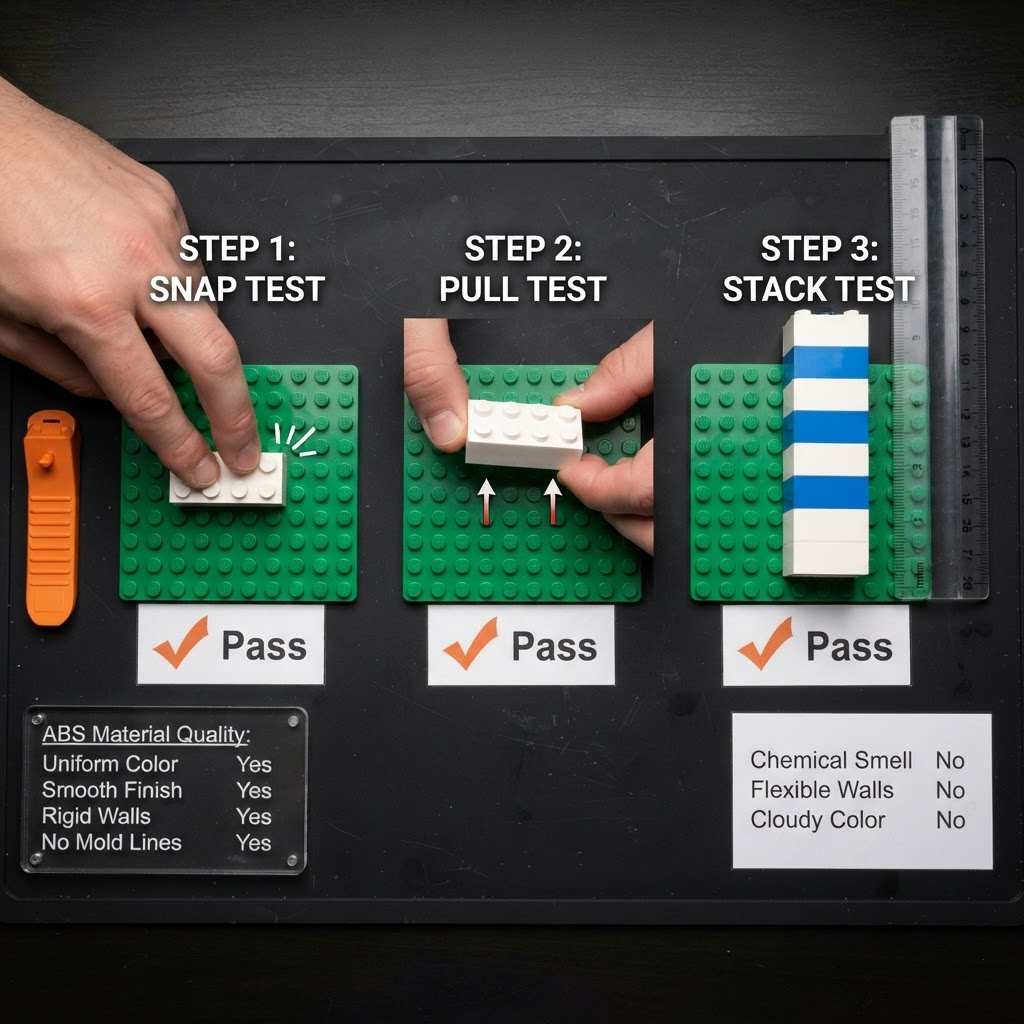
Snap Test
Press brick onto a known baseplate. It should click, not slide.
Pull Test
Lift the brick off. It should resist slightly, then release clean.
Stack Test
Build three bricks high. The tower should stand firm with no lean.
Inspect the Plastic
Hold the brick to the light. Good bricks show even color and a smooth finish. Warning signs: visible mold lines along edges, cloudy or streaked color, flexible walls that bend under light pressure, chemical smell straight from the bag. Quality bricks are molded from ABS. If a brand lists its material, that is a good sign.
Step 2: Buy Lego Compatible Bricks Bulk the Smart Way
Bulk buying is where builders save real money — or waste it. The difference is knowing what to order.
Baseplates & Foundations
No one sees the bottom layer. Use the cheapest solid ABS here.
Common Bricks
2x4s, 2x2s, and 1x1 plates in single colors. The backbone of every MOC.
Landscaping
Green plates, grey road pieces, blue water sections — ideal for bulk.
MOC Filler
Interior walls and support columns where clutch is secondary to mass.
| Factor | What to Check |
|---|---|
| Price per piece | Divide total cost by usable piece count |
| Color mix | Sorted single colors vs random assortment |
| Piece variety | Useful shapes or mostly repeater? |
| Clutch quality | Sample-tested by reviews or unknown? |
| Shipping origin | Regional stock or long overseas transit? |
Key point: Buy bulk for common pieces, compare price per brick, and check shipping origin. Morebybourn ships lego compatible bricks bulk to Europe and North America with clear regional stock and no surprise fees.
Step 3: Sort and Store Your Mixed Collection
A mixed-brand collection turns into chaos without a system. Once bricks pass the compatibility test, brand does not matter. Sort by what the piece does — by type (bricks, plates, tiles, slopes, specialty), by size (group similar footprints), and by color (separate most-used colors into dedicated bins).
Clear Containers
See contents without opening. Label by category, not brand.
Test-Failed Bin
Keep loose bricks for hidden structure only — never visible surfaces.
Reference Bricks
One small tray of known-good bricks from each brand for instant comparison.
Step 4: Build Mixed-Brand MOCs That Hold Together
A MOC (My Own Creation) is a custom build from your own design. Mixing brands gives you more colors, shapes, and pieces than any single brand offers alone.
Foundation
Cheapest solid bricks for baseplates and interior. This is where budget bulk earns its place.
Structure
Mid-tier bricks for walls and framing. Clutch power matters here — test first.
Detail
Best-fitting, best-looking bricks for the visible surface. The layer people actually see.
Handle the Weak Points
Common Mixed-Build Mistakes
Using loose-clutch bricks in load-bearing walls.
Stacking brand seams in a straight line, creating a weak fault.
Mixing warped bulk bricks into visible surfaces.
Forgetting to test a section before building on top of it.
Step 5: Join the Building Community
The mixed-brand hobby runs on shared knowledge. Other builders already know which brands fit and which fail. Connect through online forums for test results and reviews, social groups for MOC photo inspiration, and build challenges for themed skill-building. Share your own results — your feedback helps the next builder avoid a bad bulk order.
Morebybourn supports the builder community with build guides and part references. Explore resources at Morebybourn to plan your next mixed-brand project.
Bringing It All Together
- 1.Understand stud spacing (8mm) and the three clutch quality factors.
- 2.Test snap, pull, and stack before committing to any new brand.
- 3.Buy lego compatible bricks bulk for common pieces; buy per-piece for detail.
- 4.Sort by function (type, size, color) — not by brand.
- 5.Build cheap inside, quality outside, and stagger every seam.
- 6.Learn from the community and share your own compatibility test results.
Related Reading
Ready to build your mixed-brand collection?
Browse Morebybourn's range of ABS-grade compatible bricks, sorted color bulk bags, and baseplates — with clear specs and regional shipping.