How to Mix and Match Compatible Building Blocks Across Brands
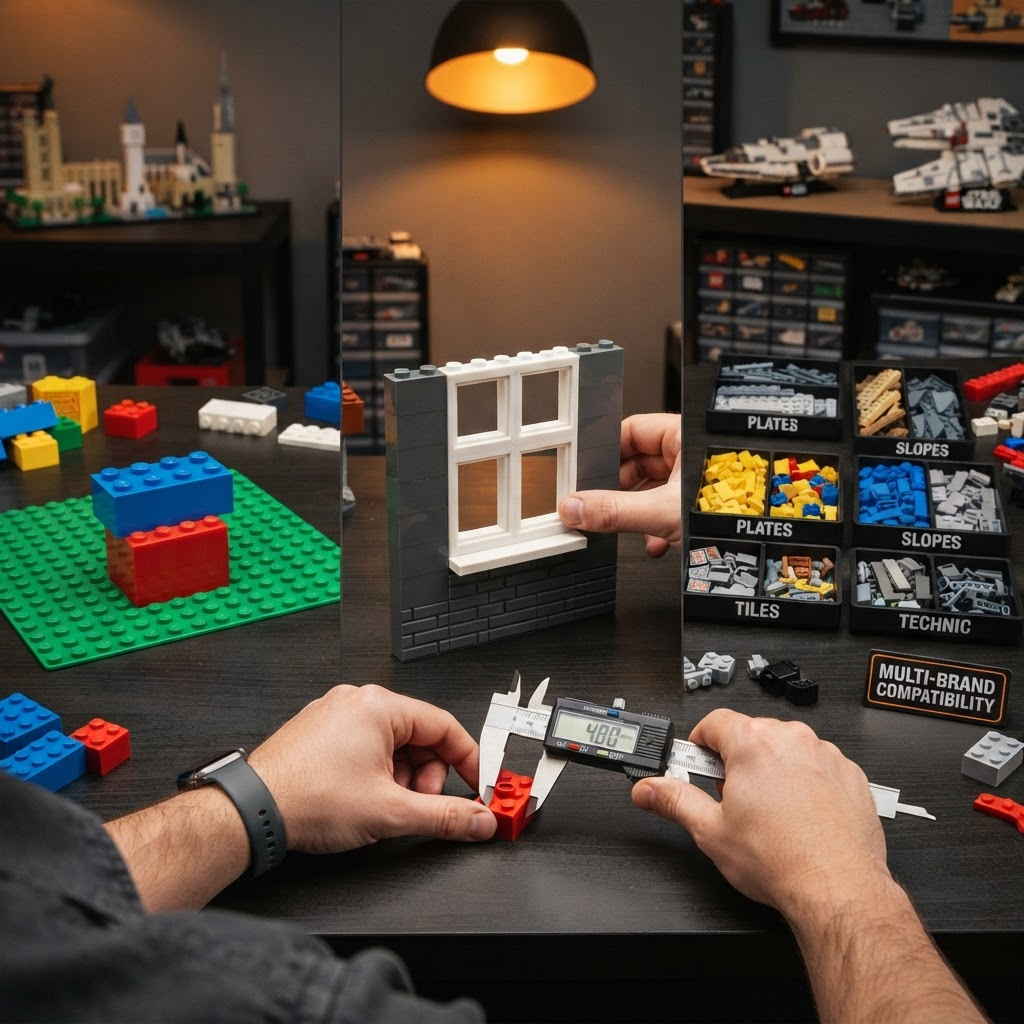
Building blocks look simple. Studs on top, tubes underneath, snap them together. But anyone who has mixed bricks from different brands knows the truth — not every block clicks the way it should. Some feel loose. Some jam. Some will not lock at all.
This guide fixes that. You will learn how to test bricks for true compatibility, how to combine sets from different makers, how to add a lego compatible 3d print to a standard build, and what to check before you buy any LEGO-alternative brick. Questions like whether mega bloks compatible with lego pieces truly interlock or are bldr compatible with lego will have clear, tested answers by the end.
Quick Answer
- Mega Bloks standard lines connect with mainstream bricks — run the snap and stack tests first
- BLDR bricks: buy one small set, test all three checks, then scale up
- 3D-printed parts need calibrated tolerance — sand if tight, tape if loose
- Sort mixed bricks by function (not brand) once they pass the grid test
- Reserve your strongest bricks for hinges and load-bearing joints
Why Brick Compatibility Matters
Not all bricks are built to the same standard. The industry-wide measurement most makers follow is a stud spacing of 8mm and a tolerance measured in fractions of a millimeter. That tiny gap is the difference between a brick that snaps and a brick that slides off.
When bricks are truly compatible, you gain freedom. You can pull a piece from one set, a plate from another, and a custom part from a third — all in the same build. Your collection stops being a pile of separate boxes and becomes one giant parts bin.
Clutch Power
The grip between stud and tube. Too little and they fall apart. Too much and they crack. Good bricks land in the middle — firm hold, clean release.
Dimensions
Stud size, wall thickness, and spacing. A brick can look right and still be off by a hair, which throws off every layer above it.
Material Quality
ABS plastic holds its shape and grip for years. Cheaper blends warp, fade, and lose their clutch over time. Check the listing before buying.
Step 1: Run the Basic Compatibility Test
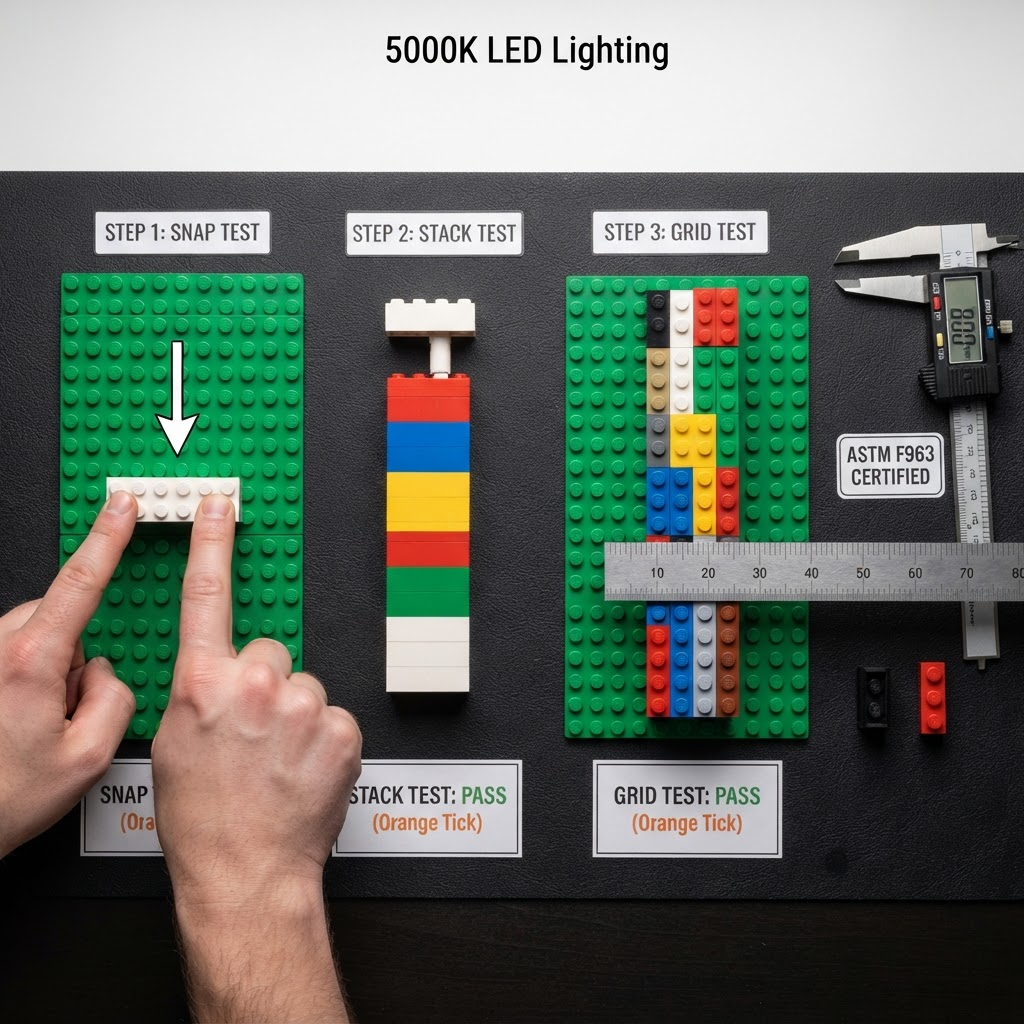
Before you commit a new brick to a big build, test it. This takes two minutes and saves hours of rework. Three checks cover everything that matters.
01
The Snap Test
Press a single brick from the new set onto a trusted brick. Listen and feel for a clean click. Good sign: firm snap, no wobble, pieces stay joined when lifted. Bad sign: mushy press or side-to-side play.
02
The Stack Test
Stack four or five bricks in a column, then lift from the top brick. If the whole column holds, clutch power is solid. If it separates in the middle, that batch has weak grip.
03
The Grid Test
Lay a baseplate down. Snap bricks across the full width — left edge to right edge. If the last brick lines up perfectly with the last stud, spacing is accurate. Any drift means the bricks are off-spec.
One brick passing all three tests tells you the whole set is safe to mix. For a deeper breakdown of how quality bricks are measured, the guides at Morebybourn walk through the specs worth knowing. Testing first means never gambling a finished model on an unknown brick.
Step 2: Mixing Sets From Different Brands
Once you know a brand's bricks pass the test, you can start combining. There is a smart way to mix and a messy way. Here is the smart way.
Sort by Function, Not Brand
Dump compatible bricks into shared bins organized by type — plates here, tiles there, slopes in their own tray. Once bricks pass the compatibility test, their brand stops mattering.
Match Colors Carefully
Two brands may both call a color 'red,' but the shades rarely match exactly. Group by section — use one brand's red for a full panel, another's for a separate panel. For large single-color areas, source from one maker.
Watch the Structural Joints
When two brands meet inside a model, put the connection where stress is low. Avoid mixing brands at a hinge, a load-bearing pillar, or a spot that gets handled often.
BLDR Compatibility Note
Popular questions like are bldr compatible with lego come up because builders want to know if a specific brand's clutch will hold at stress points. The answer always comes back to the same test — check the snap, the stack, and the grid before trusting it in a critical joint.
Step 3: Adding 3D-Printed and Custom Parts
Custom parts open a whole new level. Printed pieces let you add shapes no factory set includes — a specific window, a curved panel, a one-off figure accessory. A lego compatible 3d print lives or dies by its tolerance settings.
Filament
PLA
Clutch feel: Firm
Crisp detail but more brittle. Fine for display pieces, weaker for parts you snap on and off often.
Filament
PETG
Clutch feel: Flexible
Flexes more and resists cracking. Better for functional bricks that take repeated stress.
Filament
ABS
Clutch feel: Authentic
Matches real brick material, giving the most authentic clutch — but harder to print at home.
3D-Print Fit Troubleshooting
| Symptom | Cause | Fix |
|---|---|---|
| Part won't seat at all | Tolerance too tight / overcooled ABS | Lightly sand studs or inner walls, test after each pass |
| Part slides off under light load | Tolerance too generous | Thin strip of tape inside the tube for temporary grip |
| Stud cracks when pressing | Wrong filament (PLA under stress) | Reprint in PETG or ABS for functional pieces |
| Color doesn't match bricks | PLA dye vs ABS dye differ | Use a printed part as an accent piece, not a matched surface |
Run the same snap, stack, and grid tests from Step 1 on every printed piece. A custom part is only useful if it holds. For builders sourcing printed and specialty parts, the compatibility notes at Morebybourn help you match custom pieces to standard bricks without trial and error.
Step 4: What to Check Before You Buy Alternative Bricks
Buying LEGO-alternative bricks is where most compatibility problems start. Questions like whether mega bloks compatible with lego pieces truly interlock come down to the published specs, not the packaging photo.
Read the Material Spec
Look for ABS plastic on the listing. If a listing hides the material or only says 'high-quality plastic,' treat that as a warning sign.
Check the Tolerance Claim
Reputable brands state their manufacturing tolerance, often around 0.01mm. A brand that publishes its tolerance is a brand confident in its fit.
Look for Real Builder Reviews
Search for photos of the bricks joined to mainstream sets. Look for comments on clutch power after weeks of use — not just out of the box.
Buy a Small Set First
Order one small set, run your tests, and only then commit to the big purchase. A single test set tells you everything a product page cannot.
Verify Piece Count and Spares
Good makers include spare small parts. A brand that ships spares understands how builders use their product. Check whether the seller replaces lost or broken parts.
Compare Specs Across Sets
You can compare specs across sets on the Morebybourn collection before scaling up your order — see the full range at morebybourn.com.
Common Compatibility Mistakes and How to Fix Them
Even experienced builders hit these. Here is what goes wrong and what to do instead.
Trusting the Box Over the Brick
Always run the snap test yourself. The brick in your hand is the only authority that counts.
Mixing Brands at Stress Points
Reserve your strongest, most trusted bricks for joints that carry weight or get handled. Save cross-brand mixing for flat, stable zones.
Ignoring Color Drift
Test colors side by side under good light before committing them to one visible surface. Group shades by section if they do not match.
Forcing a Tight Fit
If a brick will not seat with firm, even pressure, stop. Sand it lightly or set it aside. Force always loses.
Skipping the Test on Printed Parts
Treat every printed part as unknown until it passes the same tests as a molded brick.
Building a Truly Universal Collection
The end goal is a collection where brand stops mattering. Where every brick in every bin is one you trust. Get there with a simple routine:
- +Test every new brand once — snap, stack, grid.
- +Sort by part type, not brand — one shared parts bin.
- +Reserve trusted bricks for stress points — grip where it counts.
- +Keep color shades grouped when they do not match exactly.
- +Vet printed and custom parts like any other brick.
Do this and your options multiply. You are no longer limited to one brand's catalog or one set's parts. Explore the full Morebybourn range at morebybourn.com to find bricks that pass every one of these checks out of the box.
Key Takeaways
- +Compatibility requires clutch power, correct dimensions, and quality ABS material — all three must pass.
- +Run the snap test, stack test, and grid test on every new brand before using it in a build.
- +Mega Bloks standard lines connect with mainstream bricks; clutch may run slightly looser — always test first.
- +A lego compatible 3d print needs calibrated tolerance — sand if tight, add tape if loose, and test like any molded brick.
- +Are bldr compatible with lego? Buy one small set, run the three tests, and confirm before scaling up.
- +Reserve your firmest-clutch bricks for hinges and load-bearing sections; use mixed brands on flat, stable areas.
Related Guides
Ready to build with fully tested compatible bricks?
Browse the Morebybourn collection — ABS bricks made to click with your existing sets.