How to Test and Mix Different Brick Brands With Your Existing Sets
You own LEGO sets. You also have a box of Mega Bloks from years back, maybe a COBI military model, and a few BrickCraft pieces the kids brought home. Can they all work together? In most cases, yes — but not always, and not equally well. This guide shows you how to test cross-brand fit, mix brands without ruining a build, and weigh the pros and cons of each combination.
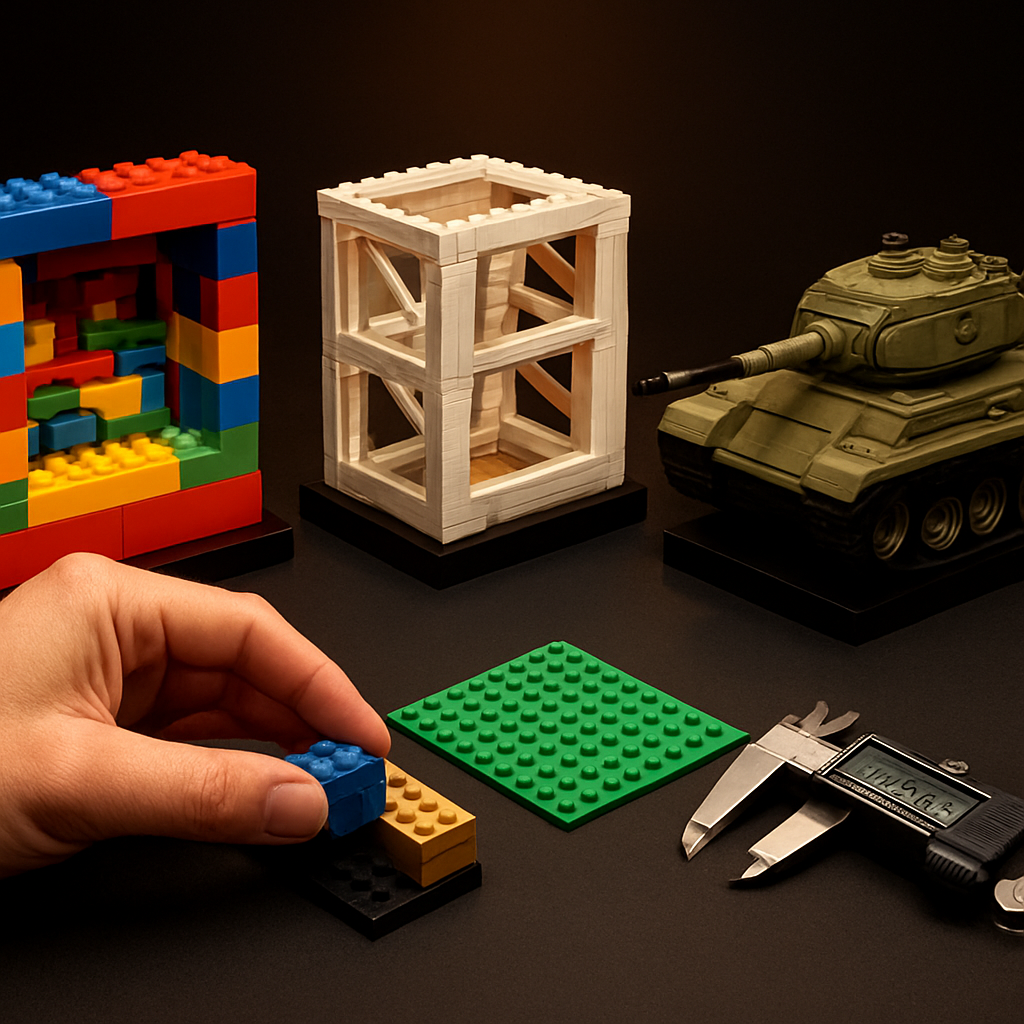
Why Brand Compatibility Matters
Most building bricks follow the same basic measurement system. Studs sit 8mm apart. Tubes underneath grip those studs. This shared standard is why a brick from one company often snaps onto a baseplate from another — but "often" is not "always." Brands differ in clutch power, plastic type, tolerance, and scale.
Clutch Power
The grip holding two bricks locked together
Plastic Type
ABS holds tight; cheaper blends loosen or crack
Tolerance
Tiny size differences that add up across a big build
Scale
Standard studs vs large Duplo-style studs
Step 1: How to Test Any Brick for Compatibility
Before you mix anything, run three quick checks. Each takes seconds. Together they tell you whether a piece belongs in a load-bearing build or a static display only.
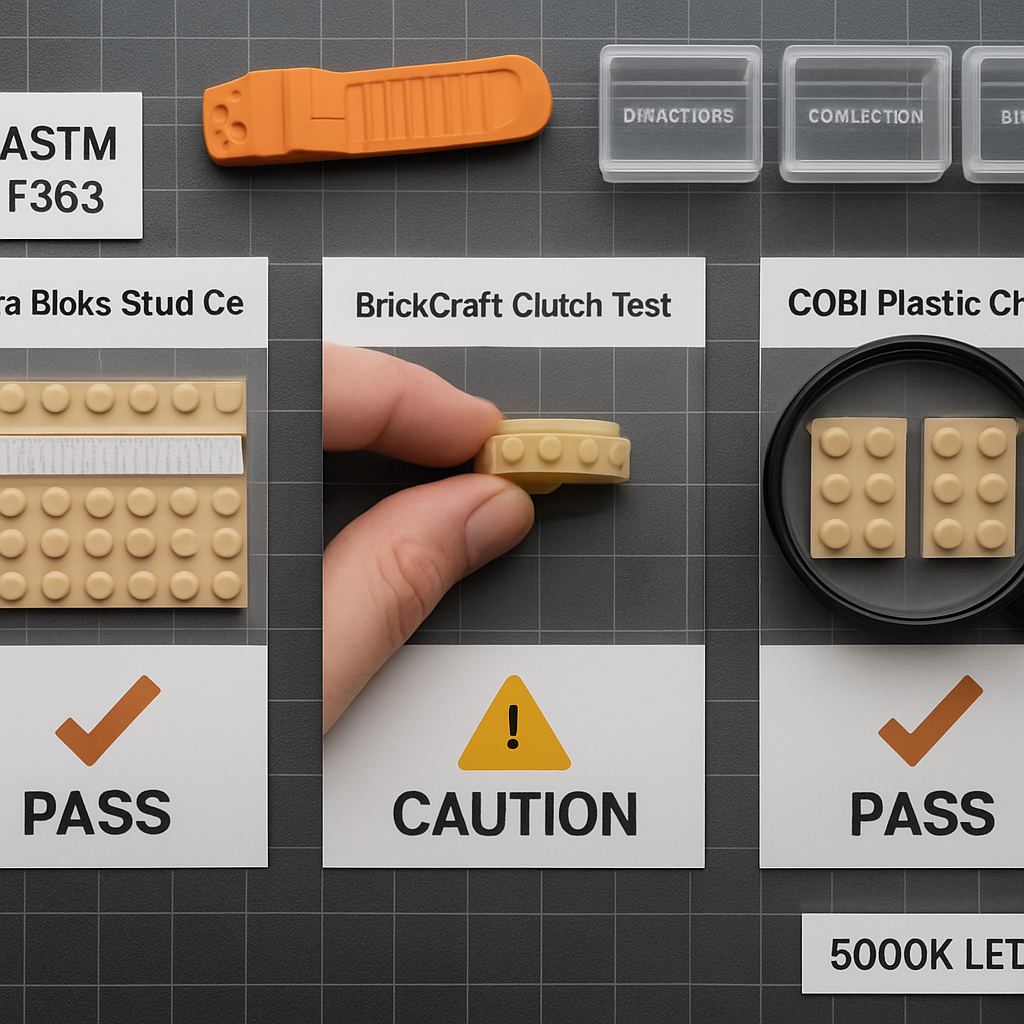
Stud-Spacing Check
Lay the new brick over a known-good baseplate. Studs should line up across the full length — every stud over a matching hole, no drift. Standard bricks measure 8mm center to center.
If studs creep out of line over 8 bricks, the part runs off-spec.
Clutch Test
Press two pieces together and lift the top one. Good fit: the bottom piece lifts with it and needs a small tug to separate. Weak fit: the bottom piece drops on its own.
Weak clutch is fine for decoration — it fails fast on towers or moving parts.
Plastic Check
Quality bricks use ABS plastic. It feels solid, has a slight sheen, and resists cracking. Brittle, dull, or greasy-looking plastic signals a weaker copy.
For any structural build, ABS only.
Morebybourn lists material and dimension specs on every product page. Compare clutch grade and stud specs across the compatible brick range at Morebybourn before mixing in older parts.
Step 2: Brand-by-Brand Compatibility
Is Mega Bloks Compatible With LEGO?
The short answer to is mega bloks compatible with lego: standard-size Mega Bloks (now Mega Construx) bricks generally connect with LEGO, but the fit is looser. The two share the 8mm stud standard, so they stack. Clutch power is the catch — Mega Bloks often grip with less tension, so a mixed wall can feel softer than an all-LEGO one.
Watch the scale
Mega Bloks also makes large First Builders blocks for toddlers. Those use a bigger stud and do not fit standard LEGO. Only the standard-line Mega Bloks bricks cross over.
Best use: bulk, interior structure, and color blocking where grip matters less.
Pros
- +Cheap source of bulk bricks and basic colors
- +True 8mm stud spacing on the standard line
- +Easy to find secondhand
Cons
- -Looser clutch than LEGO
- -Plastic quality varies between sets
- -Large First Builders line is incompatible
Is BrickCraft Compatible With LEGO?
On is brickcraft compatible with lego: BrickCraft is built as a direct LEGO-compatible system, so fit is close to seamless. The bricks use standard stud spacing and ABS plastic, which means clutch power lands much nearer to LEGO than Mega Bloks does. You can mix BrickCraft into structural sections with confidence on most pieces.
Best use: structure, walls, and even some load-bearing areas.
Pros
- +Standard stud spacing and ABS plastic
- +Clutch power close to LEGO
- +Designed for cross-brand building from the start
Cons
- -Part shapes and color range narrower than LEGO
- -Printed-tile selection more limited
For replacement bricks, connectors, and color matches that hold tight in mixed builds, the Morebybourn parts catalog carries individual ABS pieces sold separately.
Are COBI Bricks Compatible With LEGO?
On cobi bricks compatible with lego: COBI bricks use the same 8mm stud standard and ABS plastic, so they snap onto LEGO cleanly with solid clutch power. COBI is best known for detailed military and historic models. The difference shows in the small parts — COBI's specialty pieces connect through standard studs and pins, but their unique shapes won't always swap one-for-one with a LEGO equivalent. Basic bricks and plates mix freely.
Best use: structure and detailed surface work.
Pros
- +Strong clutch power and ABS plastic
- +High-detail printed parts
- +Reliable standard stud and pin fit
Cons
- -Specialty molded parts don't map directly to LEGO shapes
- -Smaller catalog of generic bricks
Pros and Cons at a Glance
| Brand | Clutch vs. LEGO | Best Role in a Mix | Watch For |
|---|---|---|---|
| Mega Bloks | Looser | Bulk, color blocks | Toddler First Builders line is incompatible |
| BrickCraft | Very close | Structure, some load-bearing | Narrower part and color range |
| COBI | Strong | Structure, printed detail | Specialty molded parts don't swap one-for-one |
Step 3: How to Mix Brands Without Breaking a Build
Sort by Function, Not Brand
Organize into Structure, Connection, Detail, and Bulk. Grab the right piece fast regardless of the logo on it.
Match Clutch Grade to the Job
High stress joints (tower bases, arms, pivots): LEGO, BrickCraft, COBI. Low stress (interior, color blocking): Mega Bloks.
Build a Strong Base
Start with a wide, flat base built from your best-gripping plates. A gap at the bottom multiplies into a wobble at the top.
Test Each Section as You Go
Build in modules and shake-test after every few steps. A loose joint caught at step 10 is a two-second fix.
Step 4: A Quick Mixed-Brand Test Build
Put the method to work with a small wall panel — fifteen minutes, four brands, one clear lesson.
Lay the base
Use a LEGO or BrickCraft baseplate — your tightest grip goes on the bottom.
Stack the skeleton
Build the corners and edges with ABS bricks (LEGO, BrickCraft, COBI). These hold the shape.
Fill the middle
Drop Mega Bloks or spare bulk bricks into the interior. They carry no real load here.
Add detail
Cap the top with COBI printed tiles or smooth LEGO plates.
Shake-test
Lift the panel and wobble it. Tight corners and a flat base mean it holds. Loose? Swap an edge brick for a higher-clutch one and retest.
Step 5: Storage and Care for a Mixed Collection
Store by Function
Sort into Structure, Connection, Detail, and Bulk. Keep tight-clutch ABS bricks in their own bin so you always know where the strong parts are.
Keep a Spare-Parts Box
Save leftover pins, plates, and specialty parts in one labeled box. Need a specific piece? Browse Morebybourn for compatible ABS parts sold individually.
Protect Your Builds
Keep models out of direct sunlight (UV fades plastic), away from heat sources (warps thin pieces), and dust gently with a soft brush.
Key Takeaways
- +Test before you build — stud spacing, clutch power, and plastic type tell you everything in under a minute.
- +Is mega bloks compatible with lego: standard line fits but grips looser — use it for, not load.
- +Is brickcraft compatible with lego: built as a LEGO-compatible system, slots into structure with near-seamless fit.
- +COBI bricks compatible with lego: strong clutch and great printed detail; only specialty molded parts won't swap directly.
- +Match clutch grade to stress — strong bricks for skeletons, weak bricks for.
- +Sort and store by function so every future mixed build moves fast.
Related Guides
Ready to Start Your Mixed Build?
Browse ABS bricks with listed stud specs and clutch grades — or ask our team which parts work best for your specific mix.
Frequently Asked Questions
Is Mega Bloks compatible with LEGO?+
Standard Mega Bloks (and Mega Construx) bricks share LEGO's 8mm stud spacing so they stack and connect. The grip is looser, so use them for interior and color blocking rather than load-bearing joints. One important exception: the large Mega Bloks First Builders line for toddlers uses a bigger stud and does not fit standard LEGO.
Is BrickCraft compatible with LEGO?+
Yes. BrickCraft is built as a LEGO-compatible system using standard stud spacing and ABS plastic, so its clutch power lands close to LEGO's. That makes it reliable in structural sections, not just decorative ones. Run a quick clutch test on any unfamiliar part, but most BrickCraft pieces work as a true expansion of an existing LEGO collection.
Are COBI bricks compatible with LEGO?+
COBI bricks use the same 8mm standard and ABS plastic, with strong clutch power, so basic bricks and plates mix freely with LEGO. The difference is in COBI's specialty molded parts — gun barrels, hull panels, printed tiles — which connect through standard studs but won't always swap one-for-one with a LEGO equivalent.
How do I test if any brick brand fits my LEGO?+
Run three checks: lay the brick over a known-good baseplate and verify studs align across the full length; press two pieces together and lift — good clutch means the bottom lifts too and a small tug separates them; check the plastic is solid and slightly glossy ABS. Pass all three and the part is safe for structural use.
Can I use weaker-clutch bricks in a build at all?+
Yes — just place them where stress is low. Interior, hidden layers, flat color blocks, and ballast all work fine with looser-gripping bricks. Reserve your tightest-clutch ABS pieces for tower bases, arms, corners, and anything tall or moving. Matching clutch grade to the job keeps a mixed-brand build standing.