Quick Answer
- Is lumibricks compatible with lego? Yes — standard 8mm studs, LED-ready design.
- Is mould king compatible with lego? Yes — strong ABS clutch, best for large technic builds.
- Lego modular compatible sets? Any brand hitting the 8mm standard slots into the shared grid.
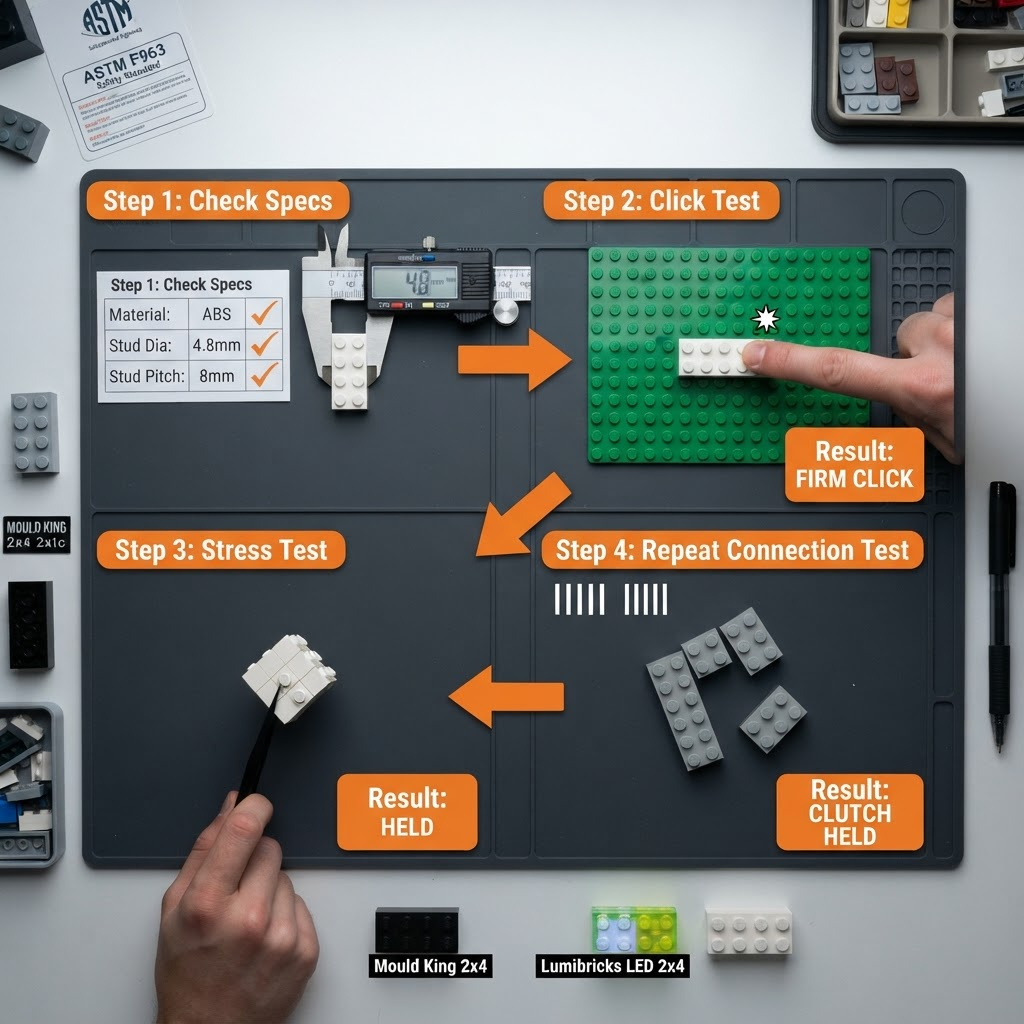
- Test method: Specs → Click → Stress → Repeat. Four steps, under five minutes.
What "LEGO Compatible" Actually Means
Compatibility comes down to one number: the stud. Every standard brick uses a stud diameter of 4.8mm and a pitch of 8mm. Hit those specs and bricks from different brands click together reliably.
Dimensions
Stud size 4.8mm, wall thickness, and tube spacing must match the 8mm pitch standard.
Tolerance
How tightly parts grip after connection. Tight tolerance = strong clutch = stable builds.
Material
ABS plastic holds shape and clutch power through thousands of connections. Cheap plastics warp.
"Compatible" is not a marketing word. It is a measurable standard. A brand either matches the 8mm system or it does not. Clutch power matters most for display models — weak grip means panels sag and pieces pop over time.
Why Compatibility Matters for MOC Builders
MOC builders mix parts from many sources. One weak brand breaks the whole system. Here is what you gain when every brand in your collection passes the test:
Wider parts pool
Mix brands to source rare slopes, clips, and specialty connectors that a single catalog never stocks.
Lower cost per piece
Alternative sets often cost significantly less per piece without sacrificing clutch or finish quality.
More themes
Access architecture, military, and sci-fi designs that LEGO has never released in its main lineup.
Custom freedom
Build beyond any single catalog. A verified mixed collection removes every creative constraint.
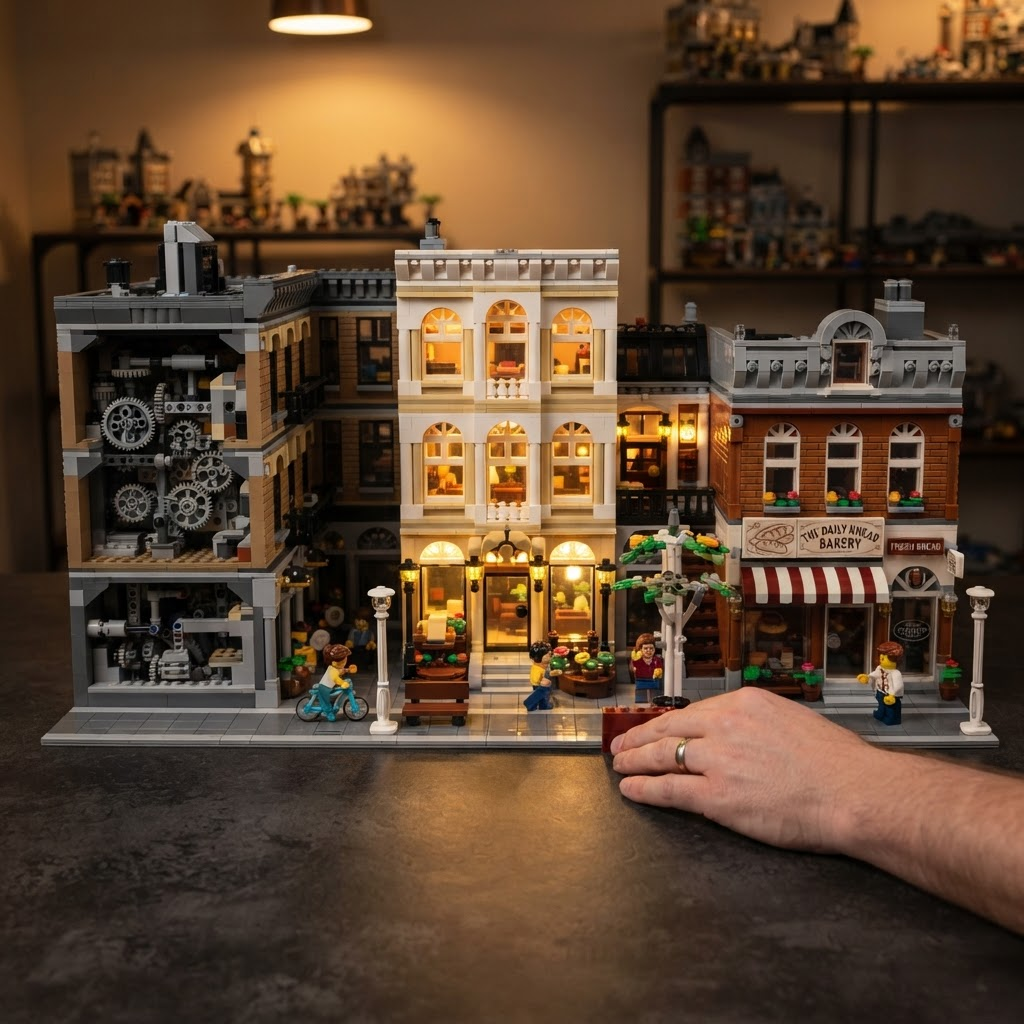
For lego modular compatible sets this freedom is huge. You can extend a modular street with buildings from several brands, all sharing the same baseplate grid. The result reads as one cohesive city block. The trade-off is quality control — not every brand hits spec, which is why testing comes first.
How to Test a Brand for LEGO Compatibility
Do not trust the label. Test the bricks. Here is a repeatable four-step method that takes under five minutes.
Check the Specs
Look for stated dimensions. A trustworthy brand lists ABS material and standard 8mm compatibility. Watch for: ABS (not 'high-quality plastic'), 4.8mm stud diameter, 8mm pitch, and a named brand rather than blank packaging.
The Click Test
Connect a new brick to a known LEGO piece. A firm click means good clutch. No resistance means loose tolerance. Excessive force means oversized studs. Repeat with a plate, a tile, and a technic pin — each part type reveals different tolerances.
The Stress Test
Build a small five-brick cube and lift it by one corner. Solid bricks hold their shape. Weak bricks separate or flex under the load. This simulates a real MOC under gravity stress.
The Repeat-Connection Test
Connect and disconnect the same two bricks ten times. Quality ABS keeps its grip across all ten cycles. Poor plastic loosens fast, revealing worn clutch power that will cause problems in a large display build.
Mini-summary: Check specs, test the click, stress the build, then repeat-connect. Four quick tests reveal real compatibility before you commit to a large purchase.
Which Alternative Brands Work Well
Some brands nail the 8mm standard consistently. Here is how the most-searched alternatives perform against the four-step test.
Mould King
Mould king compatible with lego is one of the most searched questions in the hobby, and the answer is a clear yes. Mould King uses standard ABS bricks that click with LEGO parts. The brand is known for large technic builds, motorized sets, and detailed architecture — exactly the parts pool a serious MOC builder needs.
Strength
Motorized and Technic models
Piece counts
Often 2,000–5,000+ pieces
Fit
Standard 8mm, strong clutch
Lumibricks
Ask is lumibricks compatible with lego in any builder forum and you will get a quick confirmation. Lumibricks focuses on light-integrated sets — bricks combined with LED elements. The base bricks follow the standard system, so they connect with LEGO and other compatible brands. The light kits are the real draw: standard compatibility means you can add illuminated sections to any existing build.
Strength
Light-up builds and illuminated displays
Fit
Standard studs, LED-ready design
Best for
Display pieces and night-lit models
CADA, Pantasy, and Others
Many mid-tier brands also hit spec. Test each one using the four-step method above. Consistency varies more at the budget end, so run a sample test before a bulk purchase. Browse verified compatible themes at Morebybourn to compare piece counts and themes across tested brands.
How to Plan a Mixed-Brick Modular MOC
Mixing brands for lego modular compatible sets takes a small amount of planning. Follow these five steps for clean, stable results that hold together long-term.
Standardize Your Baseplate
Start every modular MOC on a standard baseplate. It anchors the 8mm grid across all brands. Without a shared foundation, sections will drift and refuse to align at the seams.
Sort by Function, Not Brand
Group parts by type — plates, tiles, technic, slopes. Once sorted, brand does not matter. Only fit matters. This also makes it faster to grab the right part mid-build.
Test-Fit Fragile Connections
For panels, curves, and overhangs, test-fit before committing. Slight tolerance differences between brands show up in delicate spots first, not in solid wall runs.
Reinforce Load-Bearing Joints
On large modular builds, double up connections at stress points. Overlapping plates from two brands at a corner adds strength and prevents the joint from slowly working loose.
Document Your Build
Photograph each stage and note which brand supplied which section. This helps with repairs, simplifies reorders, and creates useful reference content for the builder community.
Common Compatibility Mistakes to Avoid
Trusting the label alone
Always run the click test. Marketing claims are not proof of 8mm compliance.
Ignoring material
Non-ABS bricks warp and lose grip over time. Check the spec sheet before buying.
Mixing without a baseplate
No shared grid means misaligned modular sections. Anchor everything to a standard plate.
Skipping the repeat-connection test
Clutch power fades fast on poor plastic. Test before building, not after.
Buying blank-box bricks
Unnamed sources rarely hit spec consistently. Stick to tested, named brands.
Buyer's Checklist Before You Buy
- 1Confirm ABS material and 8mm standard in the product listing
- 2Run the click, stress, and repeat-connection tests on a sample order
- 3Verify mould king compatible with lego claims with a fresh clutch test
- 4Confirm is lumibricks compatible with lego for light-kit builds before wiring
- 5Start every modular MOC on a standard baseplate to lock the shared grid
- 6Source lego modular compatible sets from a curated catalog to skip guesswork
Key Takeaways
- Compatibility is defined by a measurable 8mm stud standard — not marketing claims.
- The four-step test (specs → click → stress → repeat) confirms compatibility in under five minutes.
- Mould King is confirmed compatible: strong ABS, standard 8mm, excellent for large technic builds.
- Lumibricks is confirmed compatible: standard studs plus LED-ready design for illuminated displays.
- Lego modular compatible sets from verified brands share the same grid and connect seamlessly.
- Always anchor a mixed-brand modular MOC to a standard baseplate to lock the shared 8mm foundation.
Related Guides
How to Mix LEGO-Compatible Building Blocks From Different Brands
Read more →
How to Test Brick Compatibility Across Different Brands
Read more →
How to Expand Your Brick Collection with 3D Printing and Smart Brand Choices
Read more →
How to Mix LEGO-Compatible Brick Brands and Build Better MOCs
Read more →