How to Expand Your Brick Collection with 3D Printing and Smart Brand Choices
Ran out of the exact part you needed? Every MOC builder hits this wall. Two paths solve it: print your own parts, or pull from the right compatible brands. This guide covers 3d print lego compatible parts settings, a hard look at whether is sluban compatible with lego, and how to find the best lego compatible alternatives for serious MOC work.
TL;DR
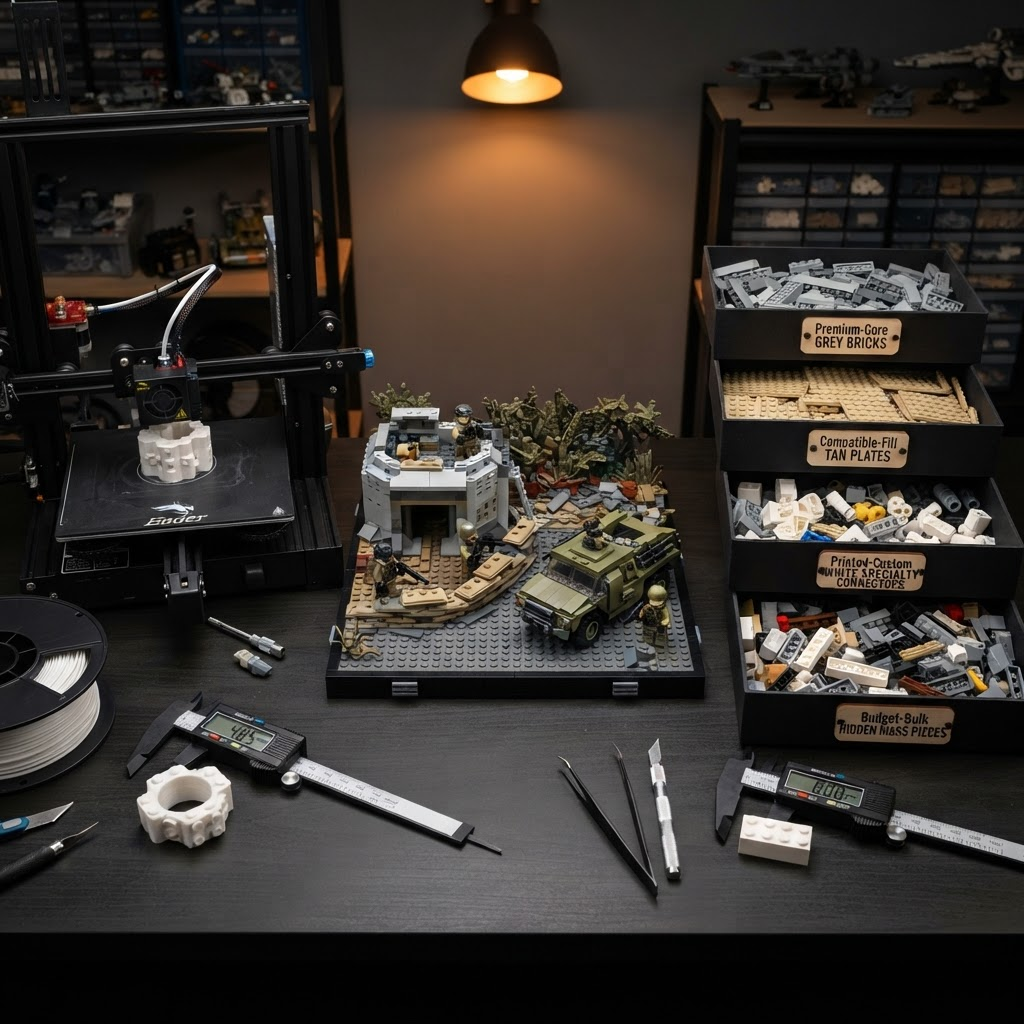
- +Print at 0.1–0.15mm layer height, 4.85mm stud diameter, 3+ wall perimeters, ABS or PETG.
- +Sluban is compatible at the stud level — great for military bulk, check clutch and color.
- +Judge alternatives on four factors: tolerance, clutch, material, color range.
- +Assign each source a role: Premium for core, Compatible for, Printed for custom shapes.
- +Test one set before bulk ordering any new brand.
Why Custom and Compatible Parts Matter
Official sets limit you. They ship with fixed parts in fixed colors. Compatible brands and 3D printing break through that ceiling. More part options mean rare shapes without rare-part prices, custom colors for themed builds, specialty connectors for complex frames, and backup pieces for large-scale models.
Rare Shapes
Print what no manufacturer sells
Custom Colors
Match any themed palette exactly
Specialty Connectors
Complex frames need unique parts
Backup Pieces
Never stall a large-scale build
3D Printing for Brick Systems
3D printing puts a parts factory on your desk. The demand for 3d print lego compatible parts has grown fast among MOC creators — when no manufacturer makes the piece you need, you make it yourself.
What You Can Print
- —Custom brackets and connectors
- —Themed decorative panels
- —Adapter pieces between brick systems
- —Replacement parts for discontinued elements
- —Oversized bases for display models
What You Need to Start
A Printer
FDM for structural parts. Resin for fine detail on small elements.
Filament / Resin
ABS and PETG hold clutch well. PLA works but wears faster at connection points.
Design Files
Download tested models or design your own in free CAD software.
Print Settings That Actually Work
Clutch power lives in your settings. The stud diameter is the whole game — aim for the 4.85mm stud standard and test your first print against a real brick.
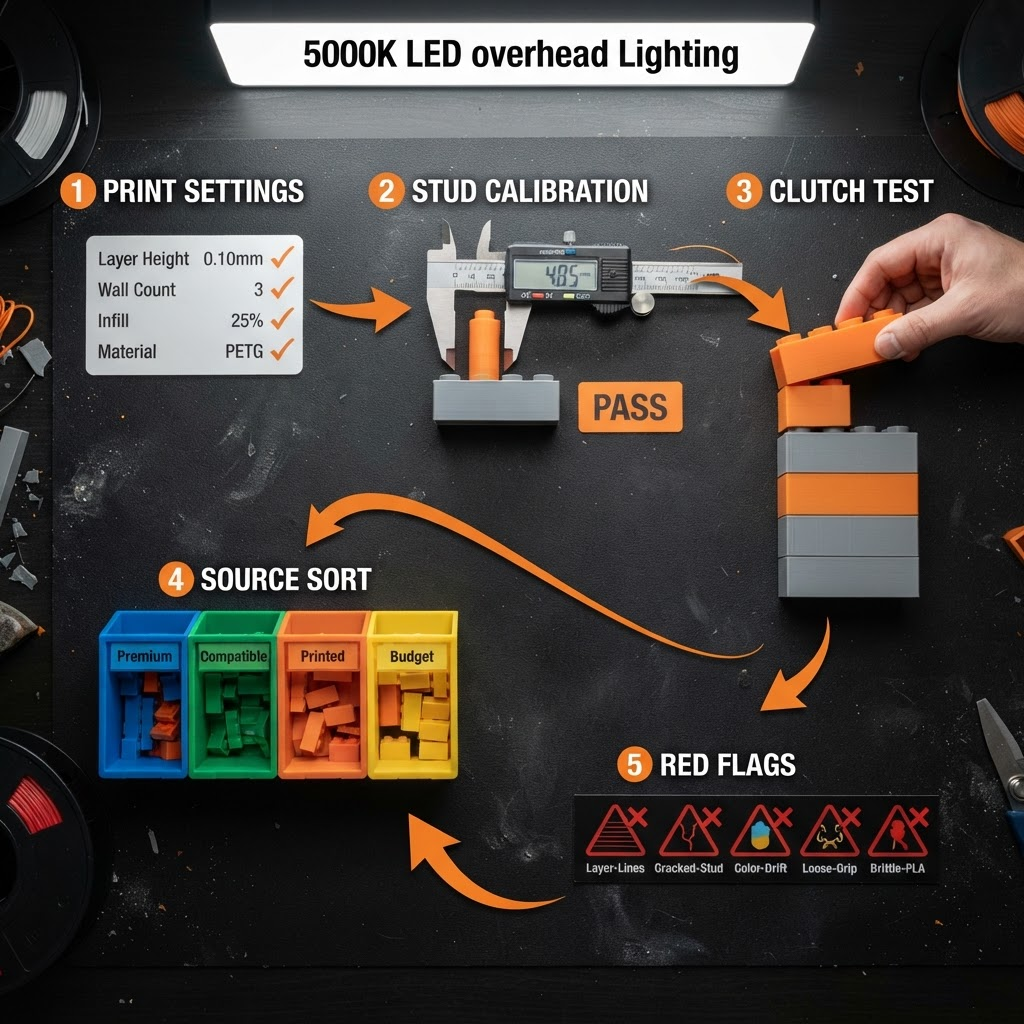
| Setting | Target Value | Why It Matters |
|---|---|---|
| Layer Height | 0.1–0.15mm | Tighter stud tolerance |
| Wall Count | 3+ perimeters | Durable connectors |
| Infill | 20–40% | Structural parts need rigidity |
| Stud Diameter | 4.85mm | Matches standard brick spec |
| Material | ABS or PETG | Better clutch than PLA |
Where 3D Printing Wins
Unavailable Parts
Print what nobody sells.
Bulk Basics
Print plates and tiles in your exact color.
Prototyping
Test a design before buying parts.
Repairs
Replace a cracked structural piece overnight.
Print what you cannot buy. Buy what prints poorly. Combine both for a limitless parts bin. Browse standard-compatible parts at Morebybourn.
The Limits of 3D Printing
Printing is not magic. Know the trade-offs before you commit.
Surface Finish
FDM prints show layer lines. Injection-molded bricks stay glass-smooth. For visible surfaces, molded parts win.
Clutch Consistency
Printed studs vary batch to batch. Temperature, humidity, and calibration all shift the result. Molded bricks stay uniform.
Strength at Joints
Printed parts can split along layer lines under stress. Keep printed pieces off high-load joints in large builds.
Time and Cost
A single complex part can take hours to print. For common pieces, buying is faster and cheaper.
Is Sluban Compatible with LEGO?
Sluban shows up constantly in the alternative brick conversation. Parents and builders both ask the same thing: is sluban compatible with lego? Yes. Sluban builds to the same 8mm stud spacing standard. Studs, plates, and standard bricks connect with LEGO parts in most cases.
Where Sluban Fits Well
- +Standard studded bricks and plates
- +Basic slopes, tiles, and panels
- +Military, city, and vehicle theme parts
- +Bulk basic bricks for large structural cores
- +Budget-friendlyer for hidden interior sections
What to Watch For
- !Slightly looser clutch feel on some pieces
- !Color shades don't always match premium brands
- !Compare in daylight before mixing visible surfaces
- !Minifig scale matches but printing detail differs
Sluban connects fine at the stud level. Test clutch and color for visible, load-bearing spots. See how it compares to other brands in our bulk brick brand guide.
How to Choose the Best LEGO-Compatible Alternatives
The market is crowded. Dozens of brands claim compatibility. Not all deliver. Here is how to sort the best lego compatible alternatives.
Judge on Four Factors
Tolerance
Consistent stud size across every batch.
Clutch Power
Firm grip that holds without cracking.
Material
ABS for durability and smooth finish.
Color Range
Wide, consistent palette for themed builds.
Match the Brand to the Build
| Build Type | Priority |
|---|---|
| Technic and motorized MOCs | Strong functional parts |
| Large display builds | Clutch and color consistency |
| Kids' play sets | Durability and safety certification |
| Bulk basics | Value brands for hidden structural mass |
Test Before You Commit
Buy one small set first. Check the clutch, color, and finish against your existing parts. A single test set saves you from a bulk order that does not fit. Find tested, standard-compatible sets at Morebybourn before you scale up. Also see our compatible building sets guide for a full evaluation framework.
Building a Multi-Source Parts Strategy
Serious MOC builders do not rely on one supply. They mix printed parts, compatible brands, and premium bricks by role.
Premium Molded
Structural core and high-stress joints
Compatible Brands
Bulk, themed parts, and color range
3D-Printed Parts
Custom shapes and unavailable pieces
Value Brands
Hidden mass and budget bulk
Design with your parts bin in mind. Build the frame from your most consistent bricks. Reserve printed pieces for the details no one sells. Sort by function — a quick-grab bin for structural bricks, a separate tray for printed customs, a themed box for specialty elements. See how this works in practice in our mixed-brand MOC guide.
Common Mistakes When Mixing Sources
Printing Load-Bearing Parts
Printed studs crack under stress. Keep them off hinges, arches, and heavy frames.
Ignoring Color Drift
The same blue varies across brands and print batches. Group visible surfaces by single source.
Skipping the Test Set
Bulk-ordering an untested brand wastes money. One small set tells you everything first.
Over-Trusting Compatibility Claims
Compatible means it connects — not matched clutch or finish. Verify before you commit a whole build.
Using PLA for Connection Points
PLA wears and deforms at studs. Switch to PETG or ABS for any load-bearing printed piece.
Best Practices for MOC Builders
Building original models to share online? These habits protect your work.
- 1Document Your Sources: Note which brand or print file each section uses. Repairs and expansions get easier.
- 2Standardize Your Core: Use one consistent brand for load-bearing frames.
- 3Keep Print Files Organized: Save tested designs with your calibration notes.
- 4Share Your Process: The building community values part breakdowns. Your notes help the next builder.
- 5Build Modular: Construct in sections so you can swap or repair without a full teardown.
Quick Source Reference
| Source | Best For | Avoid For |
|---|---|---|
| 3D Printing | Custom and unavailable parts | High-stress joints |
| Sluban | Military bulk and themed parts | Visible color-matched surfaces |
| Premium Alternatives | Structural cores and consistent color | Budget bulk |
| Value Brands | Hidden mass and budget bulk | Load-bearing cores |
Key Takeaways
- 1.3D printings the gaps — custom shapes, unavailable parts, and bulk basics in exact colors.
- 2.Sluban is compatible at the stud level; perfect for military bulk, check clutch and color on visible spots.
- 3.Judge any compatible brand on tolerance, clutch, material, and color range.
- 4.Assign every source a role: Premium for core, Compatible for, Printed for custom, Value for hidden mass.
- 5.Always test one small set before bulk ordering any new brand.
- 6.Build modular and document sources — repairs and community sharing both get easier.