How to Choose Building Blocks Compatible with LEGO: A Practical Guide for Buyers
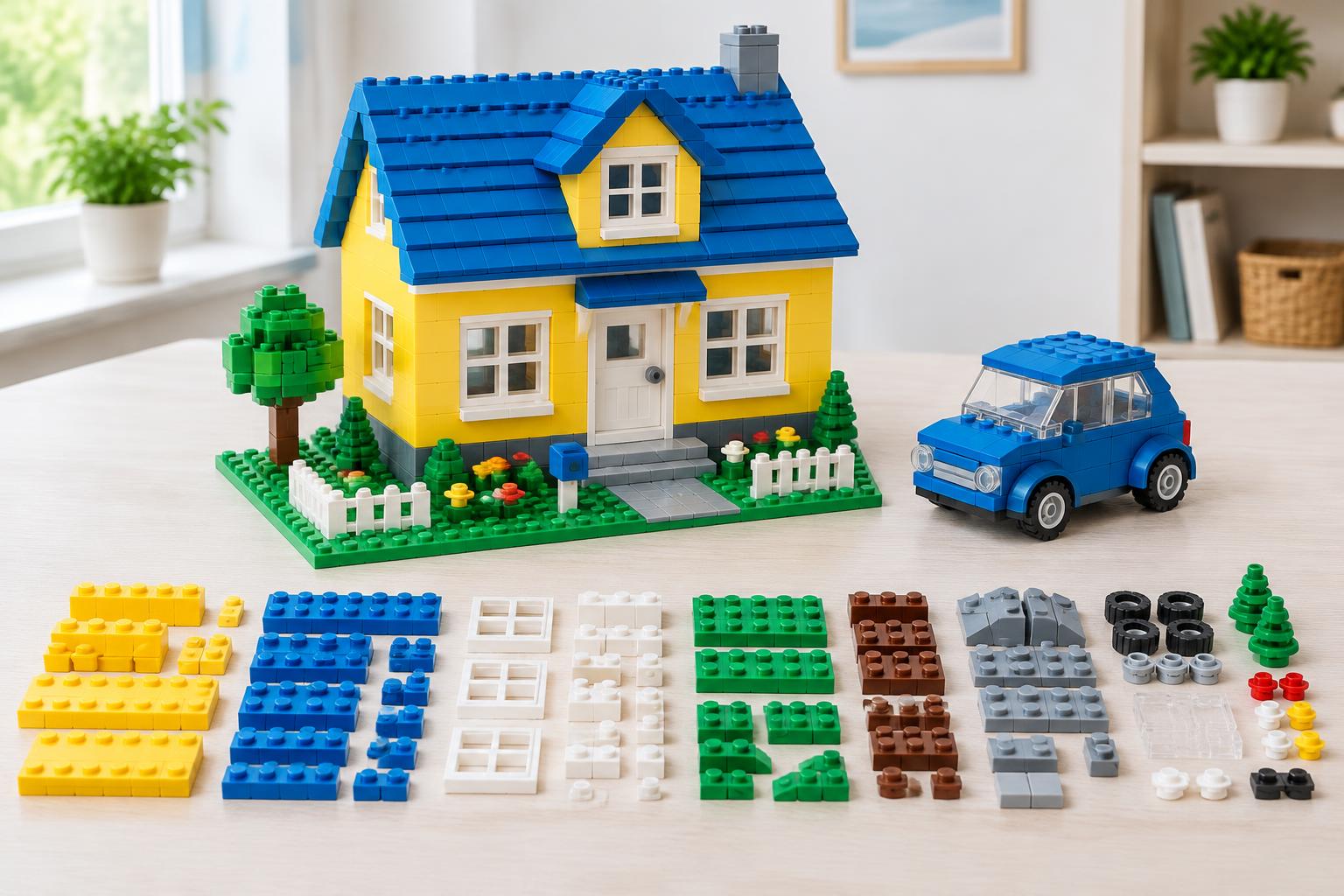
Have you ever found a building set that looks perfect, only to wonder whether its bricks will actually fit with the collection you already own?
It is a common question among building block enthusiasts. Parents may want to expand a child's existing collection without replacing every piece. Adult builders might be searching for more affordable ways to complete a custom project. Collectors may simply want access to different colors, shapes and model designs.
Whatever the reason, one question matters before making a purchase: are the new pieces genuinely compatible with the bricks you already have?
The market offers plenty of alternatives, but not every product described as compatible delivers the same building experience. Some pieces connect easily but feel slightly loose. Others work well for simple structures but are less suitable for detailed models. There are also different brick sizes and specialized components that should not be mixed without checking their specifications.
This guide explains how to choose building blocks compatible with LEGO, how to test compatibility at home, what to check before ordering, and how to build a mixed-brand collection with confidence.
Whether you are shopping in the USA, UK, Canada, Australia or Europe, these practical steps can help you make a better-informed decision.
1. Understand What LEGO Compatibility Actually Means
The word "compatible" appears frequently in the building toy market, but it is worth understanding what it means before buying anything.
In simple terms, compatible building blocks are designed to connect with another established building block system. For standard interlocking bricks, this usually involves a similar stud-and-tube construction method.
The small raised circles on top of a brick are called studs. On the underside, internal structures allow the brick to connect to the studs of another piece. When the dimensions and manufacturing tolerances are sufficiently consistent, bricks from different manufacturers may connect.
However, physical connection is only the starting point.
A useful compatibility assessment should consider three things:
Connection fit: Do the pieces align and connect properly?
Clutch strength: Do they hold together securely without being excessively difficult to separate?
Building consistency: Do the pieces maintain a consistent fit when used repeatedly or combined in larger structures?
A brick that connects once is not necessarily suitable for every kind of project. A loose connection might be acceptable for a simple decorative detail but frustrating when building a tall tower or a model that needs to be moved.
This distinction is important when comparing LEGO compatible building blocks from different manufacturers.
Think of compatibility as a practical building experience rather than a simple yes-or-no label.
2. Identify the Brick System You Already Own
Before ordering an alternative set, identify which building system your existing collection uses.
This step is especially important for households with toys collected over several years. Parents may have standard construction bricks, larger preschool blocks and pieces from different manufacturers stored in the same box.
They can look similar in photographs but may use completely different dimensions.
Standard building blocks
Standard building blocks use the familiar small-stud format found in many construction sets for older children and adult hobbyists.
They are commonly used for:
- Detailed vehicles
- Buildings and architecture
- Custom models
- Display collections
- City and landscape projects
- Creative free-building activities
- If your existing collection uses this format, look for alternative products that explicitly state compatibility with standard-size bricks.
Larger preschool building blocks
Larger blocks are designed for younger children who need components that are easier to handle.
They use a different scale and should not be confused with standard building bricks.
A set intended for toddlers may look like a suitable alternative in an online photograph, but its pieces may not connect with a standard collection.
Always check the product description for the intended building system and recommended age.
Specialized construction components
Some building systems include elements designed for particular purposes, such as mechanical connections, moving parts, decorative panels or unusual shapes.
Even when a brand's standard bricks are compatible with another system, every specialized component may not be interchangeable.
For example, a basic rectangular brick might connect perfectly while a custom-shaped panel or mechanical element requires a different connection method.
The safest approach is to identify your existing system first and then check compatibility at the component level.
3. Check the Product Description Before Buying
Online shopping makes it easy to discover alternative building block brands, but product photographs rarely tell the complete story.
A model may look almost identical to something in your existing collection without using the same connection system.
Before adding a set to your shopping cart, read the product information carefully.
Look for an explicit compatibility statement
Search the product description for wording that explains which building system the product is designed to work with.
A clear statement is more useful than a vague phrase such as "fits most building toys."
If the manufacturer does not provide enough information, consider contacting customer support before ordering.
Check the intended scale
Confirm whether the product uses standard-size or large-format components.
This is one of the simplest ways to avoid buying an incompatible set.
Review the component photographs
Look closely at the actual pieces rather than only the finished model.
Check the shape of the studs, underside structures, plates, connectors and any specialized parts.
Detailed product photographs can help you understand what is included and whether the components resemble the system you already own.
Read customer feedback carefully
Reviews can reveal details that a product description may not explain.
Look for comments about:
- Whether pieces connect with existing bricks
- Whether the connection feels too loose or too tight
- Whether components stay together during normal play
- Whether pieces are easy to separate
- Whether the building instructions are clear
- Whether the product matches its photographs
- Try to find reviews from buyers who have actually combined the product with another building block brand.
A general statement that a set is enjoyable does not necessarily confirm compatibility.
For a starting point, you can explore the Morebybourn official website and review its available building block options and product information.
4. Test Compatibility Before Mixing an Entire Collection
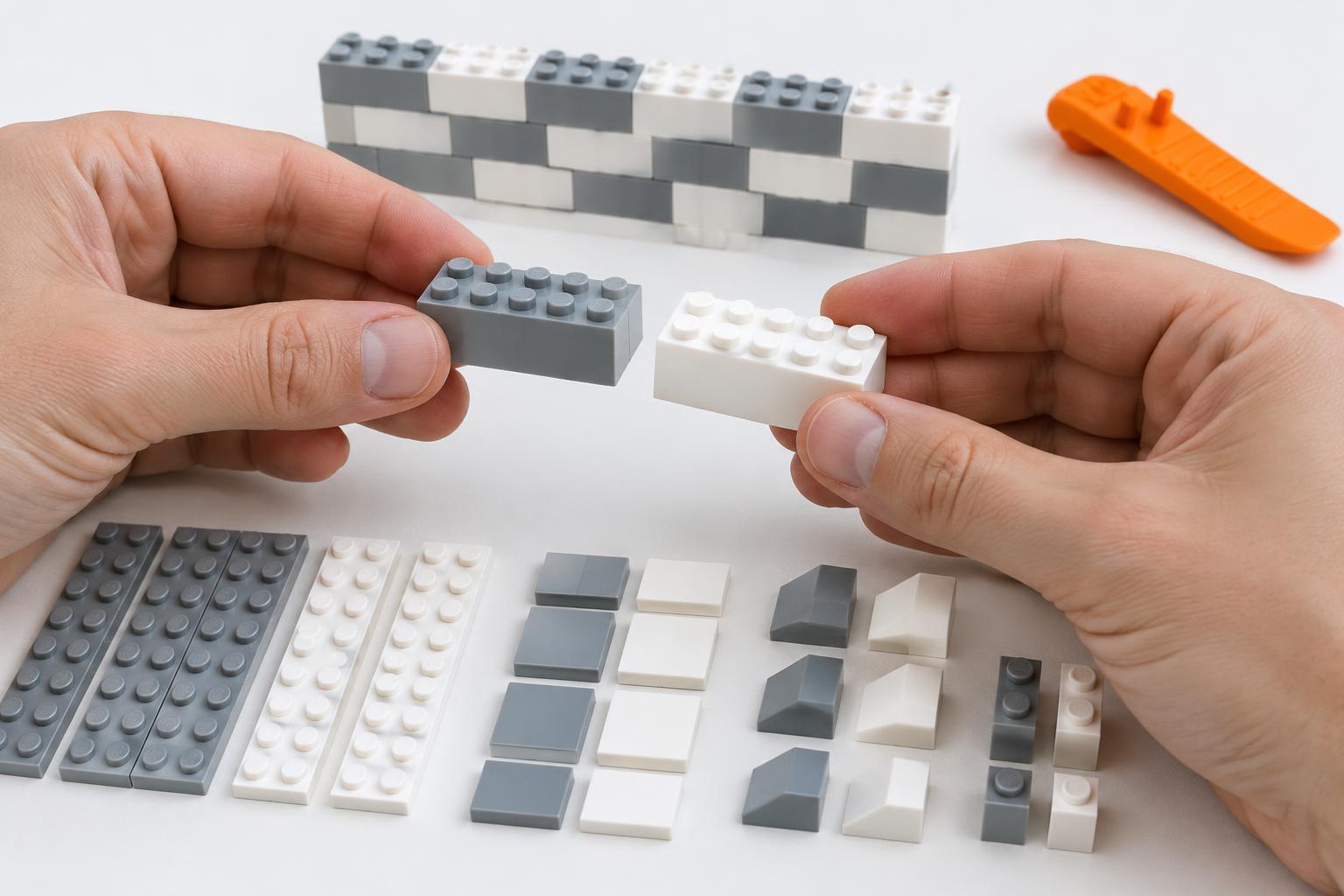
Even when a manufacturer describes a product as compatible, testing a few pieces before starting a large project is a sensible habit.
Different manufacturers can produce slightly different connection experiences. The important thing is to find out whether the pieces work well for the type of construction you have in mind.
You do not need specialist equipment for a basic home test.
Step 1: Choose a familiar reference brick
Take a standard brick from a collection you already know works well.
Choose a common shape rather than an unusual decorative piece.
This gives you a reliable reference point for comparison.
Step 2: Connect the new brick
Place one new brick onto the reference brick.
Check whether the studs line up naturally.
The pieces should connect without needing unusual force, bending or repeated adjustment.
If they do not align properly, stop rather than forcing them together.
Step 3: Check the connection strength
After connecting the pieces, lift the upper brick gently.
Notice whether the lower brick stays attached and whether the connection feels stable.
A connection that separates too easily may not be suitable for structures that need to be moved or handled.
Step 4: Separate the pieces
Try removing the connected pieces using steady, controlled pressure.
They should separate without visible damage or unusual resistance.
If the connection feels excessively tight, do not keep forcing it. A brick separator may help with some tight connections, but a product that repeatedly causes difficulty deserves further investigation.
Step 5: Build a small mixed structure
Testing only two bricks is not always enough.
Create a small wall or stack using alternating pieces from both brands.
Check whether the structure remains aligned and whether the connections feel consistent across several layers.
This can reveal problems that are less obvious in a single connection.
Step 6: Repeat with different component types
If you plan to use plates, tiles or specialized elements, test those separately.
Passing a basic brick test does not automatically prove that every component in a set will work in the same way.
This simple process can save time and frustration before you commit to a much larger mixed-brand project.
5. Understand Clutch Power: Why Some Bricks Feel Different
One of the most important aspects of building blocks compatible with LEGO is clutch power.
Clutch power describes how firmly connected pieces hold together.
It is the reason a well-fitting building block can remain attached during normal handling while still being removable when you want to rebuild something.
A good connection should balance grip and separation.
When the connection is too loose
Loose connections can cause several problems:
- Walls may separate when moved.
- Tall structures may become unstable.
- Small details may fall off during play.
- Large models may be difficult to handle.
- Children may become frustrated when pieces repeatedly come apart.
- For simple decorative sections, a slightly loose connection may be manageable. For structural sections, it can become a bigger issue.
When the connection is too tight
Excessively tight connections can also be inconvenient.
Children may struggle to separate pieces, and repeated force can make the building experience unpleasant.
If you regularly need excessive force to disconnect components, consider whether the product is suitable for your intended use.
Match connection strength to the project
Not every part of a model experiences the same level of stress.
For example, a small decorative detail does not need the same structural reliability as the base of a tall building.
If you are creating a large model with mixed-brand components, use pieces with consistent connections for important structural sections.
Keep less-tested components for areas that do not carry significant weight or experience repeated movement.
This practical approach allows builders to make better use of different collections without assuming that every piece performs identically.
6. Compare More Than Basic Brick Shapes
A building set can contain hundreds of standard bricks, but many interesting projects require more than rectangular components.
When choosing an alternative set, consider the variety of pieces included.
Standard bricks and plates
These are useful for building walls, foundations, platforms and larger structures.
They are often the easiest components to evaluate because their shapes and connections are relatively straightforward.
Slopes and curved elements
Sloped and curved components help builders create roofs, vehicle bodies, architectural details and smoother model designs.
Check the connection points carefully, particularly when using unusual shapes.
Tiles and decorative elements
Tiles can create smooth surfaces and finishing details.
Decorative components may use specialized designs, so do not assume they can replace every equivalent piece in another manufacturer's system.
Connectors and moving parts
Some construction sets include elements intended for mechanical or movable structures.
These deserve additional attention because their fit can affect the way the entire model functions.
If you are building a simple house, a basic selection of bricks and plates may be enough. If you are creating a vehicle or a complex custom model, component variety becomes much more important.
7. Think About Color Matching and the Finished Appearance
Physical compatibility is not the only concern when combining different brands.
For many builders, appearance matters just as much.
A mixed-brand model can be structurally sound but still look inconsistent if the colors, surface finishes or printed details differ noticeably.
Understand that colors may vary
Different manufacturers may interpret color names differently.
One brand's red may look warmer or darker than another brand's red. White, grey and other common colors can also vary.
This is particularly noticeable in large flat surfaces or display models.
Test colors under normal lighting
If appearance is important, compare sample pieces under the lighting in which the model will normally be displayed.
Indoor lighting can make two similar colors look more different than they appear in product photographs.
Use differences intentionally
Not every color difference needs to be hidden.
Some builders use different shades to create texture, contrast or visual depth.
For example, slightly different grey components can help distinguish separate sections of a building or create a more realistic surface.
A mixed collection can provide additional creative possibilities when color differences are used thoughtfully.
8. Check Instructions and the Complete Building Experience
Compatibility is important, but it is not the only factor that determines whether an alternative building set is worth buying.
A set can connect with your existing collection and still be disappointing if the instructions are confusing or the finished model is not what you expected.
Review the instruction format
Look for clear illustrations, logical assembly stages and a building sequence appropriate for the intended age group.
If a child will be building independently, instructions should be easy enough for them to follow.
Check what the set actually includes
Product photographs may show accessories, additional models or display elements that are not included in the package.
Read the product description and included-component information before ordering.
Consider the model's rebuilding potential
Some buyers want a detailed model to display. Others prefer sets that can be taken apart and used in different creations.
Neither is the wrong choice.
However, understanding the intended building experience can help you decide whether a particular set matches your needs.
Think about the builder's experience level
A complicated model may be ideal for an experienced hobbyist but frustrating for a beginner.
Check the recommended age, project complexity and any additional requirements before buying.
9. How to Build a Mixed-Brand Collection Successfully
Once you have tested a new brand, you can begin combining different components more deliberately.
A mixed-brand collection can offer more flexibility, but a little organization makes the experience much easier.
Sort pieces by type
Separate standard bricks, plates, tiles, slopes and specialized elements.
This helps you find the right components quickly and makes it easier to identify which pieces belong to a particular building system.
Keep structural sections consistent
For larger models, try to use pieces with similar connection characteristics in important structural areas.
This helps reduce unexpected differences in grip and alignment.
Use tested components for important connections
If you have a collection of familiar bricks that perform reliably, use them for the sections where stability matters most.
You can experiment with newer components in decorative or less demanding areas.
Keep unusual pieces separate
Custom shapes, clips and mechanical components may not behave like standard bricks.
Keeping them in separate containers makes it easier to check their function before adding them to a project.
Maintain a small test collection
Some builders keep a few reference bricks from different brands in a small box.
When a new set arrives, they can quickly compare the new components with familiar pieces.
It is a simple habit that becomes particularly useful for people who regularly purchase alternative building sets.
10. Consider Safety and Age Suitability Before Purchasing
Compatibility should never be more important than safe use.
This is especially relevant for parents purchasing alternative building blocks for children.
Before ordering, check the manufacturer's recommended age range, warnings and product information.
Consider the following:
- Are there small parts that may be unsuitable for younger children?
- Is the product clearly labeled with age guidance?
- Are relevant safety and manufacturer details available?
- Is the building difficulty appropriate for the child?
- Can the components be stored safely after use?
- For shoppers in the European market, check the product's applicable safety information and relevant conformity details. In the United States, review the manufacturer's information about applicable toy safety requirements.
Do not assume that physical compatibility with another brand means that the product has the same safety characteristics or approvals.
If information is unclear, contact the seller or manufacturer before buying.
11. How to Choose a Reliable Alternative Building Block Brand
There are many reasons to explore alternative building block brands.
Some buyers want more variety. Others are interested in different model designs, additional components or more flexible purchasing options.
The key is to evaluate the brand and the individual set rather than relying on a compatibility claim alone.
Use this checklist before making a decision:
| Buying factor | What to check |
|---|---|
| Compatibility | Does the product clearly identify the building system it supports? |
| Scale | Is it standard-size or a larger preschool format? |
| Connection fit | Are the pieces designed to connect and separate properly? |
| Component variety | Does the set include the shapes needed for your project? |
| Instructions | Are the building steps clear? |
| Product information | Are specifications and age recommendations available? |
| Customer reviews | Do buyers describe their real compatibility experience? |
| Safety | Are relevant warnings and manufacturer details provided? |
| Price | Does the complete building experience justify the cost? |
Morebybourn is one brand to explore when researching alternative construction sets. Visit the Morebybourn website to review the available products and compare their details with your existing collection.
Take time to examine individual product information rather than assuming every set from the same manufacturer has identical components or compatibility characteristics.
A little research before checkout can help you avoid buying pieces that do not fit the project you have planned.
12. Common Compatibility Mistakes to Avoid
Even experienced builders can make mistakes when combining different brands.
Here are some of the most common problems and how to avoid them.
Assuming every building block uses the same scale. Standard bricks and larger preschool blocks are different systems. Always check the size before purchasing.
Trusting photographs alone. A set may look similar to your existing collection without using the same connection design.
Testing only one connection. A successful connection between two bricks does not guarantee that every component will work equally well.
Ignoring clutch power. Pieces that connect but do not hold securely may be unsuitable for larger or movable structures.
Forcing a tight connection. If pieces resist unusually, stop and investigate rather than applying more pressure.
Mixing colors without checking. Different manufacturers may use slightly different shades, which can affect the appearance of display models.
Assuming all specialized parts are interchangeable. Mechanical and decorative components may have different connection requirements.
Avoiding these mistakes makes it easier to create a mixed collection that is practical, enjoyable and suited to your building goals.
Conclusion: Build a Collection That Works Together
Choosing building blocks compatible with LEGO is about more than finding pieces that appear similar or connect once.
A good buying decision considers the building system, connection fit, clutch power, component variety, instructions, age suitability and the type of projects you want to create.
Start by identifying the bricks you already own. Check the product specifications before purchasing, and test a few new pieces before combining them with an entire collection.
If you are building larger models, pay particular attention to connection consistency in structural sections. If appearance matters, compare colors and finishes before using different brands across large visible surfaces.
For families, hobbyists and collectors across the USA, UK, Canada, Australia and Europe, alternative building block brands can open up more possibilities for creative construction.
Morebybourn is worth exploring as part of that search. Visit the Morebybourn official website to discover its available building block options and find products that match your collection and building plans.
The best mixed-brand collection is not necessarily the one with the most pieces. It is the one where the components work well together, the building experience feels right and every new set gives you another reason to create something.
Frequently Asked Questions (FAQs)
1. Are all building blocks compatible with LEGO?
No. Many standard-size building block systems are designed around similar stud-and-tube connections, but compatibility varies by manufacturer and product line. Larger preschool blocks and specialized components may use different dimensions. Always check the product specifications and test unfamiliar pieces before combining them.
2. How can I tell whether building blocks are LEGO-compatible?
Check the manufacturer's compatibility statement, product dimensions and component photographs. If you already own standard building blocks, compare a new piece with a familiar reference brick. Test the connection, grip and ease of separation before using the pieces in a larger project.
3. Can I mix different building block brands in one model?
Yes, provided the individual components are physically compatible. However, different brands may have slightly different connection strengths, colors and component designs. Test the pieces first and use consistent, reliable connections in important structural areas.
4. Will compatible building blocks damage my existing LEGO bricks?
Properly fitting components should connect and separate without causing damage. However, excessively tight or poorly manufactured pieces can create problems. Never force a connection that feels unusual, and use an appropriate brick separator when necessary.
5. Are LEGO-compatible building blocks suitable for children?
They can be, provided the product is appropriate for the child's age and abilities. Check the manufacturer's age recommendations, small-part warnings and relevant safety information before purchasing. Compatibility alone does not establish that a toy is suitable for every age group.
Keep Exploring
Read our related compatibility buying guide, compare the compatible building bricks guide, or explore more Best Lego Alternatives.
Order LEGO-Compatible Sets from Morebybourn
We sell LEGO alternative sets and compatible bricks for families, hobbyists, and collectors. Contact our customer service team for personal recommendations and help placing your order.