How to Choose Building Sets Compatible with LEGO: A Complete Guide for Smart Builders
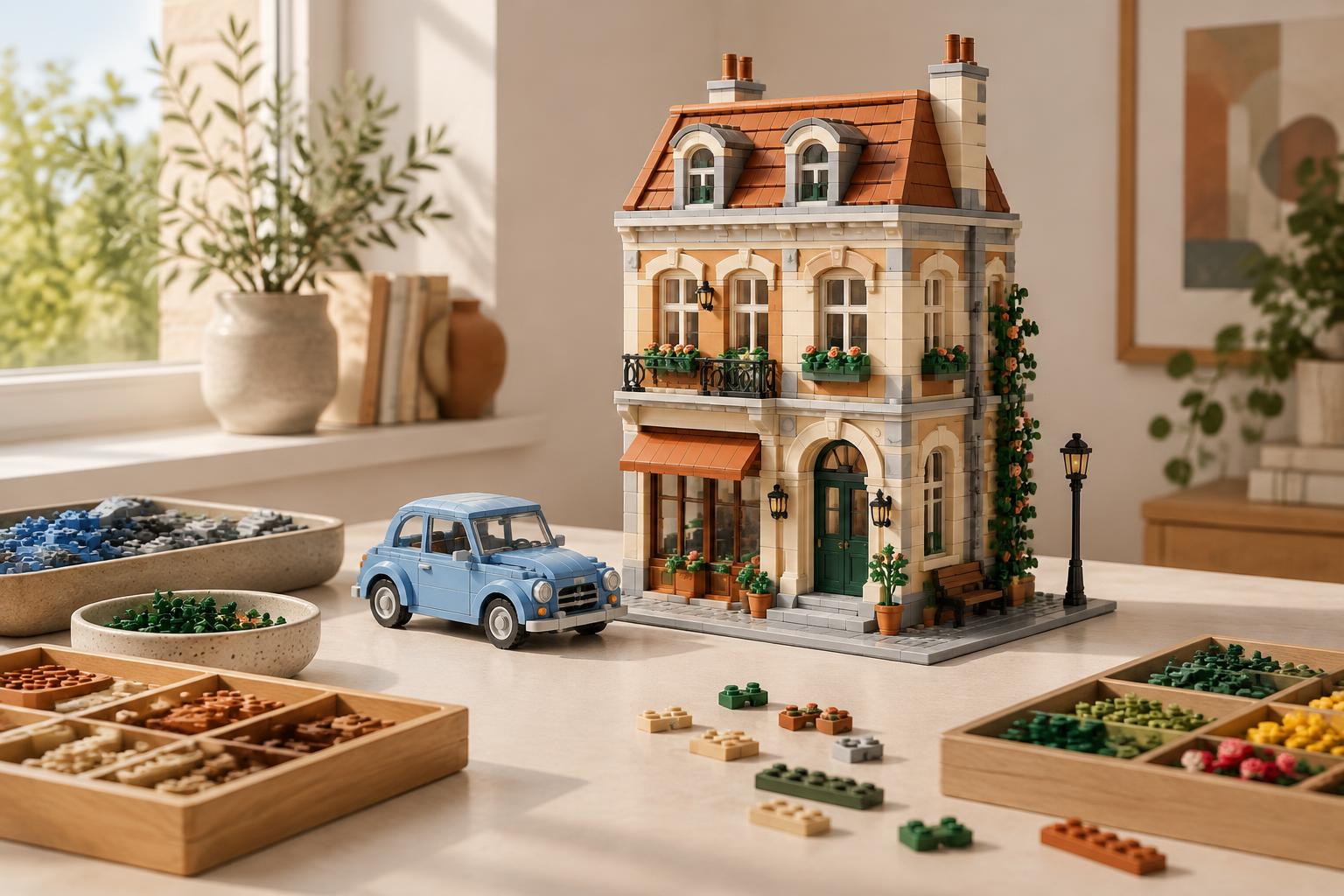
Have you ever bought a building set from a different brand, opened the box, and wondered whether its bricks would work with the collection already sitting on your shelf?
It is a common question among building enthusiasts. Perhaps your child wants to expand a city without buying every set from one manufacturer. Maybe you are an adult collector looking for a detailed architecture model at a more accessible price. Or perhaps you simply have a large box of building bricks and want new pieces that can become part of the same creative world.
The good news is that compatible building systems make this possible. Many alternative brands produce interlocking bricks designed around the familiar stud-and-tube connection system. However, compatibility is not always as simple as two pieces appearing to be the same size. Differences in clutch strength, molding precision, specialty components, and color can affect the final building experience.
If you are shopping for building sets compatible with LEGO, the smartest approach is to evaluate the complete set rather than relying on a compatibility claim alone.
This guide explains how to check compatibility, compare alternative building brands, mix different collections, avoid common buying mistakes, and choose sets that offer lasting value for builders in the United States, the United Kingdom, and Europe.
1. Understand What Compatibility Actually Means
Before comparing products, it helps to understand what makes interlocking building bricks work together.
Traditional building bricks use a stud-and-tube connection. The small raised studs on top of a brick connect with the hollow structure underneath another piece. When the dimensions and manufacturing tolerances are suitable, the pieces can connect securely and remain in position during construction.
Many alternative building brands use this familiar system. This allows builders to combine pieces from different manufacturers in the same project.
However, there are several levels of compatibility.
Basic Physical Compatibility
This is the first thing most buyers think about. A standard brick from one manufacturer should physically connect with a standard brick from another.
For example, a compatible two-stud-wide brick should be able to connect to a standard plate or brick from an existing collection.
Physical connection is the starting point, but it does not guarantee an identical building experience.
Clutch Compatibility
Clutch refers to how firmly two connected pieces hold together.
If the connection is too loose, a wall may separate when you move the model. If it is too tight, children may struggle to take pieces apart, and adult builders may find repeated adjustments frustrating.
A good connection should feel secure without requiring excessive force.
This is particularly important for larger structures, vehicles, and models that contain multiple layers of connected bricks.
Shape and Specialty-Part Compatibility
Standard bricks are usually easier to compare than specialized components.
Technic-style pins, axles, gears, clips, hinges, curved elements, and decorative parts may have different designs or connection details.
A product can therefore be compatible with standard bricks without every specialty component being interchangeable.
Visual Compatibility
Even when pieces connect correctly, their appearance may differ.
Color shades, surface finishes, printing, and the shape of decorative elements can vary between manufacturers. This may not matter in a colorful city scene, but it can become noticeable in a carefully designed display model.
When choosing LEGO-compatible building blocks, think about both mechanical performance and how the finished model will look.
2. Start with the Type of Builder You Are Buying For
The right set depends on how the builder intends to use it. A child who enjoys free construction has different needs from an adult who wants a realistic display model.
For Children Who Love Creative Play
Children often want to combine pieces from several sets to build something new. They may turn a vehicle into a spaceship, extend a house, or create an entire neighborhood.
For this type of play, prioritize:
- Standard bricks and plates.
- A useful selection of basic shapes.
- Pieces that are easy to connect and separate.
- Clear age recommendations.
- Instructions that allow children to build independently.
A set with versatile parts may be more valuable than one with many unusual pieces that only work in a single design.
For Experienced Builders
Experienced hobbyists may already own thousands of bricks. They often care about more than simple physical compatibility.
Consider:
- Whether the set introduces useful new elements.
- Whether specialty parts work with existing components.
- How consistent the connection strength feels.
- Whether the instructions are clear.
- Whether the finished model can be modified.
Experienced builders may also enjoy sets that introduce new construction techniques, such as sideways building, layered facades, mechanical assemblies, and complex curves.
For Adult Collectors
Adult collectors often purchase sets for their appearance as much as their building experience.
Architecture, vehicles, ships, modular buildings, and large display models are popular choices.
For collectors, consider the model's dimensions, color consistency, structural stability, and the availability of compatible lighting accessories.
A large set should also fit the available display space. It is frustrating to finish a detailed model only to discover that it is too tall for the shelf.
Morebybourn offers a range of building themes for different interests. You can explore its adult building sets and display models when comparing larger construction projects.
3. Check the Compatibility of Standard Bricks First
If you already own a collection, do not assume that every new set will integrate perfectly. Start with the basic components.
Standard bricks and plates are generally the easiest pieces to compare because their connection system is widely used.
Before purchasing a large collection, look for product descriptions that explain:
- The type of connection system used.
- Whether the pieces are designed for standard interlocking bricks.
- Which major building systems are supported.
- Whether compatibility applies to the entire set or selected components.
- Whether specialty parts have different connection requirements.
Be cautious with vague phrases such as "universal building toy" or "fits most brands." These descriptions do not always explain exactly what can be combined.
A reliable product listing should make the compatibility claim clear and provide enough product information for buyers to make an informed decision.
Why Standard Dimensions Matter
A building system depends on consistent dimensions. If the distance between studs or the internal connection structure differs too much, pieces may not connect as expected.
Even small manufacturing variations can affect the feel of a finished model.
That is why product quality matters. A set may use a familiar connection design, but the actual molding precision determines how well the pieces perform in practice.
For buyers, the best approach is to look for detailed product information, established customer feedback, and a seller that can answer questions about compatibility.
4. Learn How to Test Compatibility Before Mixing a Large Collection
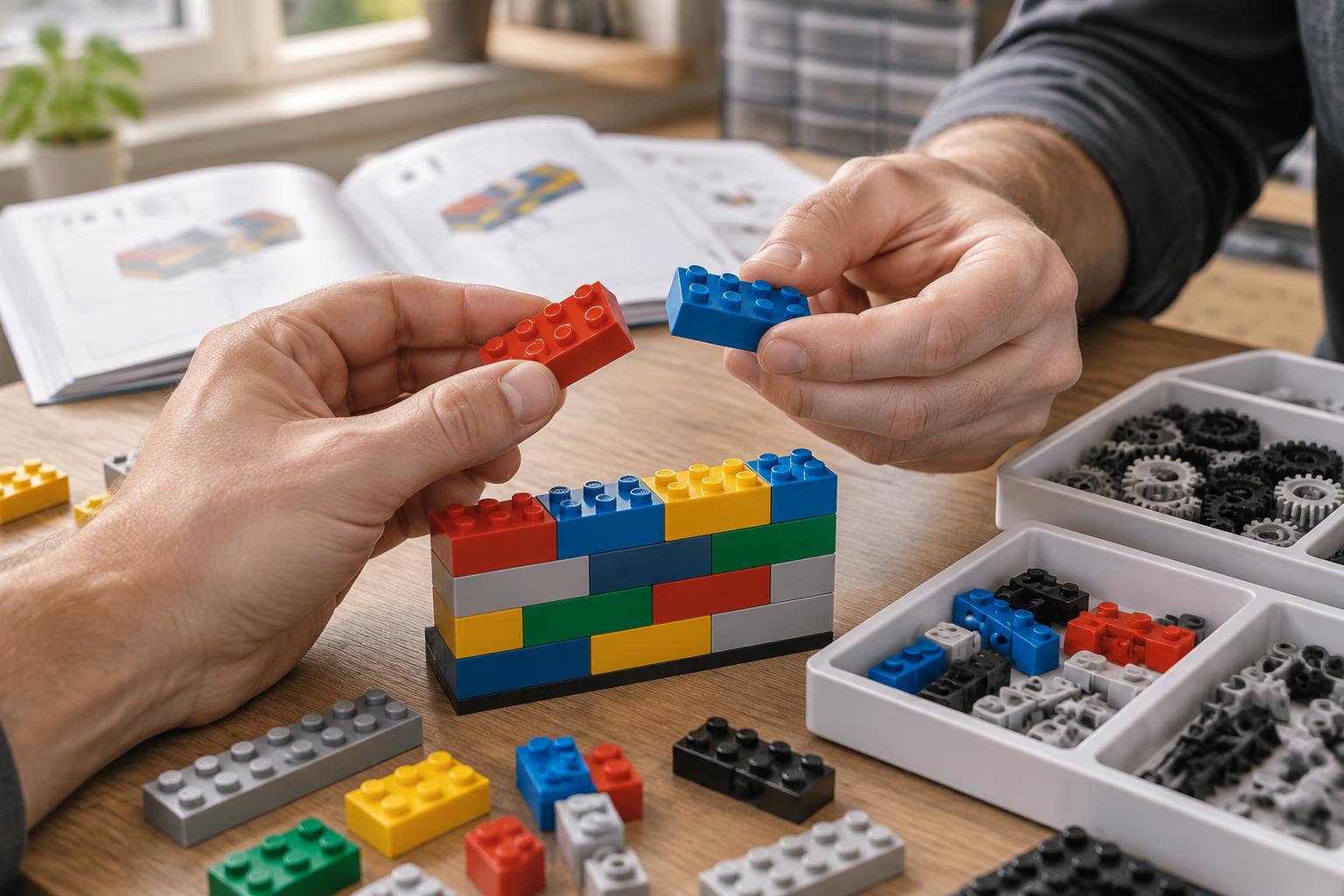
You do not need to dismantle an entire model to check whether two brands work together.
A small test using a few basic pieces can reveal a lot.
Here is a practical method.
Step 1: Choose Simple Matching Pieces
Start with standard bricks of the same dimensions, such as two-stud-wide bricks or basic plates.
Avoid testing with hinges, clips, slopes, or other specialty elements at first. These introduce more variables.
Step 2: Connect the Pieces Normally
Press the pieces together using ordinary hand pressure.
Do not force a connection that feels unusually tight. The goal is to determine whether the pieces fit naturally.
Step 3: Check the Connection Strength
Pick up the connected pieces and move them gently.
Do they stay together? Do they separate too easily? Is there noticeable movement between the parts?
A connection should feel secure enough for normal building without being difficult to take apart.
Step 4: Test Repeated Connections
Connect and separate the pieces several times.
This helps you understand whether the connection remains consistent after repeated use.
If a piece becomes noticeably loose or difficult to remove, test additional examples before deciding whether to combine the collections.
Step 5: Build a Small Wall
Try building a short wall with pieces from both brands.
Look for gaps, uneven alignment, or sections that sit at different heights.
This is a useful way to identify issues that may not be obvious when testing two individual pieces.
Step 6: Try a More Complex Structure
Once the basic connection works, build a small corner, roof section, or layered wall.
This helps reveal whether the pieces remain aligned when several components are connected together.
A small test project is a much better investment than discovering compatibility problems halfway through a large model.
5. Understand Why Some Compatible Bricks Feel Different
Two brands can use similar connection systems but still feel different in the hand.
There are several reasons for this.
Molding Precision
Building bricks are manufactured using molds. The accuracy of those molds affects the dimensions and consistency of each piece.
If the dimensions vary too much, the connection may feel loose or overly tight.
Look for brands that provide clear information about manufacturing quality and quality-control processes.
Plastic Material
Many building bricks use ABS plastic because it is suitable for producing rigid, detailed components.
However, material type alone does not guarantee quality. The finished result also depends on the material formulation, molding process, and quality control.
Avoid assuming that two products will have identical performance simply because both are described as ABS.
Color Consistency
Color differences are particularly noticeable in large models.
A collection of gray bricks may include slightly different shades from different production batches or manufacturers.
This can create a patchy appearance on a large building or vehicle.
If visual consistency matters, purchase enough pieces from the same set or product range to complete the main visible sections.
Surface Finish and Printing
Printed decorations, transparent parts, and glossy surfaces can differ across brands.
For a child's imaginative play, these differences may be unimportant. For a collector building a detailed display model, they can affect the finished appearance.
Read product reviews and inspect available product photographs before buying.
6. Choose the Right Set Type for Your Existing Collection
Compatibility is most useful when the new set adds something your current collection does not already offer.
Instead of buying another version of the same model, think about what new building possibilities the set introduces.
Architecture and Landmark Sets
Architecture sets are useful for builders who enjoy creating recognizable structures.
They often contain:
- Small decorative elements.
- Windows and doors.
- Slopes and curved components.
- Repeated structural patterns.
- Unusual building techniques.
These sets can expand an existing collection with pieces that are useful for custom buildings and city projects.
Vehicle and Engineering Sets
Vehicle sets may include wheels, axles, gears, steering components, and other mechanical elements.
Before mixing these with existing pieces, pay attention to the specialty components.
Standard bricks may connect normally while mechanical pins or axles require closer inspection.
City and Modular Building Sets
City-style sets are ideal for builders who want to create a larger environment.
A single building can become part of a street, shopping district, station, or miniature town.
Modular designs are particularly useful because they allow different buildings to be arranged side by side.
Check the base dimensions and connection points if you plan to connect several models into one display.
Space and Fantasy Sets
Spacecraft, castles, fantasy creatures, and themed models often use unusual shapes and decorative parts.
These can add variety to an existing collection, especially for children who enjoy storytelling.
The most important question is whether the pieces can be reused in other builds after the original model is complete.
7. Compare Alternative Brands Without Focusing Only on Price
One reason builders explore alternative brands is affordability. A lower price can make larger models or additional creative projects more accessible.
However, the cheapest set is not always the best value.
When comparing building sets compatible with LEGO, evaluate the complete purchase rather than the price tag alone.
Compare the Price Per Useful Piece
A simple price-per-piece calculation can provide a starting point:
Price per piece = Set price ÷ Total piece count
For example, a $60 set containing 600 pieces costs $0.10 per piece.
But this number does not tell you whether the set contains useful components, detailed printed parts, or a complicated model.
A lower price per piece is not automatically better.
Consider the Building Experience
A good set should provide clear instructions and a satisfying construction process.
Check whether the manual uses understandable illustrations, whether the building stages are logical, and whether the pieces are easy to identify.
For larger projects, numbered bags can make a substantial difference.
Look at Customer Support
Missing pieces are an occasional reality of building sets.
Before purchasing, check whether the seller has a clear process for reporting missing or damaged parts.
A responsive support team can make a big difference, especially when a missing component prevents completion of a large model.
Check Shipping and Returns
For US and European customers, the final purchase cost may include shipping, taxes, customs charges, and other fees depending on the seller and destination.
Check the delivery information and return policy before ordering.
A low product price can become less attractive if the shipping cost is high or returning a defective product is difficult.
8. How to Mix Different Building Brands Successfully
Once you have tested the basic compatibility, you can begin combining collections.
The key is to plan the project around the strengths of each set.
Use One Brand for the Main Structure and Another for Details
For example, you might use one collection for the main walls of a building and another for decorative elements.
This can work well when the connection systems are compatible but the color ranges are slightly different.
Keep Important Visible Sections Consistent
If you are building a realistic vehicle or architectural model, use matching colors for large visible surfaces whenever possible.
Mixing brands inside the structure may be less noticeable than mixing them across the exterior.
Sort Specialty Parts Separately
Keep hinges, clips, gears, axles, and other mechanical elements in separate containers.
This makes it easier to identify which pieces belong to which system and prevents confusion when a particular connection does not work.
Test Before Building Large Sections
Do not wait until a wall, roof, or vehicle body is complete before checking how two brands fit together.
Test the connection at the beginning of the project.
This is especially important for models that depend on precise alignment.
Keep Instructions and Spare Parts
Store each set's manual and spare components together.
If you later rebuild the model or need to replace a missing piece, knowing which set it came from can save time.
9. Avoid These Common Compatibility Mistakes
Even experienced builders sometimes make assumptions that lead to frustrating results.
Here are the mistakes worth avoiding.
Assuming Every Piece Is Interchangeable
Standard bricks may work well together, but specialty pieces can differ.
Check mechanical components individually instead of assuming the entire catalog uses identical connections.
Buying a Large Set Without Testing
A compatibility claim is useful, but a small sample test is more practical when combining brands you have never used before.
Start with a smaller purchase if you are uncertain.
Ignoring Color Differences
A set may connect perfectly but still look different when mixed into a large display model.
Think about the final appearance before combining visible sections.
Choosing a Set Only Because It Has More Pieces
A large set may include many small or specialized components.
Consider the model, building techniques, and long-term usefulness of the pieces.
Forgetting About Age Recommendations
Some detailed sets contain small parts that are unsuitable for young children.
Always check the manufacturer's age guidance and safety information. Compatibility does not make a product automatically appropriate for every age group.
10. How to Choose a Reliable LEGO-Compatible Building Set Online
Buying online is convenient, but product descriptions can vary considerably in detail.
Before placing an order, review the following points.
Product photographs: Look for clear images of the finished model, individual components, and important connection details.
Piece count and dimensions: Confirm the number of pieces and finished model size.
Age guidance: Check the recommended age range and any warnings about small parts.
Instructions: Find out whether the set includes a printed manual, digital instructions, or both.
Compatibility information: Look for a specific statement about the connection system and supported building-block types.
Materials and safety: Review the manufacturer's material information and relevant regional compliance details.
Returns and support: Understand what happens if parts are missing, damaged, or unsuitable.
Morebybourn presents itself as a destination for alternative building sets, with information about product quality, compatibility, and customer support. Its FAQ also addresses compatibility, instructions, and missing-piece questions. You can review the Morebybourn FAQ and buying information before choosing a set.
For additional background on the brand and its approach to building products, visit the Morebybourn About page.
11. Build a Collection That Grows with You
The best part of compatible building systems is that a collection does not have to stay fixed.
A small starter set can become part of a larger city. A vehicle model can provide wheels and mechanical components for a custom project. An architecture set can introduce new techniques that you later use in your own designs.
To build a useful long-term collection, think in terms of three categories.
Core Building Pieces
These include standard bricks, plates, and basic shapes. They are the foundation of most custom projects.
Specialized Components
These include wheels, gears, hinges, transparent pieces, slopes, and decorative elements.
They expand what you can build, but they may need separate compatibility checks.
Complete Sets
Complete sets provide a guided project and introduce new techniques.
They are especially useful for builders who want to enjoy a finished model before reusing the pieces in other designs.
A balanced collection includes all three. It gives you the flexibility to follow instructions, repair older models, and create original designs.
Final Thoughts: Build Beyond One Brand
A good building collection should encourage creativity rather than limit it to a single box or manufacturer.
When choosing building sets compatible with LEGO, look beyond the word "compatible." Check how standard bricks connect, test clutch strength, consider specialty components, and think about the appearance of the finished model.
For families, reliable connections and age-appropriate pieces make building more enjoyable. For adult hobbyists, consistency, detail, and the ability to expand an existing collection can make a set worth the investment.
Start with a small compatibility test, compare the complete product information, and choose sets that add something useful to your collection.
The best building experience is not about which logo is printed on the box. It is about having the freedom to connect ideas, combine pieces, and create something that did not exist before.
Frequently Asked Questions
1. Are building sets compatible with LEGO bricks?
Many alternative building sets use a similar stud-and-tube connection system and are designed to connect with standard LEGO bricks. However, compatibility can vary by manufacturer and component type. Always check the product description and test a few standard pieces before combining large collections.
2. Do compatible building bricks fit as tightly as LEGO bricks?
Not necessarily. Connection strength depends on manufacturing precision, material, and quality control. Some alternative bricks may feel very similar, while others may be tighter or looser. Check customer feedback and test a small selection before purchasing a large set.
3. Can I mix LEGO and alternative building blocks in one model?
Yes, when the pieces have compatible connections. Standard bricks and plates are usually the easiest to combine. Specialty parts such as gears, clips, hinges, and mechanical pins may require individual testing.
4. Are alternative building sets safe for children?
Safety depends on the specific product, its materials, design, and testing. Check the recommended age range and relevant safety information. For products sold in the US and Europe, review applicable requirements such as ASTM F963 and EN71, as relevant to the product and market. Keep small pieces away from children who may put them in their mouths.
5. What should I look for when buying LEGO-compatible building sets online?
Check the compatibility description, piece count, model dimensions, product photographs, material information, age recommendation, instructions, shipping terms, and return policy. It is also worth checking whether the seller offers help with missing or damaged pieces.
Keep Exploring
Compare our related construction and compatibility guide, read the compatible building blocks buying guide, or explore more Best Lego Alternatives.
Order LEGO-Compatible Sets from Morebybourn
We sell LEGO alternative sets and compatible bricks for families, hobbyists, and collectors. Contact our customer service team for personal recommendations and help placing your order.