How to Choose Bricks and Blocks Compatible with LEGO: A Complete Buying and Building Guide
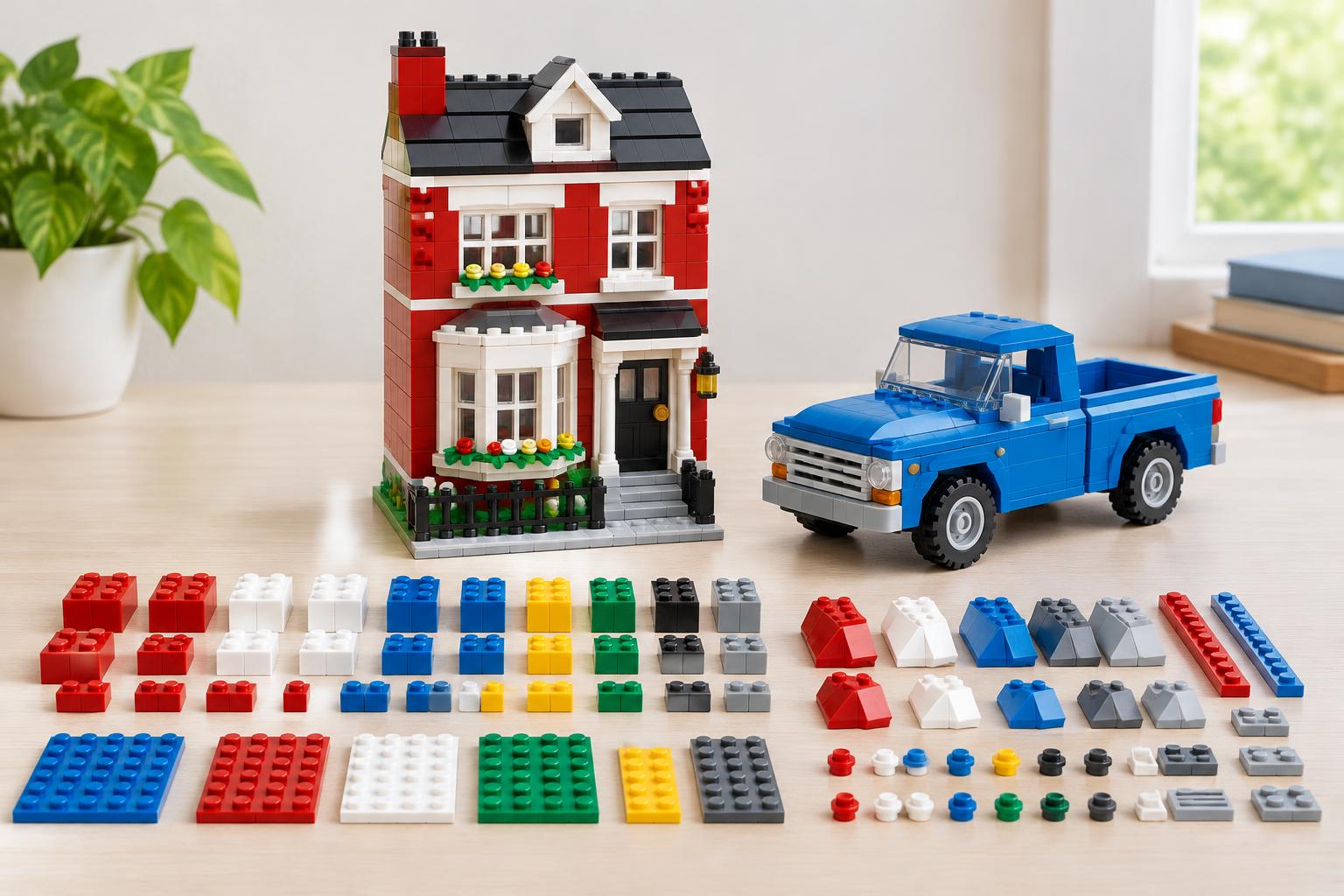
Building block collections have a way of growing. A few bricks become a small box, the box turns into several sets, and before long, there are enough pieces to build an entire city, a fleet of vehicles or an imaginative world that keeps changing every weekend.
For many builders, however, collecting does not stop with one brand. They may discover a particular vehicle design from an alternative manufacturer, need extra components for a custom project or simply want more choices when shopping for their next building set.
That is where compatibility becomes important.
Finding bricks compatible with LEGO is not just about whether two pieces can connect. Builders also need to consider the types of components, connection strength, dimensions, colors, model requirements and the experience of combining different products.
The same applies when looking for blocks compatible with LEGO for children's play, family collections or more ambitious construction projects.
Whether you are a parent in the USA, a hobbyist in the UK, a collector in Germany or a creative builder in Australia, this guide will help you make more informed choices. You will learn how to identify suitable building blocks, compare alternative sets, plan mixed-brand projects and avoid common purchasing mistakes.
1. Understand the Difference Between Bricks and Blocks
The words "bricks" and "blocks" are often used interchangeably in the construction toy market. However, when shopping online, understanding the terminology can make your search more effective.
What are building bricks?
Building bricks usually refer to the smaller, standardized components used in detailed construction models.
They commonly feature raised studs on the upper surface and connection structures underneath. This design allows individual pieces to connect and form larger constructions.
Bricks are frequently used for:
- Detailed buildings and architecture
- Cars, trucks and other vehicles
- Custom models and MOCs
- Display pieces
- City scenes and landscapes
- Creative construction projects
- When consumers search for bricks compatible with LEGO, they are often looking for standard-size components that can be incorporated into an existing collection.
What are building blocks?
"Building blocks" is a broader expression. It can describe standard interlocking bricks, larger construction pieces and other modular building components.
In many online searches, blocks compatible with LEGO refers to alternative products designed to connect with standard LEGO-style building systems.
However, not every product marketed as a building block uses the same dimensions or connection system.
For example, larger preschool construction blocks are designed for a different scale. They should not be assumed to fit standard-size building bricks.
Why does this distinction matter?
Search terminology can be broad, but product specifications need to be precise.
Before buying, check whether a set contains standard-size bricks, larger blocks or specialized components.
This simple step can prevent the disappointment of receiving a product that looks suitable in photographs but does not work with your existing collection.
2. Identify What You Want to Build Before Shopping
A good buying decision starts with the project, not the product.
Different building projects require different types of components. A set that works perfectly for a small house may not provide the pieces needed for a detailed aircraft or a large architectural model.
Before searching for alternative building blocks, think about your intended use.
Building houses and architectural models
Architecture projects usually need a good selection of standard bricks, plates, slopes and decorative components.
The most important considerations include:
- Stable foundations
- Consistent wall connections
- Suitable window and door elements
- Roof-building components
- Different shapes for architectural details
- If you plan to create a large building, prioritize components that work consistently across repeated sections.
Creating vehicles
Vehicles often require a more varied selection of components.
Depending on the model, you may need wheels, curved elements, slopes, connectors and specialized pieces.
A basic brick collection may provide a useful foundation, but it may not contain every component required for a detailed vehicle.
Look at the set contents carefully before purchasing.
Building landscapes and city scenes
City and landscape projects often benefit from a combination of standard bricks, plates, tiles and decorative elements.
Builders may need road surfaces, platforms, walls, trees, buildings and other scene details.
For this type of project, a collection with a variety of useful components may be more valuable than a set designed around one finished model.
Creating custom MOCs
MOC stands for "My Own Creation". It describes a model designed by an individual builder rather than simply following an existing instruction booklet.
MOC builders often need flexibility.
They may look for specific colors, unusual shapes, extra plates or components that are difficult to find in a standard collection.
When shopping for LEGO compatible bricks, think about the pieces your design actually requires. This helps avoid buying large sets that contain many components you will never use.
3. Learn How to Check Physical Compatibility
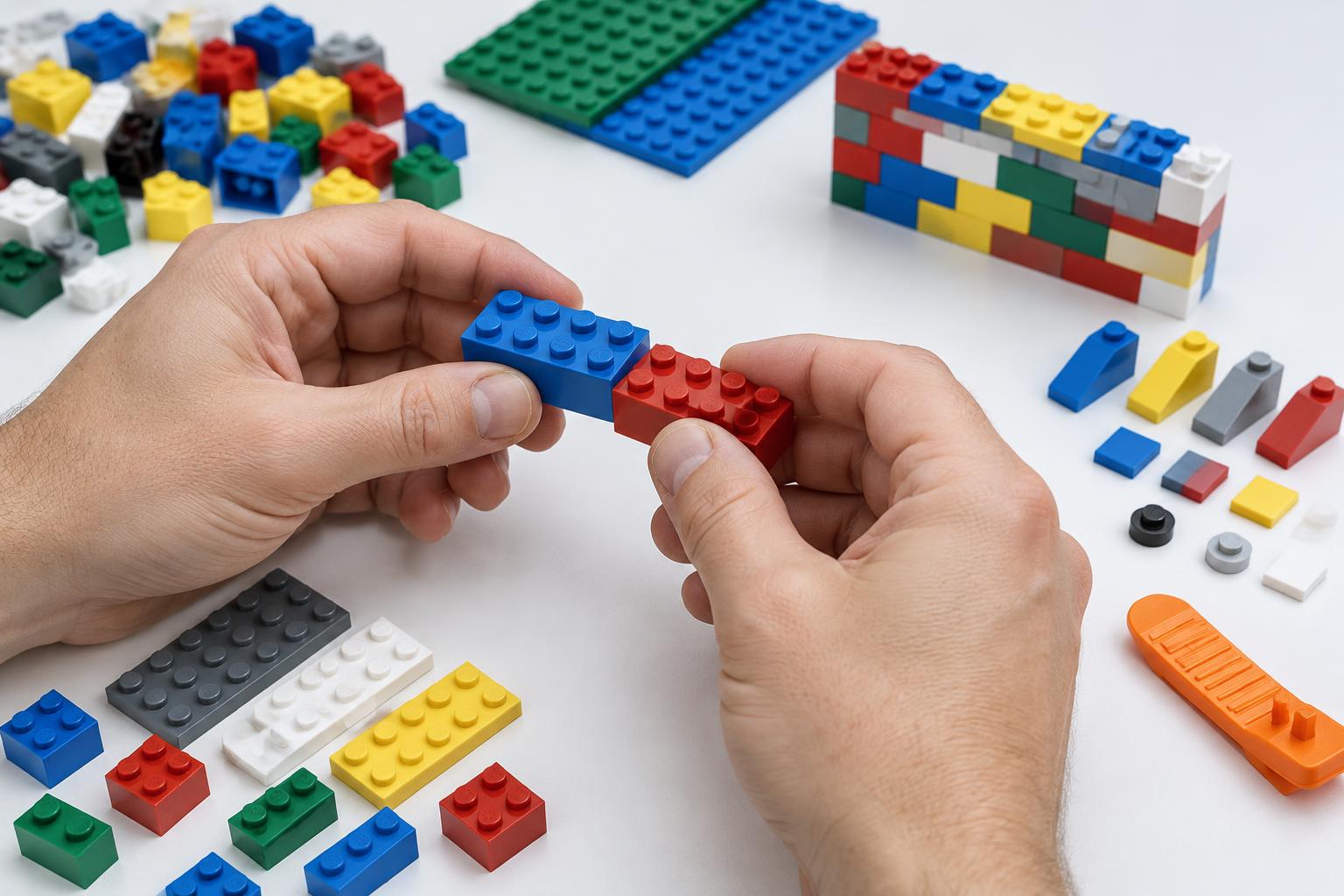
A product description may claim that a set is compatible with another building system, but it is still important to understand what compatibility means in practice.
Standard interlocking building bricks generally use a stud-and-tube connection design. The raised studs on one piece connect with structures underneath another.
For different manufacturers' pieces to work together, their dimensions and manufacturing tolerances must be sufficiently similar.
However, compatibility is not always identical across every component or product line.
Check the basic dimensions
Start by confirming that the alternative set uses standard-size building bricks.
Do not rely on product photographs alone. Read the manufacturer's specifications and look for an explicit compatibility statement.
If the product information is unclear, contact the seller before purchasing.
Examine the connection points
The studs, underside structures and connection surfaces all influence how pieces fit together.
A similar-looking brick may still connect differently if its dimensions are not consistent with the system you already own.
For that reason, checking the actual connection design is more useful than judging a product by appearance.
Consider different component types
Compatibility should be evaluated across the pieces you intend to use.
A standard rectangular brick may work well with your existing collection, while a specialized connector, decorative panel or mechanical component may behave differently.
Do not assume that a successful connection between two basic bricks proves that every element in the set is interchangeable.
4. Compare Connection Quality Before Expanding Your Collection
Physical compatibility is only one part of the building experience.
A useful mixed-brand collection should also provide connections that feel appropriate for the project.
This is where clutch power becomes important.
Clutch power refers to how firmly connected bricks hold together.
Too loose: When structures become unstable
If the connection is too weak, a model may come apart when moved.
This can be frustrating when building:
- Tall towers
- Large walls
- Detailed vehicles
- Models with small decorative sections
- Constructions that need to be handled regularly
- Loose connections may be manageable for some decorative applications, but they are less suitable for important structural areas.
Too tight: When rebuilding becomes difficult
Very tight connections can also reduce enjoyment.
Children may struggle to separate components, while adult builders may find it inconvenient to make frequent design changes.
Repeatedly forcing pieces apart is not a good building experience.
Test before committing to a large project
If you are trying a new brand, start with a few pieces.
Connect them to familiar reference bricks, check whether they align naturally and test how easily they can be separated.
Then build a small wall or stack using components from both brands.
This gives you a better understanding of connection consistency before you combine the pieces in a large model.
5. Choose the Right Mix of Standard and Specialized Components
One of the biggest advantages of exploring alternative building brands is the opportunity to discover different component selections.
However, a large number of pieces does not automatically make a set useful.
The best selection depends on what you want to build.
Standard bricks
Standard bricks are the foundation of many construction projects.
They can be used for walls, supports, foundations and general structures.
A set with a useful range of common brick shapes can provide flexibility for builders who enjoy creating their own designs.
Plates
Plates are thinner components that can help create foundations, platforms and layered structures.
They are useful in architectural projects, vehicle designs and custom models.
If you frequently build large structures, plates may be just as important as standard bricks.
Tiles
Tiles provide smoother surfaces and finishing details.
They can be useful for floors, roads, dashboards, building interiors and other visible areas.
Because they are often used for appearance rather than structural support, consistency in surface finish and color can be particularly important.
Slopes and curved pieces
Slopes and curved components help create rounded shapes, vehicle bodies, roofs and more realistic model details.
They can also make a basic collection more versatile.
Specialized components
Some sets include wheels, clips, connectors, hinges or mechanical elements.
These pieces may have different connection requirements from standard bricks.
If your project depends on a particular specialized component, verify its dimensions and intended use rather than relying on general compatibility claims.
6. Think About Color, Texture and Model Appearance
Builders often focus on whether pieces connect, but appearance is another important consideration.
A mixed-brand model can fit together physically while still looking inconsistent.
This is particularly noticeable in large display models, architectural projects and vehicles with broad color surfaces.
Understand color variation
Different manufacturers may use slightly different color formulations.
Two pieces both described as grey may not look exactly the same under normal lighting.
The same can apply to black, white, red and other common colors.
If you are building a model that needs a consistent appearance, check product photographs and customer feedback.
Consider surface finish
Some components may have slightly different surface textures or finishes.
These differences can become visible when two brands are placed side by side.
For smaller hidden sections, the difference may not matter. For a display model, it may be more noticeable.
Use contrasting colors creatively
A difference in color is not always a disadvantage.
Builders can use contrasting shades to create visual depth, highlight separate sections or add texture to a model.
For example, different grey tones can help distinguish building materials or create a more detailed landscape.
The important thing is to consider appearance before purchasing components for a large visible project.
7. Compare Complete Sets with Individual Building Pieces
When shopping for alternative construction toys, you may find both complete themed sets and collections of individual components.
Each option has advantages.
Complete building sets
Complete sets are often designed around a particular model or theme.
They may include instructions and a selection of components intended to create a specific finished project.
These are useful for buyers who enjoy structured building experiences.
Before purchasing, check:
- The complete list of included components
- The recommended age
- The complexity of the model
- Whether instructions are provided
- Whether the set offers rebuilding possibilities
Individual pieces and component collections
Individual components are more useful when you already have a specific project in mind.
For example, an experienced builder may need additional plates, slopes or particular colors rather than another complete model.
This can make it easier to expand an existing collection without accumulating unnecessary pieces.
Which is better?
Choose a complete set if you want a ready-to-build project.
Choose individual components if you are working on a custom design or need to replace specific pieces.
For families, themed sets may offer an easier introduction to alternative building brands. For MOC enthusiasts, carefully selected components may provide more practical value.
8. Check the Building Instructions and Product Information
Even compatible components cannot guarantee an enjoyable building experience.
Instructions, packaging information and product descriptions all influence how easy a set is to use.
Look for clear instructions
Good instructions should show each building stage clearly.
The illustrations should make it easy to identify the pieces needed for each step.
This is especially important for children who want to build independently.
Verify what is included
Product photographs sometimes show a completed model in a display setting.
Do not assume that every visible accessory, background object or decorative element is included.
Read the product description and component list carefully.
Check the recommended age
A complicated construction set may be suitable for experienced adult hobbyists but inappropriate for a younger beginner.
Always follow the manufacturer's age recommendations and safety warnings.
Review customer experiences
Customer feedback can reveal whether the instructions are easy to follow, whether the components match the description and whether the completed model meets expectations.
Look for detailed reviews rather than relying only on star ratings.
For buyers exploring alternative construction products, the Morebybourn official website is a useful place to review available options and product information before making a purchase decision.
9. How to Organize a Mixed-Brand Building Collection
Once you have confirmed that different products work together, organization becomes important.
A mixed collection can contain many different shapes, colors and component types. Without a simple system, finding the right piece can take longer than building the model itself.
Sort pieces by function
Consider separating:
- Standard bricks
- Plates
- Tiles
- Slopes
- Wheels and vehicle parts
- Connectors and specialized elements
- This makes it easier to find components for specific projects.
Sort by color when appearance matters
For display models and architectural builds, color organization can be helpful.
It also makes it easier to identify differences between similar shades from different manufacturers.
Keep unusual pieces separate
Specialized components should have their own storage space.
This helps prevent them from being mixed up with standard bricks and makes it easier to check their intended use.
Keep a small compatibility test collection
If you regularly purchase from different manufacturers, keep a few reference bricks from your existing collection.
You can use them to test new components before adding an entire set to your main storage system.
This is a simple but useful habit for serious builders.
10. How to Find Alternative Building Blocks in the USA, UK and Europe
Online shopping gives buyers access to a wider range of alternative building brands than ever before.
However, different markets can have different product listings, shipping arrangements and consumer expectations.
A careful shopping process helps reduce uncertainty.
For buyers in the USA and Canada
Check product descriptions, shipping information, return policies and customer reviews.
If compatibility is important, look for clear manufacturer statements rather than relying on general marketplace titles.
For buyers in the UK
Pay attention to product specifications, age guidance and shipping details.
If a set is intended for a particular building system, the product page should explain that clearly.
For buyers in the EU
Look for appropriate product safety information and relevant manufacturer or importer details.
Check the product's recommended age and applicable warnings, particularly when purchasing construction toys for younger children.
For buyers in Australia
Review the product specifications, delivery arrangements and return conditions before ordering.
If you plan to combine components with an existing collection, verify the building system and compatibility details first.
Across all these markets, the same principle applies: clear product information is more useful than a broad compatibility claim without supporting details.
11. How to Evaluate an Alternative Building Block Brand
Choosing a brand is about more than finding a product that looks similar to a familiar set.
You want to understand what the manufacturer offers and whether its products fit your building plans.
Use the following checklist when comparing brands:
| Evaluation factor | What to look for |
|---|---|
| Product range | Are there sets or components that match your interests? |
| Compatibility | Is the supported building system clearly described? |
| Component variety | Are the required bricks, plates and specialized pieces available? |
| Connection quality | Are there useful customer comments about fit and separation? |
| Instructions | Are building steps clear and complete? |
| Product images | Can you see the actual components and finished model? |
| Safety information | Are age recommendations and relevant warnings provided? |
| Customer support | Is there a clear way to contact the seller or manufacturer? |
| Value | Does the set offer the features you actually need? |
Morebybourn is a brand worth including in your research when comparing alternative building block options.
Rather than choosing based only on appearance or piece count, review the product details and consider how each set might fit into your existing collection.
You can explore the Morebybourn website to discover its available building products and assess which options suit your next construction project.
The best choice is the one that meets your practical requirements, not simply the one with the most impressive packaging.
12. Common Mistakes to Avoid When Buying Compatible Bricks and Blocks
Even experienced builders can overlook important details when purchasing alternative components.
Here are several mistakes worth avoiding.
Assuming every building block is the same size. Standard bricks and larger preschool blocks belong to different formats. Check dimensions before buying.
Relying only on product photographs. Similar-looking components may use different connection systems.
Assuming every component is interchangeable. Standard bricks, clips, wheels and mechanical parts can have different compatibility requirements.
Ignoring connection strength. Pieces that fit together but separate too easily may not be suitable for larger models.
Forgetting about color consistency. Different manufacturers may use slightly different shades and surface finishes.
Buying too many unnecessary pieces. Consider your actual project requirements before purchasing a large collection.
Overlooking age and safety information. Always check the manufacturer's recommendations and warnings.
Avoiding these mistakes makes it easier to build a collection that works well and provides a more satisfying experience.
Conclusion: Choose Compatible Bricks That Match Your Building Goals
Finding the right bricks compatible with LEGO and blocks compatible with LEGO requires more than checking whether two pieces can connect.
Start by identifying the building system you already own. Decide what you want to create, check the component types you need and review the manufacturer's compatibility information.
Pay attention to connection strength, color consistency, instructions and product details. If possible, test a few pieces before combining an entire collection.
For parents, hobbyists and collectors across the USA, UK, Canada, Australia and Europe, alternative building brands can offer more options for creative construction.
Morebybourn is one brand to explore as you compare different building products and consider how they might fit into your collection.
Ultimately, a successful building collection is not defined by the number of brands or pieces it contains. It is defined by how well the components work for your projects and how much creative freedom they give you.
Frequently Asked Questions (FAQs)
1. Are bricks compatible with LEGO the same as LEGO bricks?
Not necessarily. Compatible bricks are made by another manufacturer and may be designed to connect with standard LEGO-style building systems. Their dimensions, connection strength, colors and component designs can still vary.
2. Are all blocks compatible with LEGO standard-size bricks?
No. The term "building blocks" can describe several different construction systems, including larger preschool blocks. Always check the product dimensions and compatibility statement before purchasing.
3. Can I use compatible building bricks to create custom models?
Yes, provided the individual components work with your chosen building system. Many builders use alternative pieces for custom models, architectural projects, vehicles and other creative constructions. Testing unfamiliar components first is recommended.
4. How can I check whether alternative building blocks will fit my existing collection?
Check the manufacturer's specifications and look for an explicit compatibility statement. Then test a few pieces against familiar reference bricks. Evaluate alignment, connection strength and how easily the pieces separate.
5. Are alternative building block brands worth buying?
They can be worth considering if they offer the designs, components and building experience you need. Compare product information, instructions, customer reviews, age recommendations and compatibility details before making a decision.
Keep Exploring
Read our related compatibility buying guide, compare the compatible building bricks guide, or explore more Best Lego Alternatives.
Order LEGO-Compatible Sets from Morebybourn
We sell LEGO alternative sets and compatible bricks for families, hobbyists, and collectors. Contact our customer service team for personal recommendations and help placing your order.