How to Choose Construction Sets Compatible with LEGO: A Practical Guide to Building Beyond One Brand
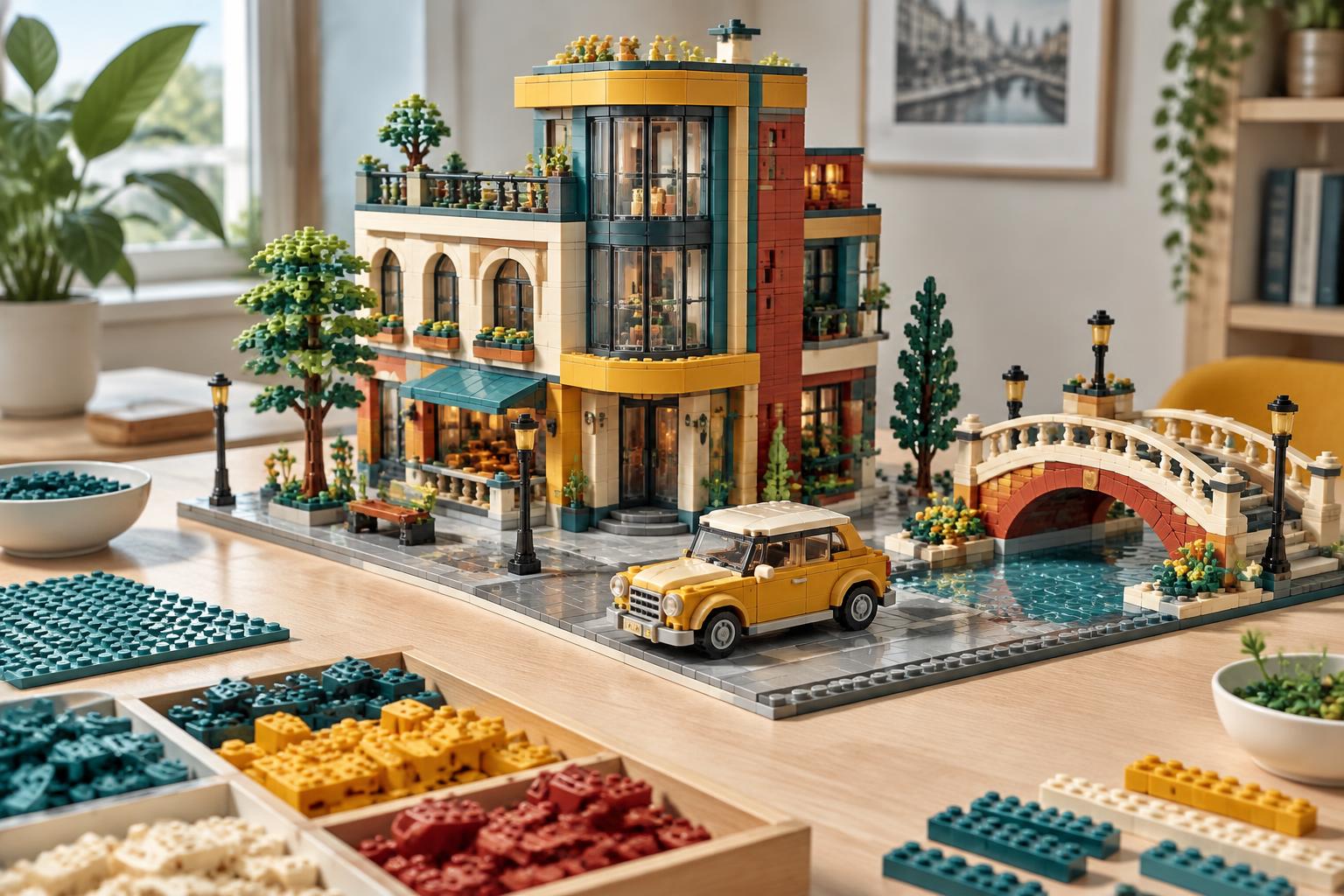
Building with interlocking bricks is one of those hobbies that becomes more interesting as your collection grows. A small starter set might be enough for a weekend project, but eventually you may want to create a larger city, expand a vehicle collection, construct a detailed architectural model, or experiment with your own designs.
That is when compatibility becomes especially important.
Buying a new building set is not simply about choosing an attractive model. You also need to consider whether its pieces will work with bricks you already own, whether the instructions are clear, whether the parts suit your building style, and whether the finished model will fit into your existing collection.
For builders in the United States, the United Kingdom, and across Europe, the growing selection of alternative brick brands creates more opportunities to explore different themes and price points. However, not every set offers the same building experience.
This guide explains how to choose construction sets compatible with lego, how to evaluate compatibility beyond a simple marketing claim, and how to build a collection that gives you more creative freedom.
1. Start With the Project, Not the Piece Count
One of the most common mistakes when shopping for building sets is choosing a kit because it contains an impressive number of pieces.
A box advertising 2,000 pieces may look like better value than one containing 800. But the larger number does not automatically mean a better building experience.
Think about what you actually want to create.
Are you building a display model for your office? Do you want a play-friendly vehicle for a child? Are you planning a modular street that can grow over time? Or are you mainly interested in collecting unusual components for custom projects?
Each goal calls for a different type of set.
For family building sessions
Families often benefit from models that can be completed in manageable stages. A vehicle, small house, or themed play scene can give children a clear goal without requiring several days of concentration.
Look for:
- Instructions with clear, easy-to-follow steps.
- A sensible progression from simple to more detailed sections.
- Pieces that are easy to identify and organize.
- A theme that connects with the child's interests.
- Age guidance appropriate to the intended builder.
A set that encourages children to complete one section at a time can be more rewarding than a large model that feels overwhelming.
For adult hobbyists
Adult builders may prefer architectural models, detailed vehicles, landmarks, mechanical designs, or display-focused creations.
In this case, consider more than the total piece count. Look at the variety of slopes, tiles, transparent elements, decorative components, and structural parts.
A 1,200-piece set with unusual components may offer more creative possibilities than a larger set made mostly from standard bricks.
You can explore Morebybourn's adult building sets to see examples of models aimed at collectors and experienced builders.
For custom builders
If you enjoy creating your own models rather than following instructions exactly, prioritize versatility.
Useful sets may include:
- Basic bricks in several sizes.
- Plates for creating larger surfaces.
- Slopes and curved elements.
- Transparent pieces for windows and lighting effects.
- Connectors for structural reinforcement.
- Decorative elements that add visual detail.
The ideal set is not necessarily the one that looks most impressive on its own. It is the one that supplies components you can use in many different projects.
2. Understand What Compatibility Really Means
The word "compatible" can sound straightforward, but it covers several different aspects of the building experience.
A product may connect physically with another brick system while still differing in appearance, grip, color, or specialized components.
Before buying construction sets compatible with lego, understand the different levels of compatibility.
Physical connection
The first question is whether the bricks can connect using the same general stud-and-tube building system.
Standard interlocking bricks are designed around a consistent arrangement of studs and connection points. When pieces from different manufacturers follow compatible dimensions, builders may be able to connect them in the same structure.
However, a general compatibility statement should not replace checking the specifications of an individual product.
Specialty parts, decorative elements, and non-standard building systems may behave differently from ordinary bricks.
Clutch and connection feel
Clutch refers to how firmly connected pieces hold together.
This matters more than many first-time buyers realize.
If the connection is too loose, a model may separate during handling. If it is excessively tight, taking the model apart can become difficult and may make rebuilding less enjoyable.
When comparing products, look for information about material, manufacturing quality, and customer experiences with the connection between pieces.
If you already own bricks from another manufacturer, testing a small number of basic components is a sensible way to evaluate how they work together.
Structural compatibility
A brick can fit physically without being ideal for every structural purpose.
For example, a small decorative component may connect successfully but may not provide enough support for a large overhanging section.
This is particularly important for:
- Tall buildings.
- Large vehicles.
- Bridges and suspended structures.
- Models with movable sections.
- Display pieces that may be transported.
Think about the role each component plays. A connection that works for a small decorative detail may not be the best choice for a load-bearing section.
Visual compatibility
Visual consistency is another consideration.
Two pieces may connect perfectly but still look different because of variations in color, surface finish, shape, or printing.
For a hidden structural section, these differences may not matter. For a visible wall, roof, or vehicle body, they can be much more noticeable.
If you are planning a large mixed-brand model, consider testing a small sample before committing to a complete color scheme.
3. Check the Product Information Before Ordering
Online product photos can make almost any building set look appealing. The challenge is determining whether the listing provides enough information to make a confident decision.
A useful product page should help you understand what you are buying, not simply show a finished model.
Review the material description
Many interlocking building bricks are made from ABS plastic. Material information can help you compare products, but the material name alone does not guarantee identical performance across manufacturers.
Manufacturing precision, component design, and quality control also influence the final experience.
Read the product description carefully and look for specific information rather than relying on vague phrases such as premium quality.
Check the piece count and model dimensions
Piece count gives you a rough idea of the scale of a project, but finished dimensions tell you how much physical space it may occupy.
This is especially important for collectors in apartments or smaller homes.
A large model may look manageable in a product photograph but require an entire shelf or display cabinet.
Before ordering, compare:
- Total piece count.
- Finished length, width, and height.
- Approximate building complexity.
- Available display space.
- Whether the model can be divided into smaller sections.
These details help prevent the disappointment of receiving a model that is much larger than expected.
Look for clear instructions
Instructions are part of the product experience.
A detailed manual should make it easy to identify components, understand their orientation, and follow the construction sequence.
For larger projects, clear section divisions are particularly useful. They allow builders to pause and resume without losing track of progress.
If digital instructions are available, consider whether the format is convenient to view on a tablet or computer.
Read the compatibility statement carefully
A product described as compatible with other major brick systems is making a claim that should be supported by useful product information.
Check whether the manufacturer explains which types of pieces are intended to connect.
Do not automatically assume that every component will work with every other component. Standard bricks, specialty mechanical pieces, minifigure accessories, and decorative elements may have different connection requirements.
A little research before ordering can save considerable time later.
4. Learn How to Test Mixed-Brand Bricks at Home
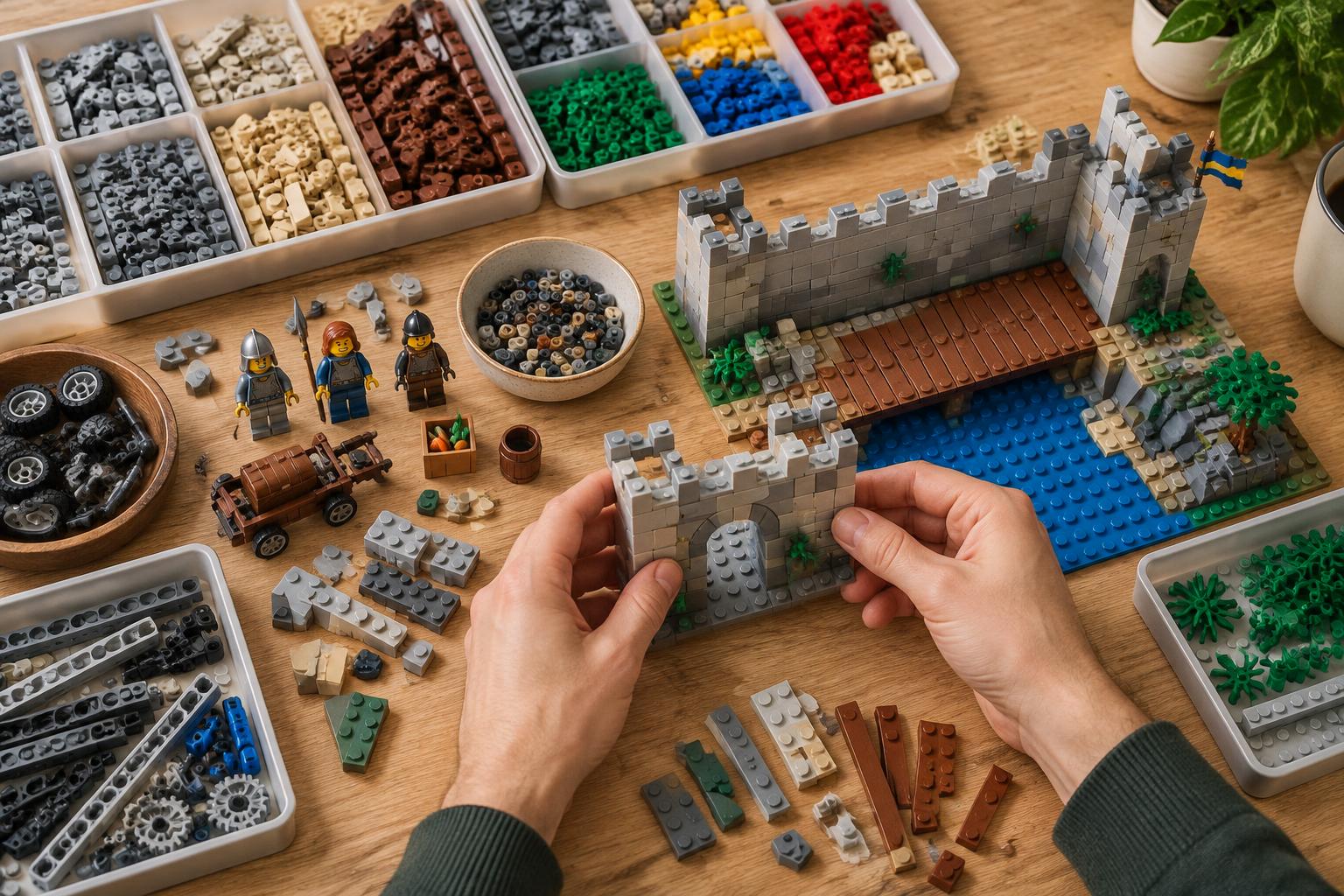
If you already have a collection from another manufacturer, you do not need to combine everything immediately.
A small, controlled test can tell you much more than a product photograph.
Here is a practical process for evaluating a new set.
Step 1: Choose a few standard components
Start with ordinary bricks and plates rather than unusual decorative pieces.
Choose several examples with familiar dimensions, such as basic rectangular bricks and flat plates.
Avoid beginning with complex mechanical parts because their connection requirements may be different.
Step 2: Test the connection
Connect the new components to pieces from your existing collection.
Pay attention to whether they sit evenly, whether the connection feels secure, and whether the pieces can be separated without excessive force.
Try more than one combination. A single successful connection does not necessarily demonstrate consistent performance across an entire set.
Step 3: Build a small structure
Create a simple wall, platform, or rectangular frame using pieces from both collections.
This helps you assess how the components behave when used together in a larger arrangement.
Look for uneven surfaces, unexpected gaps, or sections that separate easily.
Step 4: Try a visible section
Once the basic connection has been checked, build a small section that includes visible colors and decorative elements.
This is a useful way to evaluate whether the pieces look consistent enough for the project you have in mind.
For example, a mixed-brand building may need consistent wall colors, while a custom vehicle may require matching body panels.
Step 5: Test disassembly
A building set should not only be enjoyable to assemble. It should also be practical to take apart.
Try separating the pieces after building a small structure.
If components are unusually difficult to remove, consider whether that will affect future rebuilding sessions.
Step 6: Record your observations
If you collect bricks from several manufacturers, keep a simple note of what works well together.
You might record:
- Which standard bricks connect comfortably.
- Which plates work well together.
- Whether colors are close enough for visible sections.
- Whether specialty components require separate handling.
- Any combinations that feel too loose or too tight.
Over time, this becomes a useful personal reference for future purchases.
5. Choose Sets That Expand Your Existing Collection
A compatible set should ideally add something new to your building options.
Buying another collection of basic bricks may be useful, but a set with a different theme or unusual components can open up more possibilities.
Think about what your current collection is missing.
Add architectural variety
If you already own several vehicles, an architectural model may introduce new building techniques and decorative elements.
Buildings can also be adapted into larger custom environments, such as streets, shopping areas, or miniature town scenes.
Consider whether the set includes useful windows, doors, roof pieces, tiles, and façade details.
Expand your vehicle collection
Vehicle sets can provide interesting components for custom designs.
Depending on the model, these may include wheels, transparent elements, slopes, curved panels, and specialized structural pieces.
If you enjoy designing your own vehicles, the variety of components may matter more than the finished model alone.
Explore mechanical building
Some advanced building sets use gears, axles, pins, and other mechanical elements.
These systems can introduce a different kind of building challenge, especially for hobbyists interested in moving models.
However, do not assume that every mechanical component from one manufacturer will connect with every other system.
Check the specific connection type and product information before combining parts.
Build a display collection
Collectors may want to focus on models that work together visually.
A group of architectural landmarks, vehicles, or themed display pieces can create a more cohesive collection than unrelated models.
Think about scale, color palette, display dimensions, and how future purchases might fit into the arrangement.
6. Plan a Mixed-Brand Build Before You Start
One of the biggest advantages of compatible building systems is the possibility of combining different sets in one creative project.
But mixing pieces without a plan can quickly become frustrating.
A simple project outline makes the process more enjoyable.
Define the finished model
Start by describing what you want to build.
For example:
- A small European-style street.
- A modern city block.
- A large custom vehicle.
- A fantasy castle.
- A display scene combining buildings and landscaping.
A clear goal helps you identify the parts you need.
Divide the model into sections
Large projects become easier when divided into smaller construction areas.
A city street might include:
- Base and pavement.
- Main building structures.
- Windows and doors.
- Roof sections.
- Street furniture and decorative details.
This approach also helps you decide which existing sets can supply useful components.
Sort pieces before building
Avoid mixing every component into one large container.
Instead, organize pieces by type, size, or color.
For example, use separate trays for standard bricks, plates, tiles, slopes, and specialty pieces.
A simple sorting system reduces interruptions and makes it easier to identify the right component during construction.
Build a small prototype
Before constructing the full model, create a small test section.
This is particularly useful when combining different brands or using unfamiliar components.
A prototype can reveal problems with dimensions, alignment, color matching, or structural support before you invest time in the entire project.
Keep the original instructions
Even if you plan to modify a set, keep its instruction manual.
The original building sequence can help you identify structural sections, understand how specialized parts are used, and rebuild the model later if needed.
You can also use the manual as a reference when designing a new version.
7. Compare Value Instead of Looking Only at Price
Price is an important part of choosing a building set, particularly for families and hobbyists who purchase several models each year.
However, the cheapest product is not automatically the best value.
A more useful comparison considers the complete buying experience.
Calculate cost per piece carefully
Cost per piece can be a useful starting point, but it should not be your only measurement.
A set containing many small components may have a lower cost per piece while offering fewer useful building options.
Consider the type and variety of parts included.
Evaluate the model itself
Ask whether you would still want the set if you ignored the number printed on the box.
Does the finished model interest you? Does it introduce new techniques? Can you reuse its components in future projects?
A smaller set that fits your interests may provide more satisfaction than a larger set that remains unfinished.
Consider shipping and customer support
For buyers in the US and Europe, delivery costs and service policies can affect the overall value of an order.
Before purchasing, check:
- Estimated delivery time.
- Shipping fees.
- Available payment methods.
- Returns and cancellation conditions.
- Procedures for reporting missing or damaged parts.
- How to contact customer support.
These details are particularly important when ordering large or complex models online.
Check safety information
When purchasing for children, review the recommended age range and the safety information provided for the individual product.
In the US, buyers may encounter ASTM F963 references. In the European market, EN 71 is an important toy safety standard.
Do not assume that a general statement about product quality proves that every individual product meets every requirement in every market. Check the relevant documentation and product information.
For younger children, pay particular attention to small components and age recommendations.
8. Avoid These Common Buying Mistakes
Even experienced builders can make avoidable mistakes when exploring alternative building brands.
Mistake 1: Assuming every component is interchangeable
Standard bricks may connect across compatible systems, but specialty components can have different dimensions or connection designs.
Check individual product details rather than assuming universal compatibility.
Mistake 2: Buying based only on photographs
Product photographs show the finished model, not necessarily the complete building experience.
Look for piece counts, dimensions, instructions, materials, and customer service information.
Mistake 3: Ignoring the available space
A large model can become difficult to display if you have not measured the intended shelf or cabinet.
Measure first, especially for architectural models and large vehicles.
Mistake 4: Choosing complexity over enjoyment
A highly detailed model may look impressive, but it may not be suitable for every builder.
Choose a project that matches your available time, experience, and patience.
Mistake 5: Mixing colors without testing
Slight differences in color can become obvious across large visible surfaces.
Test a small section before using pieces from several manufacturers in the same wall, roof, or vehicle body.
Mistake 6: Forgetting about future expansion
A set may look attractive today but contribute little to your collection if its parts are difficult to reuse.
Consider whether the theme, components, and building style will remain useful for future projects.
9. Build a Collection That Grows With Your Interests
A good building collection should not be limited to a single manufacturer or one type of model.
It should reflect the way you enjoy building.
Some people prefer following detailed instructions and displaying finished models. Others enjoy taking everything apart and designing something completely new. Families may value sets that encourage shared activities, while adult collectors may focus on architectural detail and presentation.
The most useful collection often includes a balance of:
- Basic bricks for everyday construction.
- Plates and tiles for creating surfaces.
- Specialty components for more advanced projects.
- Themed sets for inspiration.
- Larger models for display.
- Spare storage space for future additions.
This approach makes it easier to use new sets as part of an existing creative system.
For more information about Morebybourn's product approach and common questions about its building blocks, visit the Morebybourn FAQ page. You can also explore other building ideas and practical guides in the Morebybourn article collection.
10. Your Pre-Purchase Checklist
Before ordering your next set, take a few minutes to work through this checklist.
Product details
- Is the theme suitable for the intended builder?
- Is the piece count clearly stated?
- Are the finished model dimensions available?
- Is the recommended age range appropriate?
Compatibility
- Does the manufacturer provide a clear compatibility statement?
- Are the components standard bricks or specialized pieces?
- Can you test a small sample with your existing collection?
- Are color and connection differences acceptable for your project?
Building experience
- Are the instructions clear?
- Is the difficulty level suitable?
- Can the model be completed in manageable sessions?
- Does the set include components you can reuse?
Ordering
- Are shipping costs and delivery estimates clear?
- Is there a stated returns policy?
- Can you contact customer support?
- Is there a clear process for reporting missing or damaged parts?
If most of these questions have satisfactory answers, you are in a much better position to choose a set that will remain useful after the first build.
Conclusion: Make Compatibility Work for Your Creativity
Choosing the right building set is about more than finding bricks that connect.
The best purchase should match your project, provide a satisfying building experience, and fit naturally into the collection you already own. Compatibility is an important starting point, but details such as clutch feel, component variety, visual consistency, instructions, and customer support also deserve attention.
For families, the right set can create enjoyable shared building sessions. For adult hobbyists, it can introduce new techniques and display possibilities. For custom builders, compatible components can make it easier to experiment without limiting every project to a single collection.
When comparing construction sets compatible with lego, take the time to check the product information, test connections where possible, and think about how each new set will contribute to your future builds.
A thoughtfully chosen set does more than complete one model. It gives you more ways to create the next one.
Frequently Asked Questions
1. Are construction sets compatible with LEGO bricks?
Some alternative building sets are designed to connect with standard LEGO brick systems. However, compatibility can vary by manufacturer and component type. Check the product description and, where possible, test standard bricks and plates before combining a large number of pieces.
2. Can I mix bricks from different manufacturers in one model?
In many cases, standard interlocking bricks from compatible systems can be combined in the same model. However, differences in connection feel, dimensions, color, and specialty components may affect the result. Testing a small section first is recommended.
3. What should I check before buying a compatible building set?
Review the piece count, finished dimensions, material information, instructions, age guidance, compatibility statement, shipping conditions, and customer support policy. If you plan to combine the set with an existing collection, pay particular attention to the type of components included.
4. Are alternative building sets suitable for adult collectors?
Yes. Many alternative building sets are designed around detailed architecture, vehicles, landmarks, and other display-focused themes. Adult collectors should consider model dimensions, part variety, construction complexity, and how the finished model will fit into their display space.
5. Are compatible building sets a good choice for custom projects?
They can be. Sets with a varied selection of standard bricks, plates, tiles, slopes, and specialty components can provide useful materials for original designs. Before starting a large project, test how the pieces connect and check whether their colors and dimensions work with your existing collection.
Keep Exploring
Compare our related construction and compatibility guide, read the compatible building blocks buying guide, or explore more Best Lego Alternatives.
Order LEGO-Compatible Sets from Morebybourn
We sell LEGO alternative sets and compatible bricks for families, hobbyists, and collectors. Contact our customer service team for personal recommendations and help placing your order.