How to Choose Compatible LEGO Bricks and Sets for Custom Projects
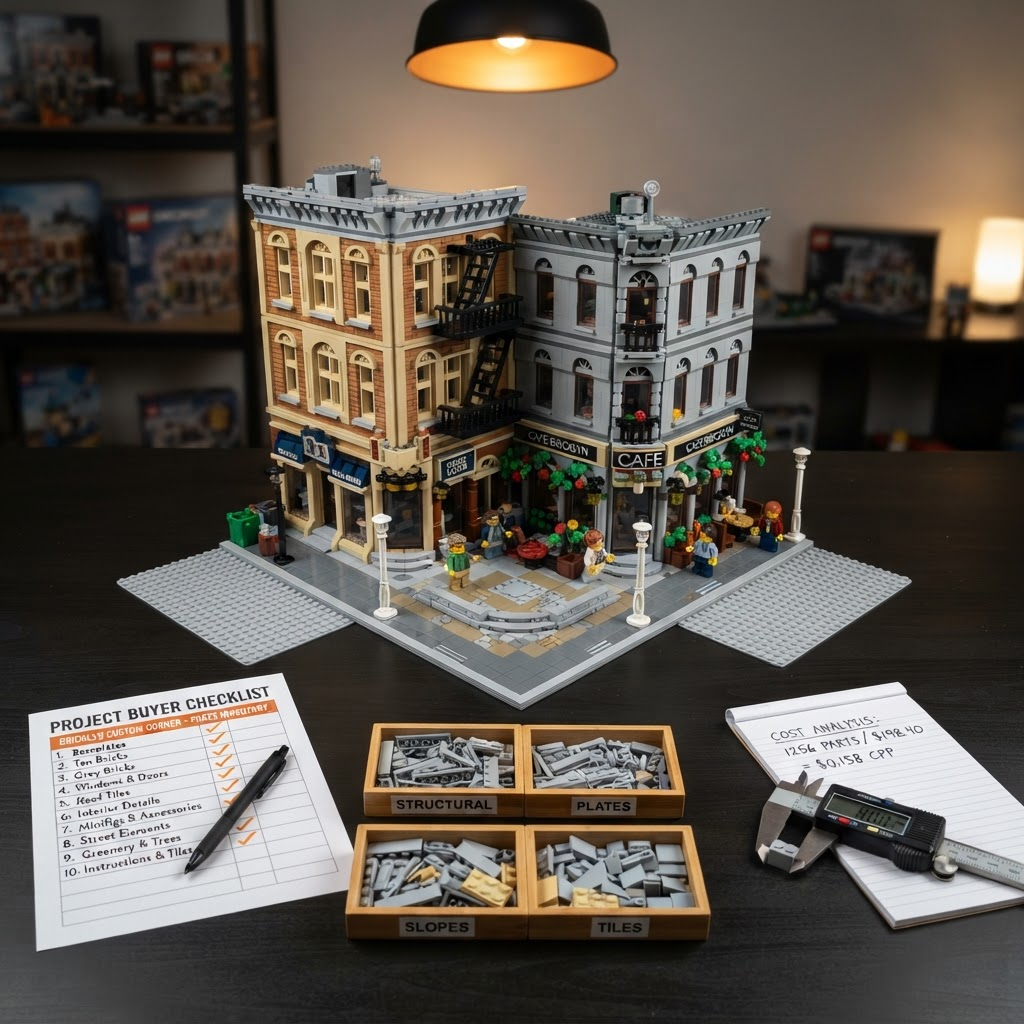
You have a build in mind — maybe a modular street, maybe a giant spaceship no official set covers. To pull it off you need parts from more than one source. The catch: not every set on the shelf plays nice with the rest of your collection.
This guide fixes that. It walks you through reading packaging, judging any lego compatible building sets before you pay, and planning a custom build that pulls from several sources at once. No brand rankings. No guesswork. Just a clear system for picking parts that work.
Quick Answer
- 1.Read the box — look for ABS, clear dimensions, and a compatibility claim.
- 2.Check specs — prioritize part variety, clutch, color range, and rare pieces.
- 3.Evaluate — preview the manual, read reviews, confirm the return policy and shipping cost.
- 4.Plan — define your model, list parts, match sets to sections, sort before you build.
What "Compatible" Actually Means on the Box
Start with the label. Most brands print their compatibility claims right on the packaging. Learn to read them and you skip most bad purchases.
"Compatible with major building block brands" — signals the maker built to the 8mm stud grid used across the hobby.
A box listing piece count and finished size tells you the maker measured carefully. Precision on the box means precision in the mold.
Look for ABS plastic. It is the sign of a set that clutches well and holds up over repeated builds.
A 16+ rating usually means small, specialized pieces that mix well into detailed builds — a positive signal for custom work.
The Specs That Actually Matter
Not every number on the box carries weight. Here is what to prioritize when comparing compatible lego bricks across sets.
A high piece count means nothing if every part is the same 2x4 brick. Plates, tiles, slopes, brackets, and technic connectors give you far more building options.
ABS plastic grips firmly, keeps its color, and survives repeated building. Cheaper blends feel light and lose their grip fast — check reviews for clutch reports.
A wide, consistent color palette is worth more than a large piece count in a narrow range. Consistent color means parts blend cleanly into your existing collection.
Curved wedges, large panels, unusual angles — hard-to-source pieces are gold for custom work. A set that supplies rare parts at a fair price is a smart buy.
How to Evaluate a Set Before You Buy
Buying blind wastes money. Run this five-point check on any lego compatible building sets before you commit.
Preview the Manual
Many makers post the build manual online. Flip through it — you will see every part type, how the set assembles, and whether the techniques suit your skill level. A clear, well-drawn manual also signals a serious maker.
Read Builder Reviews
Skip the marketing copy. Go straight to reviews from real builders. They report clutch strength, color accuracy, missing-piece rates, and how well the set mixes with other brands.
Check the Return and Replacement Policy
Missing pieces happen. A free replacement policy for missing or broken parts tells you the company stands behind its product. If the answer is yes, buy with confidence.
Compare Cost Per Part
Divide the price by the piece count for a rough value figure, then adjust for part variety and rarity. A set that costs slightly more but delivers rare, useful parts beats a cheap set ofer bricks.
Confirm Regional Availability
Check that the set ships to your region without surprise fees. Import charges and long delivery windows can turn a good deal sour. Look for makers that cover customs and duty up front.
Planning a Build From Multiple Sets
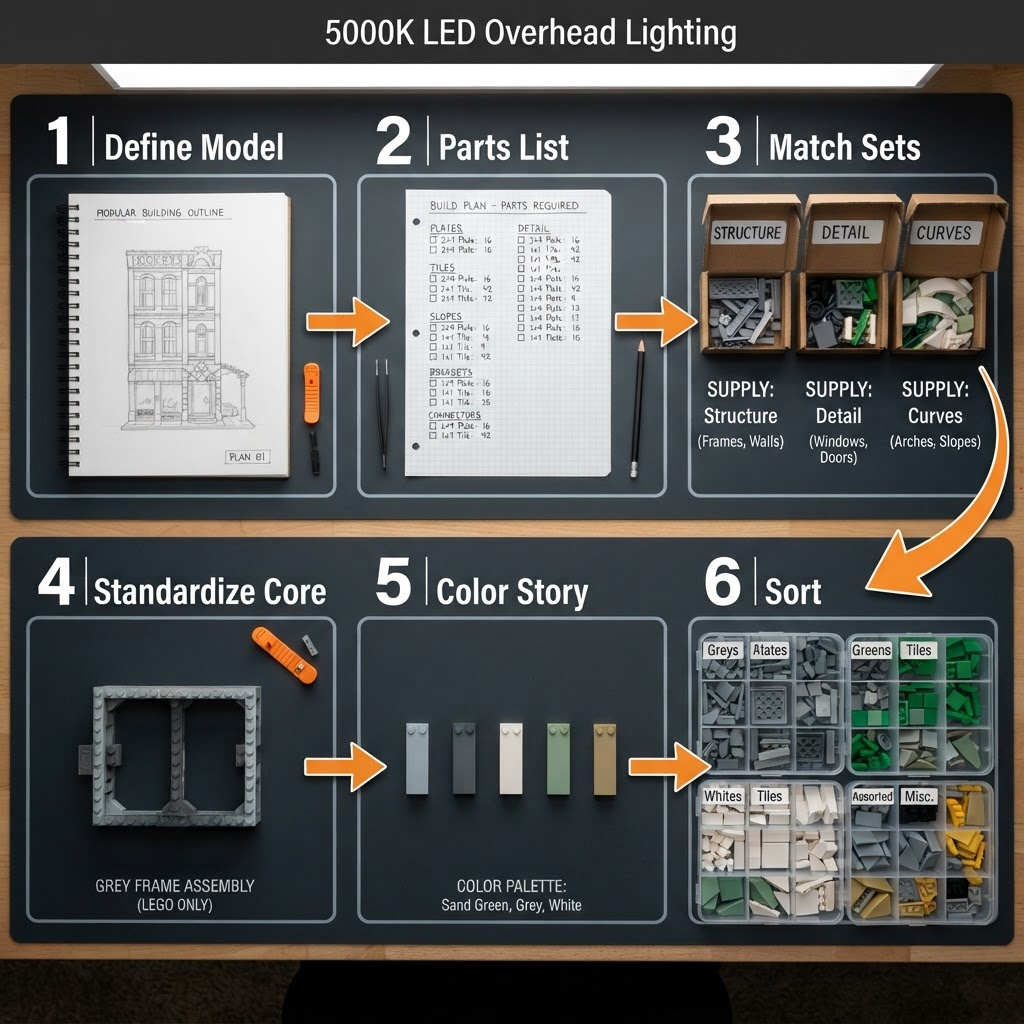
Combining several lego compatible building sets into one custom project takes planning. Follow this six-step workflow.
Step 1
Define the Model
Write down size, theme, color scheme, and function before you buy anything. A modular building? A large vehicle? A landscape diorama? The clearer the plan, the smarter the purchases.
Step 2
Build a Parts List
Break your model into sections. For each section, list the part types you will need — structural bricks, surface tiles, angled slopes, connectors. This turns a vague idea into a shopping list.
Step 3
Match Sets to Sections
Shop with purpose. Instead of buying random sets, pick sets that supply the specific parts each section needs. One set covers the structural core; another supplies detail tiles; a third delivers rare curved pieces.
Step 4
Standardize Your Core
Pick one set — your most reliable, tight-fitting one — as the structural base. Build the load-bearing frame entirely from it. Consistent clutch in the skeleton keeps the whole model solid.
Step 5
Plan Your Color Story
Lay out all your sets' colors side by side before building. Spot the mismatches early. Decide which brand supplies each visible surface so your whites, grays, and tans stay consistent.
Step 6
Sort Before You Build
Combine all your sets, then sort by color and part type. It takes time, but it saves hours of digging mid-build and helps you catch color mismatches before they are locked into the model.
Getting the Most From Your Sets
You have bought smart. Now build smart. These habits stretch every set further.
Save the extras
Most sets include spare small parts. Keep them in a labeled bag by color. Over time you build a spare-parts library that patches any project.
Keep the manuals
Even after you break down a set, the manual is a reference for part names and techniques. Store them together in a binder or folder.
Build in modules
Construct your model in sections, then combine. Modular building makes edits easy and lets you swap parts between sections without tearing everything down.
Photograph your work
Progress shots help you troubleshoot and share with the builder community. Other builders will point out fixes and ideas you would miss on your own.
Join the community
Online forums and social groups are full of builders who have already solved the problems you are facing. Post your custom builds, ask questions, and share what works.
Common Buying Mistakes to Avoid
Even careful builders slip up. Watch for these five recurring mistakes.
Chasing piece count
A big number means nothing if the parts are repetitive. Prioritize variety over volume every time.
Ignoring color consistency
Mismatched whites and grays ruin a clean surface. Plan your color story before you buy, not after.
Skipping reviews
The box tells you what the maker wants you to know. Reviews tell you the rest — especially clutch and fit.
Overlooking shipping terms
A cheap set with high import fees is not cheap. Always check the full delivered cost before committing.
Buying for the model, not the parts
For custom work, the parts inside matter more than the pictured build. Judge sets by what you can build with them.
A Simple Buying Checklist
Use this on every purchase. Hit most of these and you have found a set worth buying.
ABS plastic confirmed
Clear dimensions and piece count on box
Wide part variety, not juster bricks
Consistent, useful color range
Rare or specialty parts included
Manual available to preview
Strong builder reviews
Free missing-part replacement policy
Ships to your region, fees included
Good cost per part after adjusting for variety
Key Takeaways
- 1.Read the box for ABS plastic, clear dimensions, and a compatibility statement — these signal a well-made set.
- 2.Prioritize part variety, clutch quality, color range, and rare pieces over raw piece count.
- 3.Run the 5-point check — manual, reviews, policy, cost per part, shipping — before every purchase.
- 4.Use one reliable set as the structural core; mix other brands in for surface detail and rare pieces.
- 5.Plan your color story before buying, not after — sort all parts by color and type before you start building.
- 6.Save extras, keep manuals, build in modules, and photograph progress to get the most from every set.
Related Guides
How to Choose and Build with LEGO Compatible Sets: A Buyer's Guide
6-point pre-purchase checklist, skill and space matching, and integration strategies.
How to Find, Test, and Mix Bricks Compatible With LEGO
5-minute fit test, COBI verdict, and smart mixing strategies.
How to Build a Smart LEGO-Compatible Collection
6-point brand checklist and standard-first buying rule.
How to Mix LEGO-Compatible Building Blocks From Different Brands
Mega Construx and Mould King brand verdicts plus four mixing rules.
Ready to a gap in your build?
Browse the full range of compatible lego bricks and sets at Morebybourn — ABS quality, clear specs, and shipping fees included.