How to Choose and Use LEGO-Compatible Building Brands

TL;DR
LEGO-compatible brands let builders expand collections without paying full LEGO prices. This guide covers how to evaluate cada bricks lego compatible brand quality, integrate playmobil lego compatible sets, find lego boost compatible devices, and build mixed-brand MOCs — with buying tips for Europe and the US from Morebybourn.
There are more building brick options available today than at any point in history. For parents chasing educational value, adult collectors after a complex display model, or MOC builders who live for custom creations, that is genuinely exciting news.
LEGO remains the gold standard. But the gap has narrowed. Premium alternatives now match LEGO's ±0.01 mm stud tolerance, use the same ABS plastic, and ship with clear English instructions. The question is no longer "LEGO or nothing" — it is "which LEGO-compatible brand is right for this build?"
Understanding LEGO Compatibility: What Does It Actually Mean?
LEGO compatibility is a technical claim: a brick from another brand will physically connect to — and disconnect from — an official LEGO stud without damaging either piece.
- Stud diameter: 4.8 mm
- Internal tube diameter: 6.51 mm
- Clutch tolerance: ±0.01 mm
Too loose, and pieces fall apart mid-build. Too tight, and you risk cracking bricks when pulling them apart. Premium brands hit these numbers; budget brands often do not.
What materials should LEGO-compatible bricks be made from?
ABS — acrylonitrile butadiene styrene — the same thermoplastic LEGO uses. Good ABS is rigid enough to hold a stud connection, slightly flexible so it will not snap, and colour-stable so bricks do not yellow quickly. Look for virgin (not recycled) ABS and EN71 (EU) or ASTM F963 (US) certification.
System compatibility vs. theme compatibility
System compatibility means the physical bricks connect. Theme compatibility means the aesthetic, minifigure scale or design language matches well enough to mix sets visually. A brand can be one without the other — knowing which you need shapes every purchase.
How to Evaluate a Cada Bricks LEGO Compatible Brand
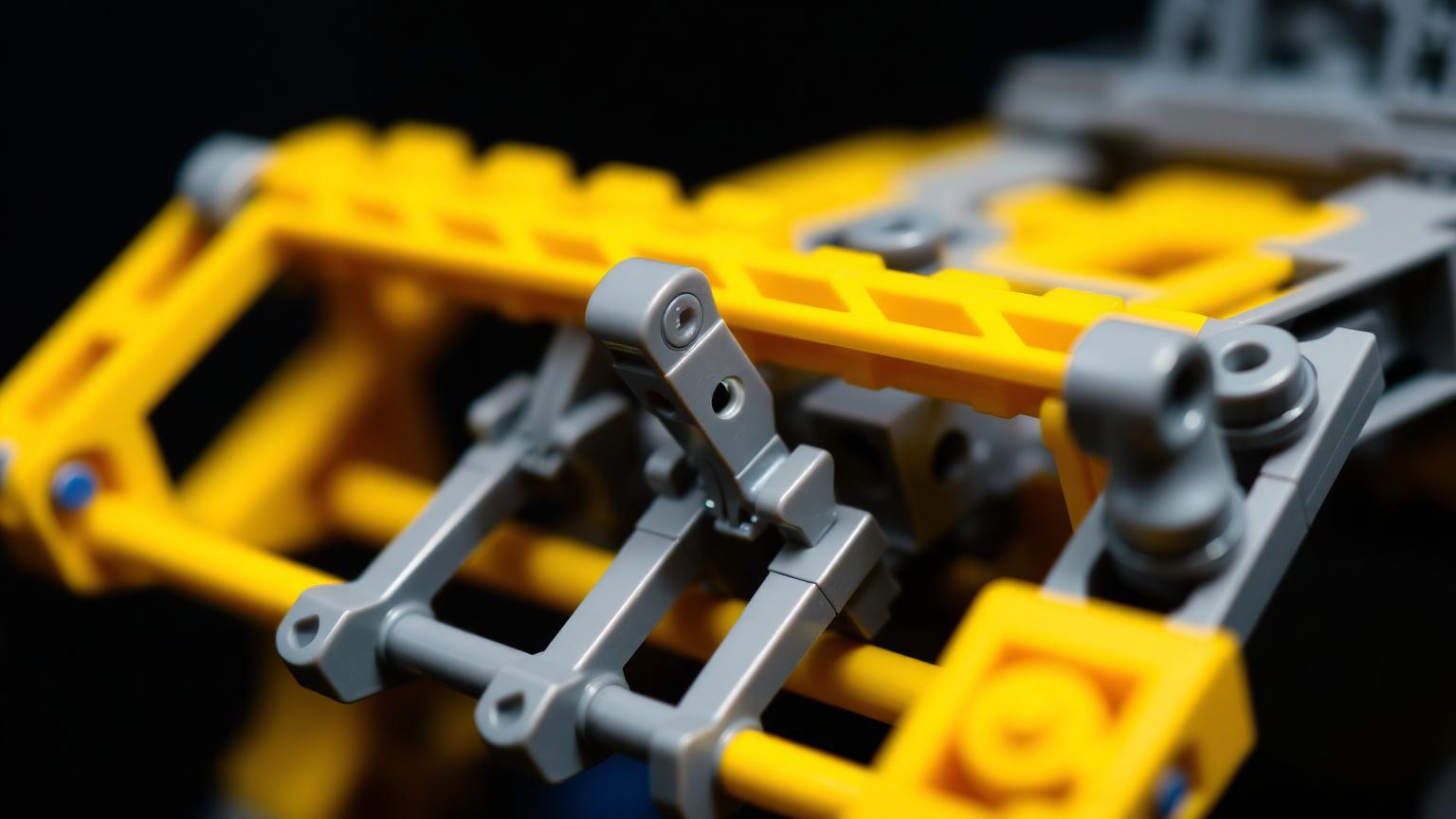
Cada is one of the most discussed names in the space, particularly among adult builders interested in Technic-style mechanical and motorised sets. Four things are worth checking:
- Stud and tube tolerance. Cada bricks are made to LEGO-standard tolerances; builders report clean connections between Cada Technic pins, axles and beams and official LEGO Technic parts.
- Print quality and colour matching. Prints hold up to repeated handling. Colour matching is close but not always perfect — check reviews for a specific set if colour consistency matters.
- Instruction quality. Numbered bag builds with step-by-step booklets that rival LEGO's own. This matters more than most buyers expect on a 2,000-piece model.
- Motorisation and moving parts. Many Cada motors are cross-compatible with LEGO Power Functions, which opens up mixed builds.
European buyers find Cada through specialist retailers; US buyers can shop dedicated LEGO-alternative stores — including Morebybourn's curated catalog. See also our breakdown of JMBricklayer and Cada police-set compatibility.
How to Integrate Playmobil-Compatible Sets Into Your Collection
Here is what surprises newer builders: Playmobil and LEGO are not system-compatible. Playmobil uses a peg-and-socket system rather than stud-and-tube, so the bricks do not directly connect.
So what does playmobil lego compatible mean in practice? It means using both systems in a shared scene or diorama — building side-by-side rather than brick-to-brick.
- Base plate planning: use a large LEGO base plate as the foundation, build LEGO structures on it, then position Playmobil figures within the scene.
- Themed pairing: a Playmobil pirate ship beside a LEGO dock shares enough visual language to feel intentional.
- Accessory swapping: small barrels, crates and foliage work as scenery props even without attaching.
How to Find and Use LEGO Boost-Compatible Devices
LEGO Boost is LEGO's entry-level robotics and coding system for children aged 7+. It pairs buildable models with a programmable Move Hub, colour and distance sensors, and a block-based coding app.
What makes a device LEGO Boost-compatible?
- Physical compatibility: does the device use LEGO-standard connectors and studs so it can be built into Boost models?
- Software compatibility: can it be controlled through the Boost app, or through Scratch or Python environments?
Many third-party motors meet the physical standard. For software, open-source libraries such as Pybricks let Boost hubs talk to a far wider range of lego boost compatible devices than the official app supports.
- Motorising non-LEGO sets: a Boost motor may slot into a Cada or Mould King housing designed for Power Functions — test fit carefully.
- Coding education: Scratch or Pybricks setups extend what children can program well beyond the official app.
- MOC integration: adult builders animate display models, conveyor systems and interactive dioramas with Boost hubs.
Step-by-Step: Building a Mixed-Brand MOC or Display
- Define your goal. Play-focused build (durability first) or display model (visual detail first)? This shapes every later choice.
- Choose a base and scale. Anchor to one brand's base plate and figure scale; minifigure scale is the most flexible.
- Sort by connection type. Standard stud-and-tube, Technic pin, and non-connective decorative pieces.
- Build structure with your most reliable bricks. Fill detail sections with the rest.
- Test connections before committing. A loose joint buried ten layers down means a full teardown.
- Document and share. The AFOL community actively celebrates mixed-brand builds.
Why Morebybourn Is Worth Bookmarking
Quality varies enormously by brand and even by individual set. Morebybourn curates sets from manufacturers that already clear benchmarks for ABS quality, clutch power, print durability and instruction clarity — across architecture, space, vehicles and city collections.
- English instructions in every shipment — not guaranteed on overseas marketplaces.
- EN71 and ASTM F963 certified sets for both EU and US buyers.
- Beginner to collector scale: from under 500 pieces to 2,000+ — browse the full range.
Frequently Asked Questions
Are Cada bricks truly compatible with LEGO Technic, including pins and axles?
Yes. Cada builds to ±0.01 mm LEGO-standard tolerances and Technic pins, axles and beams connect cleanly to official parts. Minor set-to-set variation exists, so check reviews for a specific model.
Can you physically connect Playmobil pieces to LEGO bricks?
No. Playmobil uses peg-and-socket, LEGO uses stud-and-tube. Combine them in shared scenes on a LEGO base plate instead.
What third-party devices work with LEGO Boost?
Motors built to Power Functions specifications are usually physically compatible; Pybricks extends software support beyond the official app.
How do I know if a LEGO-compatible brand is safe for children?
Look for EN71 (EU) or ASTM F963 (US) certification. Certified bricks use the same BPA-free, phthalate-free ABS resin as official LEGO.
Are LEGO-compatible sets worth buying for adult display models?
Yes — Cada and Mould King produce 3,000+ piece models with Technic mechanisms and motorisation aimed squarely at adult collectors.
Order LEGO-Compatible Sets from Morebybourn
We sell LEGO alternative sets — including Cada, Mould King, Reobrix and DUPLO-compatible bricks — with EN71 / ASTM F963 certification and fast warehouse shipping. Contact our customer service team to place an order.